Feasibility of machine learning analysis for the identification of patients with possible primary ciliary dyskinesia
Gully Burns, Carey Kauffman, Michele Manion, Ruth-Anne Pai, Carlos Milla, Michael G. O’Connor, Adam J. Shapiro, Heidi Bjornson-Pennell

TL;DR
This paper explores using machine learning to screen for primary ciliary dyskinesia in children, a rare disease often underdiagnosed, using claims data to identify potential cases.
Contribution
The study introduces a feasible machine learning approach for screening PCD using claims data without a specific diagnostic code.
Findings
A random forest model achieved variable performance with sensitivity 0.75–0.94 and positive predictive value 0.45–0.73.
Expanding the dataset improved model performance, making it suitable for screening.
The model identified 7705 potential cases in 1.32 million pediatric patients, matching PCD's estimated prevalence.
Abstract
Significant diagnostic delays are common in primary ciliary dyskinesia (PCD), a rare disease that is significantly underdiagnosed. Scalable screening methods could improve early identification and health outcomes. Can machine learning (ML) be used to screen for PCD in pediatric patients? We evaluated the feasibility of a random forest model to screen for PCD using data from the PCD Foundation Registry and a national claims database. We identified a cohort of pediatric patients (< 18 years of age) with diagnostic codes indicative of conditions potentially associated with PCD, and studied diagnostic, procedural, and pharmaceutical codes associated with PCD to develop ML features. Models were trained on composite claims data from confirmed patients with PCD, patients with Q34.8 (Specific Congenital Malformation of the Respiratory System) diagnosed within 6 months of an Electron…
Genes, proteins, chemicals, diseases, species, mutations and cell lines named across the full text — each resolved to its canonical identifier and authoritative record.
Click any figure to enlarge with its caption.
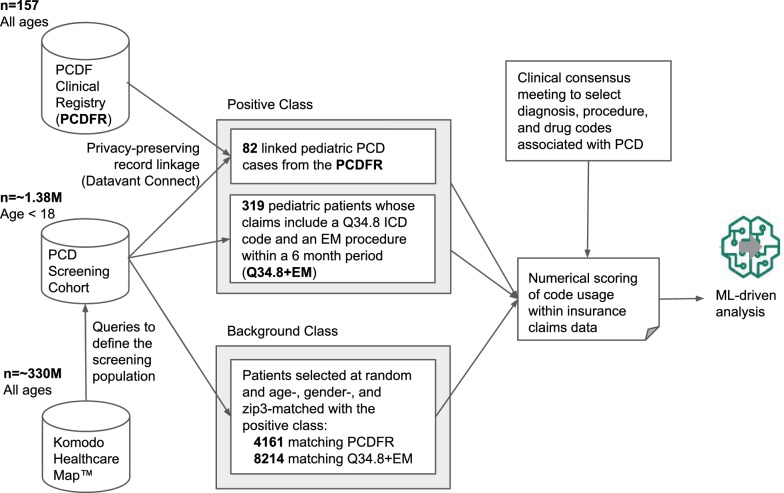 Figure 1
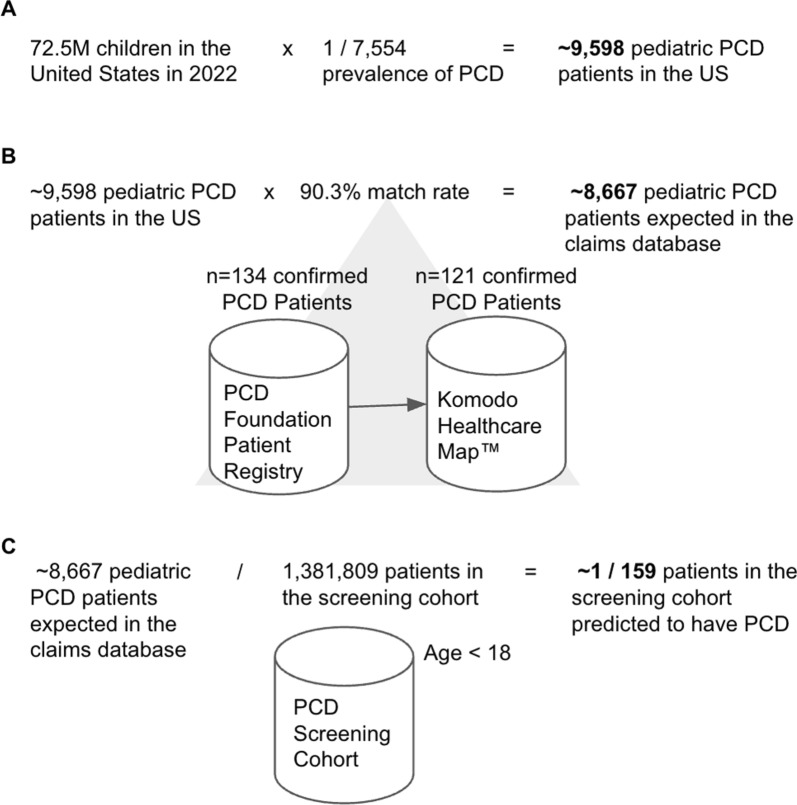 Figure 2
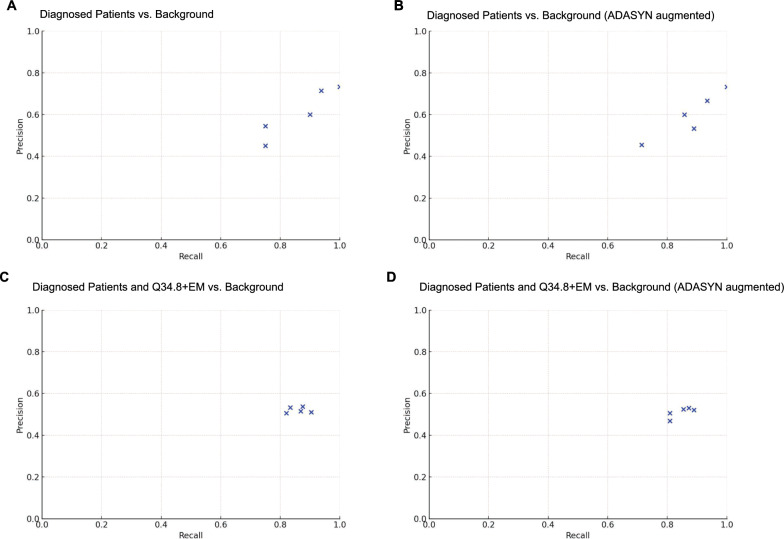 Figure 3
 Figure 4
Peer Reviews
No public reviews on file for this paper yet. If you reviewed it on a platform where reviews are public (OpenReview, ICLR, NeurIPS, ICML), you can paste yours below so the community can read it here.
Videos
No videos yet. Explain this paper in a talk, walkthrough, or lecture? Add one.
Taxonomy
TopicsCystic Fibrosis Research Advances · Tracheal and airway disorders · Respiratory viral infections research