Visible light photo-switching in a conformationally-strained electron acceptor via a dual singlet–triplet mechanism
Sai Shruthi Murali, Aditi Kumar, Damon M. de Clercq, Céline Janiseck, Geoffrey R. Weal, Isabella Wagner, Kai Chen, Michael P. Nielsen, Timothy W. Schmidt, Justin M. Hodgkiss, Paul A. Hume

TL;DR
A new molecule can switch its shape using visible light through a unique dual mechanism involving both singlet and triplet states.
Contribution
The discovery of a visible-light photo-switching mechanism involving both singlet and triplet states in a strained electron acceptor.
Findings
NIDCS-A exhibits photoisomerisation via both singlet and triplet excited states.
Singlet state isomerization uses vibrational energy to overcome a large barrier.
Triplet state isomerization occurs through thermally activated processes.
Abstract
Molecular photo-switches have significant potential for use in smart materials that can be controlled by light. Photo-switches function due to lowering or complete removal of the barrier to switching in the excited state. This constraint on the ground and excited state potential energy surfaces means that relatively few photo-switching molecules are known, and fewer that only utilise visible photons. Here, we report the unanticipated visible-light photo switching behavior of a conformationally strained electron acceptor molecule, NIDCS-A, which consists of an anthracene core linked via vinylic double bonds to two thiophene-naphthalamide substituents. Using a combination of spectroscopic techniques, we find that NIDCS-A exhibits an unusual dual photo-switching mechanism via both singlet and triplet excited states. In the singlet state, photoisomerisation precedes geometric relaxation,…
Genes, proteins, chemicals, diseases, species, mutations and cell lines named across the full text — each resolved to its canonical identifier and authoritative record.
Click any figure to enlarge with its caption.
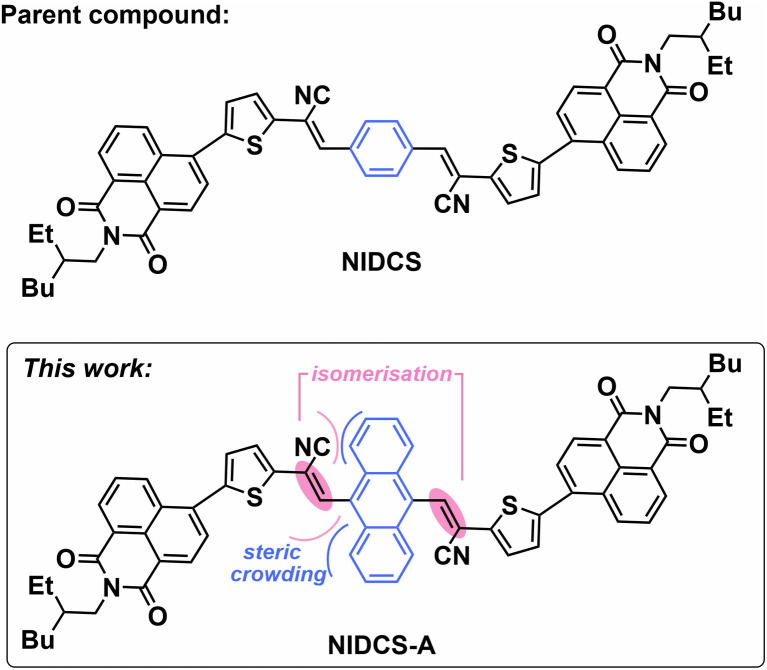 Figure 1
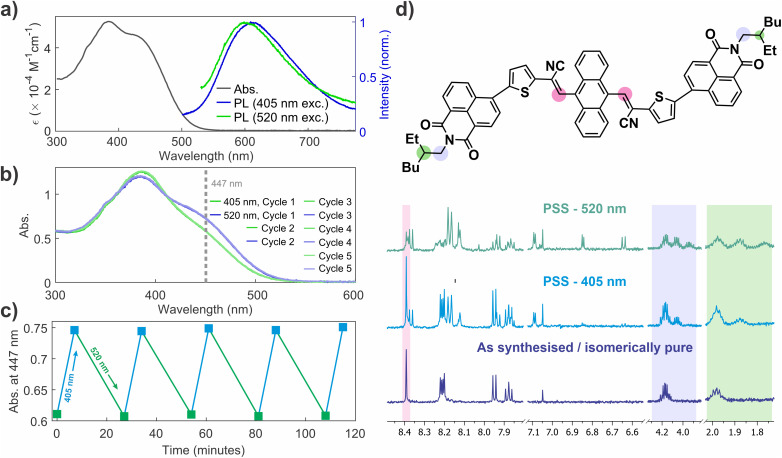 Figure 2
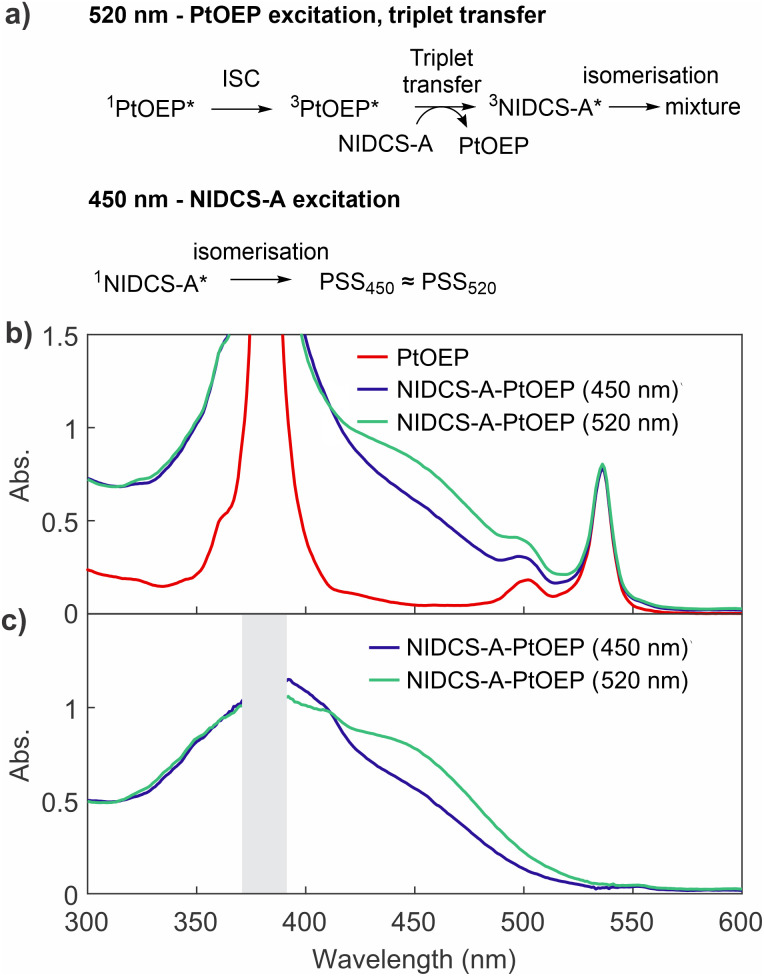 Figure 3
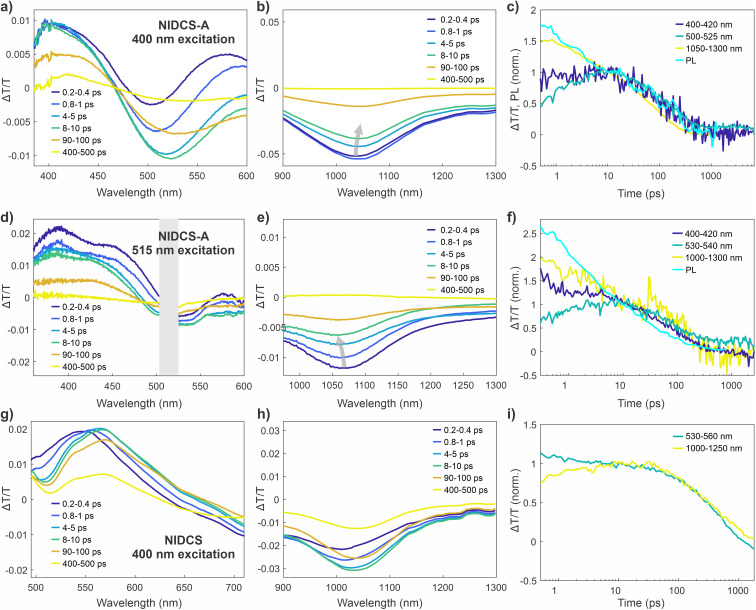 Figure 4
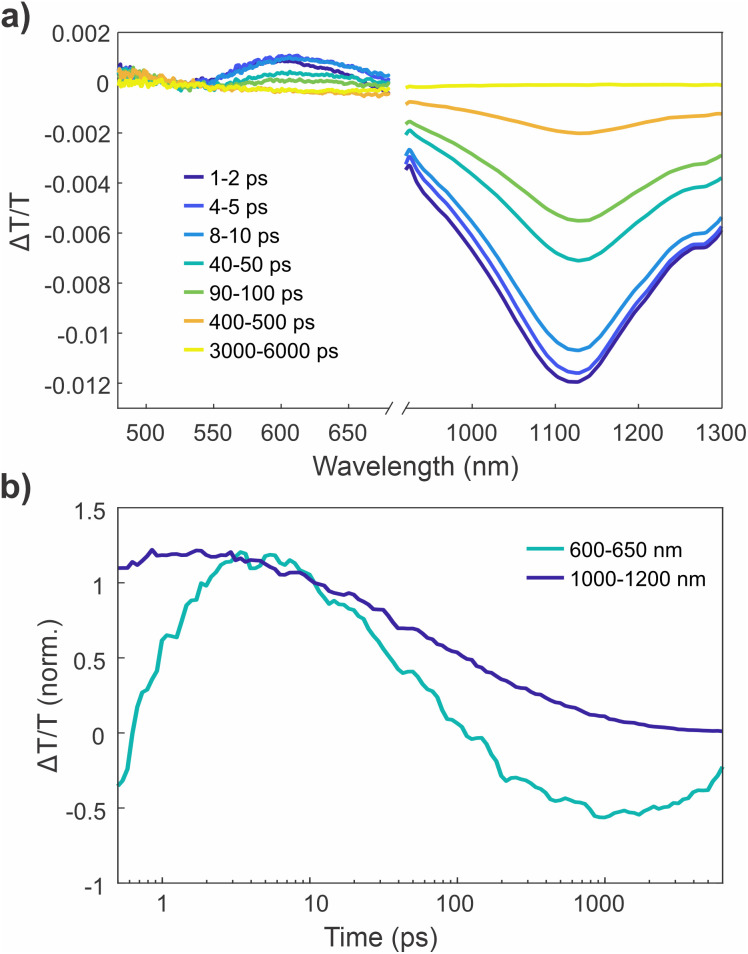 Figure 5
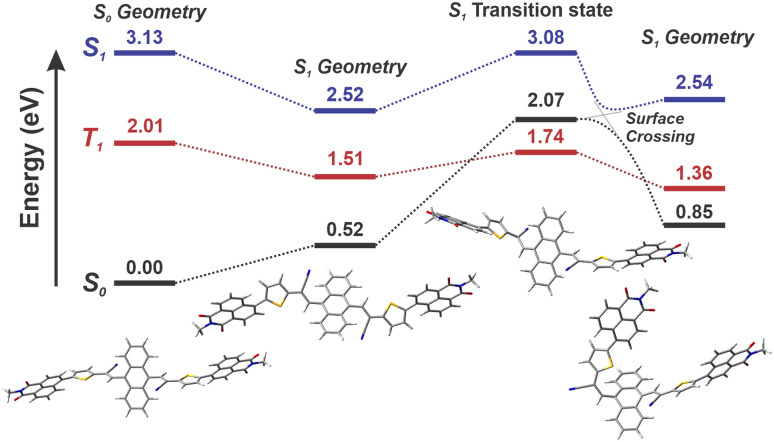 Figure 6
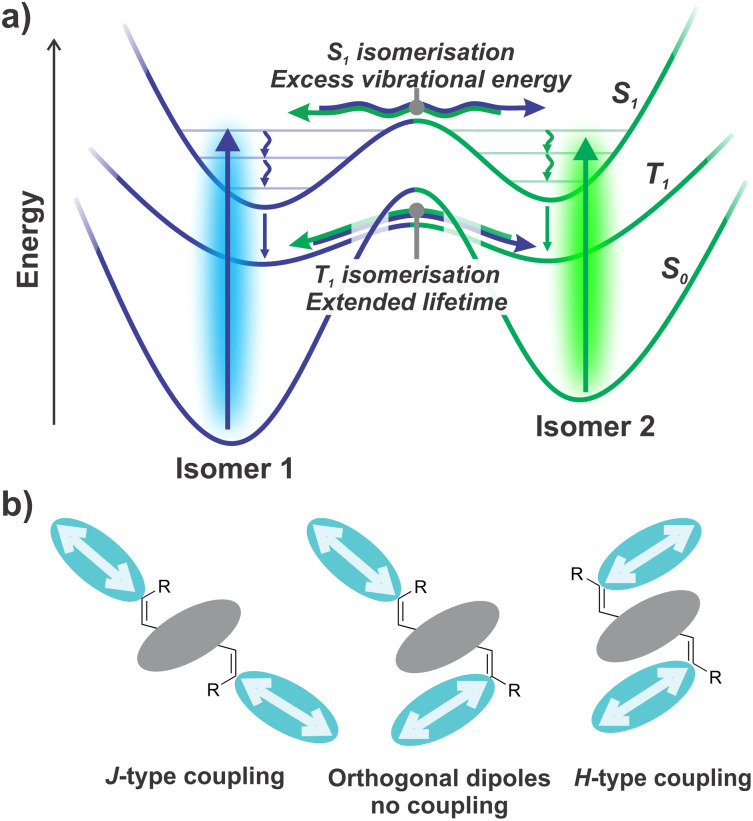 Figure 7
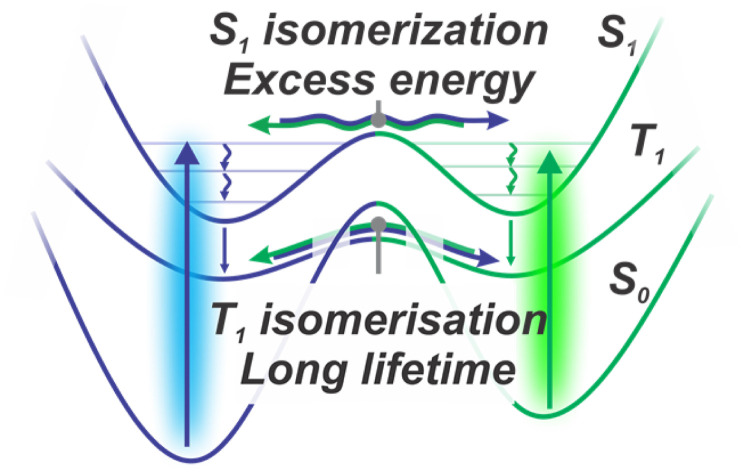 Figure 8
Peer Reviews
No public reviews on file for this paper yet. If you reviewed it on a platform where reviews are public (OpenReview, ICLR, NeurIPS, ICML), you can paste yours below so the community can read it here.
Videos
No videos yet. Explain this paper in a talk, walkthrough, or lecture? Add one.
Taxonomy
TopicsPhotochromic and Fluorescence Chemistry · Photochemistry and Electron Transfer Studies · Luminescence and Fluorescent Materials