Lomitapide response in a cohort of patients with homozygous familial hypercholesterolemia and the potential influence of MTTP gene variants
Genovefa Kolovou, Vana Kolovou, Katherine Anagnostopoulou, Georgia Anastasiou, Petros Kalogeropoulos, Evangelos Liberopoulos

TL;DR
This study examines how patients with a rare cholesterol disorder respond to a specific drug and how genetic differences might affect treatment outcomes.
Contribution
The study identifies specific MTTP gene variants potentially linked to greater response to lomitapide treatment in patients with homozygous familial hypercholesterolemia.
Findings
Lomitapide treatment significantly reduced LDL cholesterol levels in all patients with homozygous familial hypercholesterolemia.
Certain MTTP gene variants were more common in patients with greater than 50% LDL-C reduction.
The study found a trend suggesting more MTTP gene variants per patient in those with greater LDL-C reduction.
Abstract
Homozygous familial hypercholesterolemia (HoFH) is a rare inherited disorder of lipoprotein metabolism caused by pathogenic variants in both alleles of key low-density lipoprotein receptor (LDLR)-mediated pathway genes, resulting in very high LDL cholesterol (LDL-C) levels from birth. The microsomal triglyceride transfer protein (MTP) inhibitor lomitapide, is an effective treatment for lowering LDL-C in HoFH that acts independently of LDLR. This study investigated the response to lomitapide treatment and the potential impact of MTTP gene variants in a cohort of patients with HoFH. Data were extracted from medical records of patients diagnosed with HoFH and receiving treatment with lomitapide in addition to background statin + ezetimibe + PCSK9 inhibitor therapy. Data on LDL-C levels before and after lomitapide treatment were collected from patient medical histories. Genetic sequencing…
Genes, proteins, chemicals, diseases, species, mutations and cell lines named across the full text — each resolved to its canonical identifier and authoritative record.
Click any figure to enlarge with its caption.
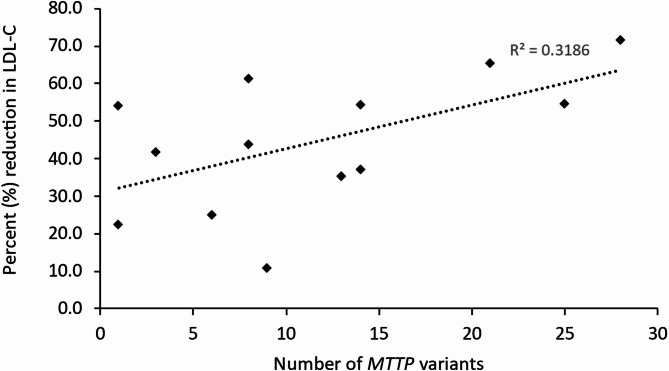 Figure 1
Peer Reviews
No public reviews on file for this paper yet. If you reviewed it on a platform where reviews are public (OpenReview, ICLR, NeurIPS, ICML), you can paste yours below so the community can read it here.
Videos
No videos yet. Explain this paper in a talk, walkthrough, or lecture? Add one.
Taxonomy
TopicsLipoproteins and Cardiovascular Health · Systemic Lupus Erythematosus Research