The enigma of the RING-UIM E3 ligases: its transformative impact on cancer research
Ye Wang, Yue Zhao, Qi Xin, Jihong Zhang

TL;DR
This review explores how RING-UIM E3 ligases influence cancer by modifying key proteins and signaling pathways.
Contribution
The paper provides a comprehensive overview of the diverse roles and mechanisms of RING-UIM E3 ligases in cancer.
Findings
RING-UIM E3 ligases ubiquitinate oncogenes and tumor suppressors, affecting cancer signaling.
Their functions vary across different cancer types, impacting immunity, inflammation, and DNA repair.
The review highlights potential clinical applications of targeting these ligases in cancer therapy.
Abstract
RING-UIM E3 ligases, a subfamily within the RING-type E3 ligases, comprise four members: RNF114, RNF125, RNF138, and RNF166. These ligases are crucial in various biological processes, including immunity, inflammation, epigenetics, and homologous recombination. Extensive research has demonstrated that RING-UIM E3 ligases fulfill specific biological roles in carcinogenesis by ubiquitinating critical oncogenes and tumor suppressors, thereby modulating various signaling pathways, differing their functions across distinct cancer contexts. This review comprehensively examines the multifaceted roles of RING-UIM E3 ligases in human cancers, elucidates the molecular mechanisms underpinning their actions and regulatory effects on cancer cells, and explores their potential clinical applications.
Genes, proteins, chemicals, diseases, species, mutations and cell lines named across the full text — each resolved to its canonical identifier and authoritative record.
Click any figure to enlarge with its caption.
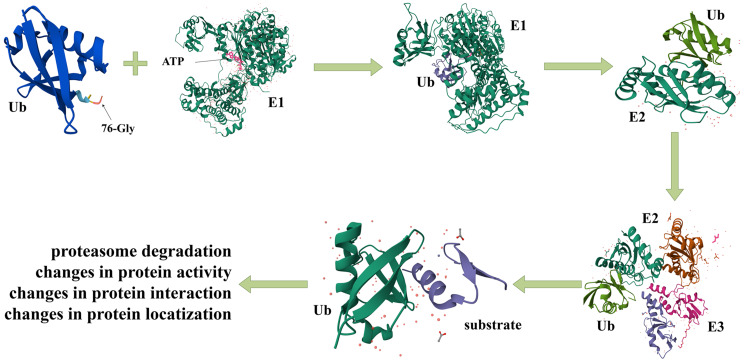 Figure 1
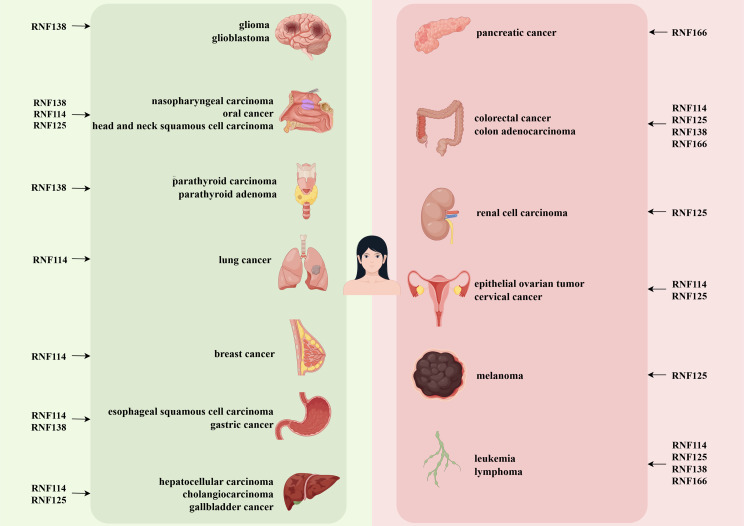 Figure 2
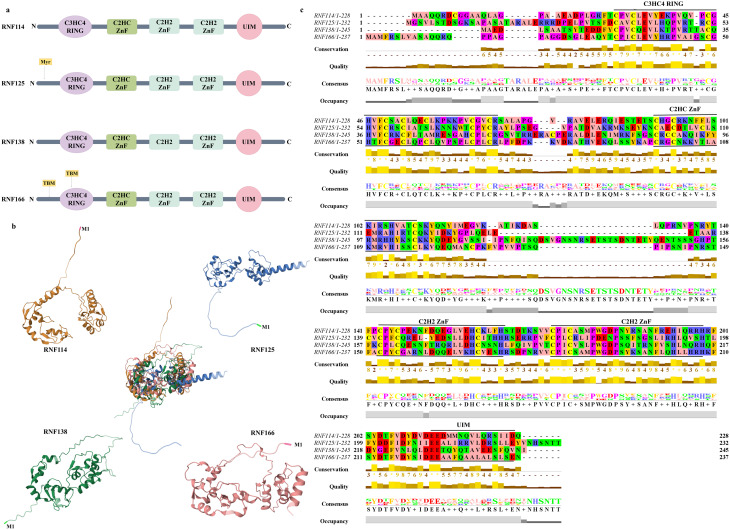 Figure 3
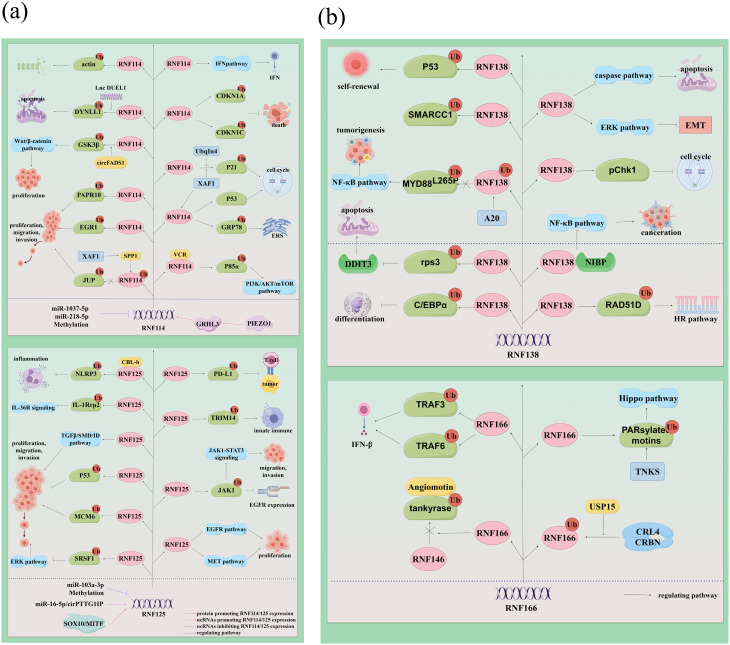 Figure 4
Peer Reviews
No public reviews on file for this paper yet. If you reviewed it on a platform where reviews are public (OpenReview, ICLR, NeurIPS, ICML), you can paste yours below so the community can read it here.
Videos
No videos yet. Explain this paper in a talk, walkthrough, or lecture? Add one.
Taxonomy
TopicsUbiquitin and proteasome pathways · Protein Degradation and Inhibitors · Viral-associated cancers and disorders