Understanding the origin of stereoselectivity in the photochemical denitrogenation of 2,3-diazabicyclo[2.2.1]heptene and its derivatives with non-adiabatic molecular dynamics
Leticia A Gomes, Steven A Lopez

TL;DR
This paper uses advanced simulations to explain how a specific chemical reaction produces different products based on how bonds break and atoms move.
Contribution
The study reveals the mechanism of stereoselectivity in the photochemical denitrogenation of diazabicyclo[2.2.1]heptenes using non-adiabatic molecular dynamics.
Findings
The reaction proceeds through a dynamically concerted but asynchronous denitrogenation process.
Two clusters of surface hopping points were identified, leading to different product geometries.
Dynamical effects after bond breaking drive the formation of the inverted housane product.
Abstract
Photochemical denitrogenation reactions of bicyclic azoalkanes produce strained bicyclic compounds of interest to synthetic organic chemists. We report a computational study on the mechanism of diazabicyclo[2.2.1]heptenes to address long standing mechanistic questions. Indeed, the mechanism of these reactions has been disputed for over six decades. We employed non-adiabatic molecular dynamics (NAMD) simulations combined with state-of-the-art multireference quantum mechanical calculations to understand the photophysical properties and mechanisms of these diazabicyclo[2.2.1]heptenes. The energetically accessible lowest excitations are nNN(σCN) → π* and range from 3.94–3.97 eV. From the >292 trajectories, the reaction proceeds through a dynamically concerted but asynchronous denitrogenation reaction. One σCN bond breaks along the S1 surface; the other σCN breaks after hopping to the S0. We…
Genes, proteins, chemicals, diseases, species, mutations and cell lines named across the full text — each resolved to its canonical identifier and authoritative record.
Click any figure to enlarge with its caption.
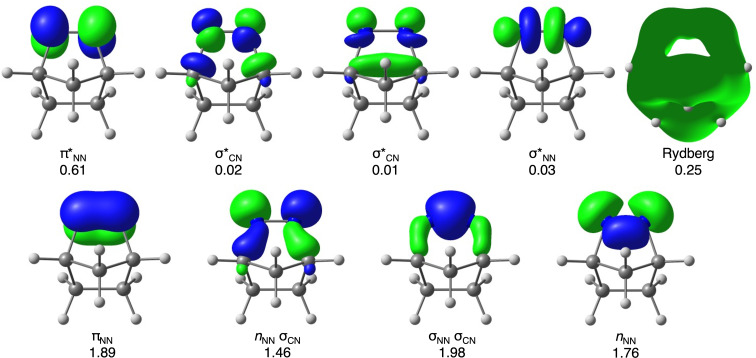 Figure 1
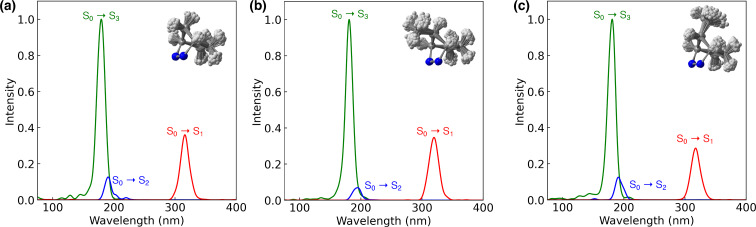 Figure 2
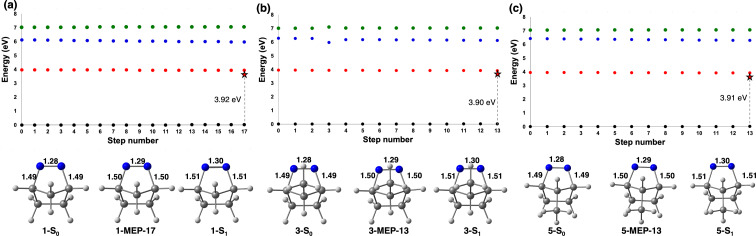 Figure 3
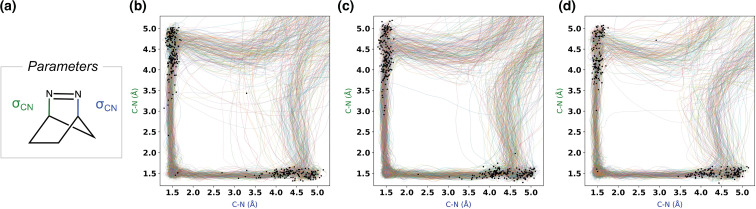 Figure 4
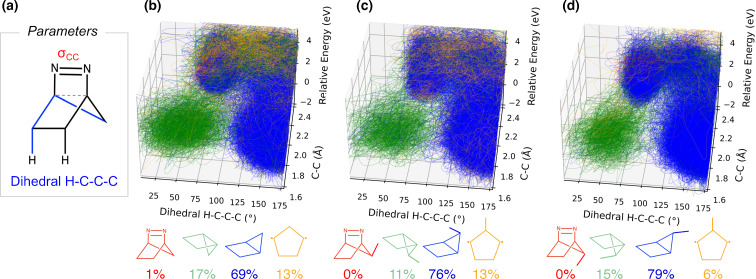 Figure 5
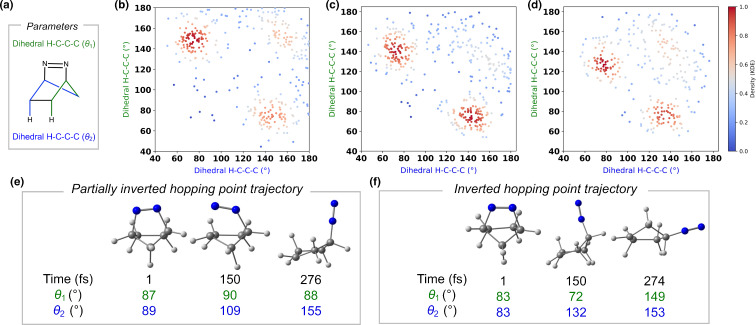 Figure 6
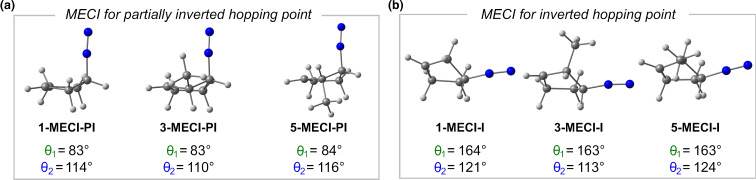 Figure 7
 Figure 8
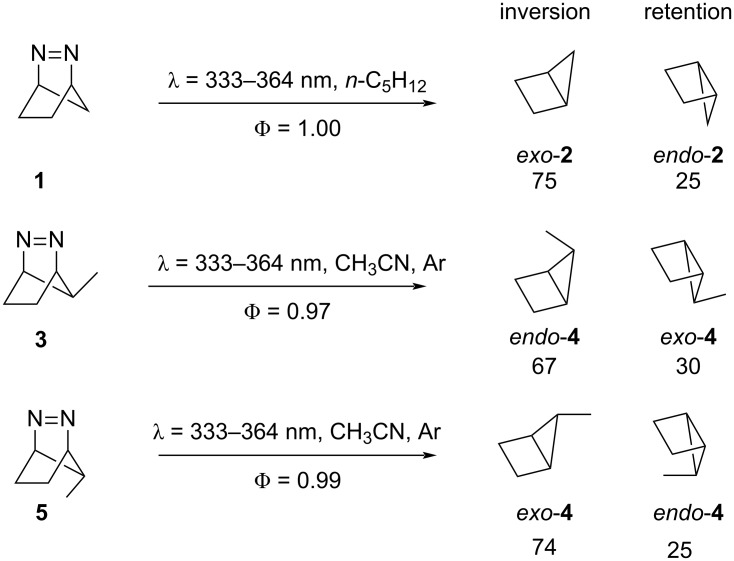 Figure 9
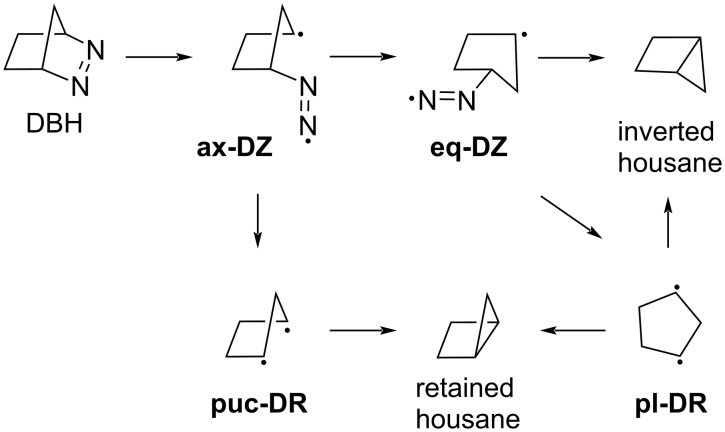 Figure 10
Peer Reviews
No public reviews on file for this paper yet. If you reviewed it on a platform where reviews are public (OpenReview, ICLR, NeurIPS, ICML), you can paste yours below so the community can read it here.
Videos
No videos yet. Explain this paper in a talk, walkthrough, or lecture? Add one.
Taxonomy
TopicsPhotochemistry and Electron Transfer Studies · Porphyrin and Phthalocyanine Chemistry · Radical Photochemical Reactions