Polymer Nanomedicines with pH-Triggered Pirarubicin Release: Revealing the Role of Carrier Hydrophilicity and Release Kinetics in Anticancer Performance
Sára Pytlíková, Benchun Jiang, Lucie Woldřichová, Kevin Kotalík, Ladislav Androvič, Shanghui Gao, Vladimír Šubr, Anna Rumlerová, Robert Pola, Natália Podhorská, Marcela Filipová, Mingjie Zhang, Michal Pechar, Jun Fang, Richard Laga, Tomáš Etrych

TL;DR
This study explores how the design of polymer nanomedicines affects their ability to release a cancer drug in response to pH, showing that linker length and hydrophobicity significantly impact treatment effectiveness.
Contribution
The study reveals the specific impact of linker hydrophobicity and length on drug release and anticancer performance in pH-sensitive nanomedicines.
Findings
Aminohexanoyl linkers improved drug release and antitumor activity compared to shorter linkers.
The rate of drug release, controlled by linker structure, is a key factor in therapeutic efficacy.
Polymer hydrophilicity had a lesser impact on treatment outcomes than previously assumed.
Abstract
The therapeutic efficacy of antitumor nanomedicines is influenced by numerous factors, with the most critical being the selection of an appropriate biomaterial and the use of suitable stimulus-responsive linkers. The chosen biomaterial must be biocompatible and capable of binding the drug via a linker that facilitates selective release and activation of the therapeutic effect, specifically within tumor tissue. In this study, we designed, synthesized, and compared the physicochemical and biological properties of various polymer nanomedicines, each bearing pirarubicin conjugated to water-soluble and biocompatible methacrylamide-based copolymers through pH-sensitive hydrazone bonds. Our findings indicate that the hydrophobicity and length of the linker near the hydrazone bond are crucial factors influencing the treatment efficacy of the nanomedicines. Conjugates with aminohexanoyl linkers…
Genes, proteins, chemicals, diseases, species, mutations and cell lines named across the full text — each resolved to its canonical identifier and authoritative record.
Click any figure to enlarge with its caption.
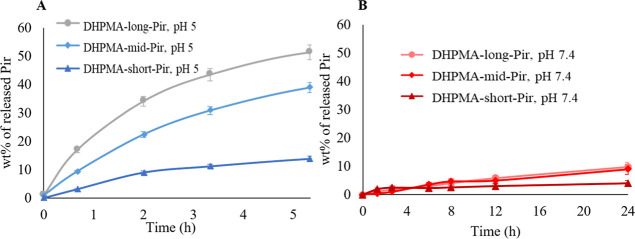 Figure 1
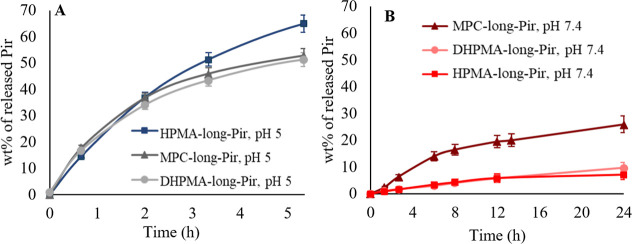 Figure 2
 Figure 3
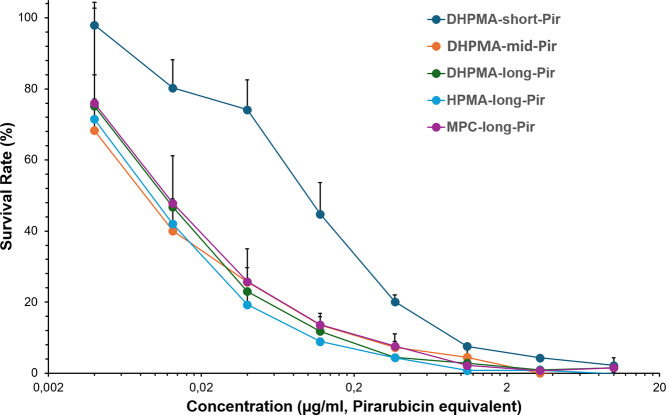 Figure 4
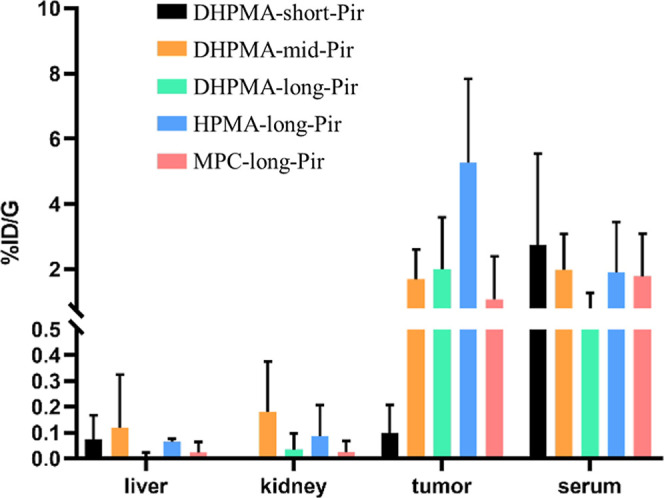 Figure 5
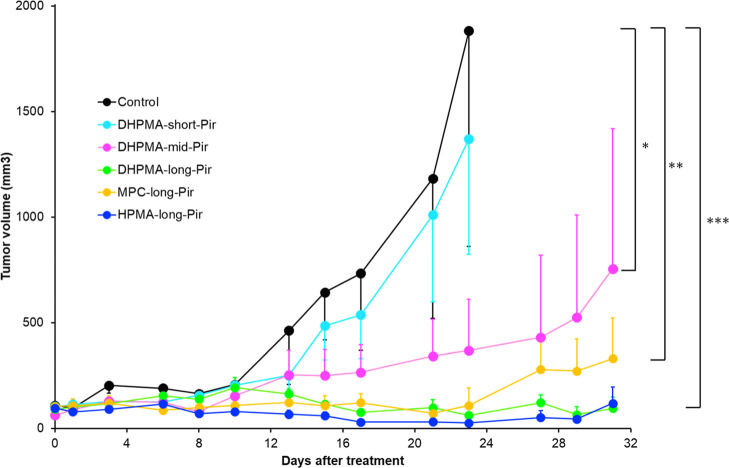 Figure 6
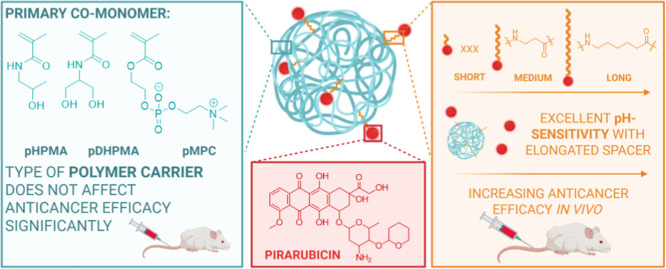 Figure 7
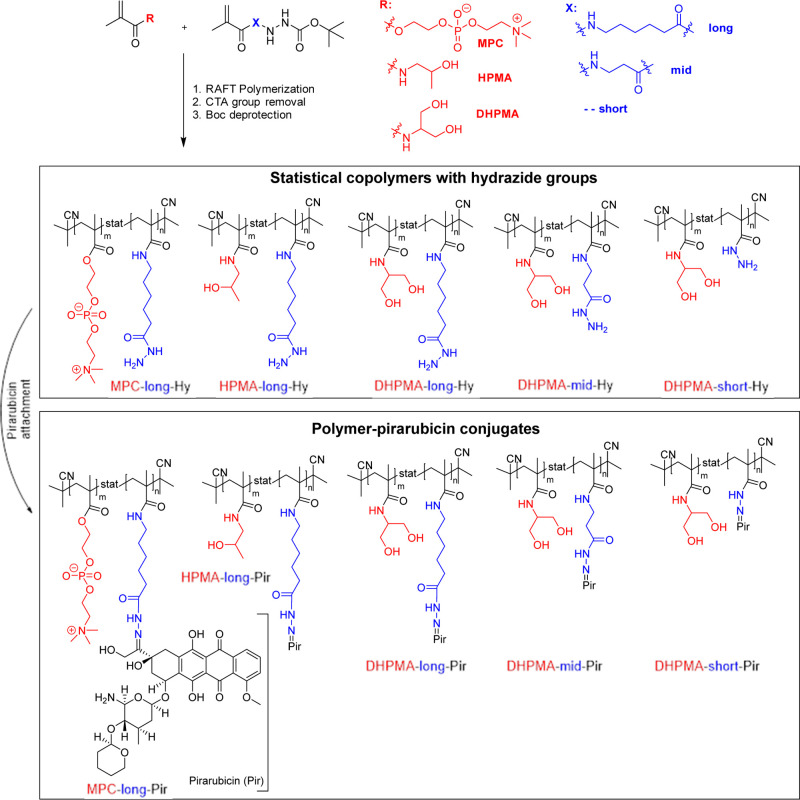 Figure 8
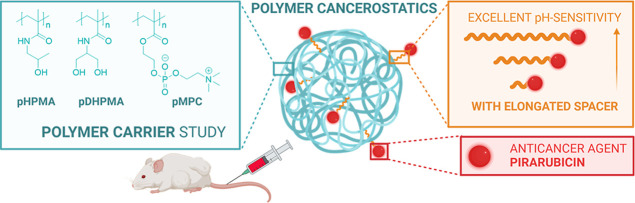 Figure 9
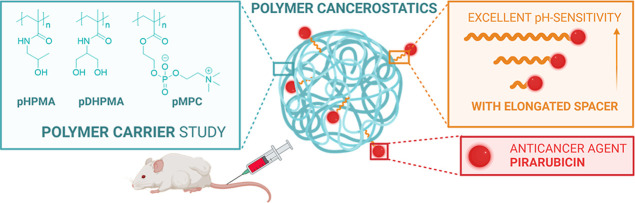 Figure 10
Peer Reviews
No public reviews on file for this paper yet. If you reviewed it on a platform where reviews are public (OpenReview, ICLR, NeurIPS, ICML), you can paste yours below so the community can read it here.
Videos
No videos yet. Explain this paper in a talk, walkthrough, or lecture? Add one.
Taxonomy
TopicsNanoparticle-Based Drug Delivery · Graphene and Nanomaterials Applications · Dendrimers and Hyperbranched Polymers