Ligand Basicity Governs Cysteine Reactivity in Au(I)–NHC Thiolate Complexes: A Computational Study
Gustavo Clauss, Igor Santos Oliveira, Camilla Abbehausen

TL;DR
This study uses computational methods to understand how the basicity of ligands affects the reactivity of gold complexes with cysteine, which is important for designing better therapeutic agents.
Contribution
The study identifies ligand basicity as a key factor governing cysteine reactivity in Au(I)–NHC thiolate complexes.
Findings
Complexes with more basic ligands (Stzn and 2tu) react more with cysteine.
Au(IMes)Cl shows faster deprotonation of intermediates compared to other complexes.
The preferred reaction mechanism involves the leaving ligand in cysteine deprotonation.
Abstract
Gold–thiolate compounds have emerged as promising therapeutic agents, showing activity against parasites such as Leishmania amazonensis and Trypanosoma cruzi, as well as viruses including Mayaro, Zika, and SARS-CoV. However, their use is limited by speciation due to the rapid ligand exchange with thiolated biomolecules, and control of this reactivity is key for the design of drugs. This study explores the reactivity of linear Au(I) complexes featuring the NHC, 1,3-bis(mesityl)imidazole-2-ylidene (IMes), and thiol-donating ligands, specifically pyrimidine-2-thione (HSpym), 2-thiouracil (2tuH), 1,3-thiazolidine-2-thione (HStzn), and 1,3-benzothiazole-2-thione (HSbtz), along with a chloride complex, Au(IMes)Cl, focusing on their interaction with the biologically significant amino acid cysteine. Thiol-donor ligands were selected for their structural diversity, biological relevance, and…
Genes, proteins, chemicals, diseases, species, mutations and cell lines named across the full text — each resolved to its canonical identifier and authoritative record.
Click any figure to enlarge with its caption.
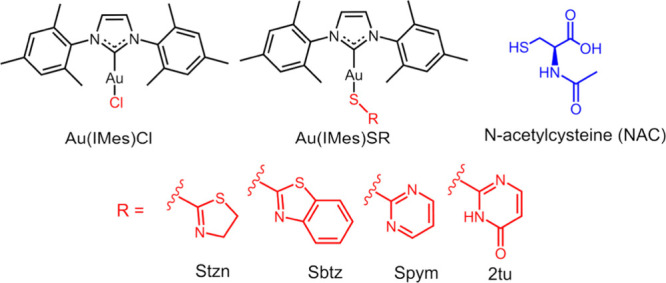 Figure 1
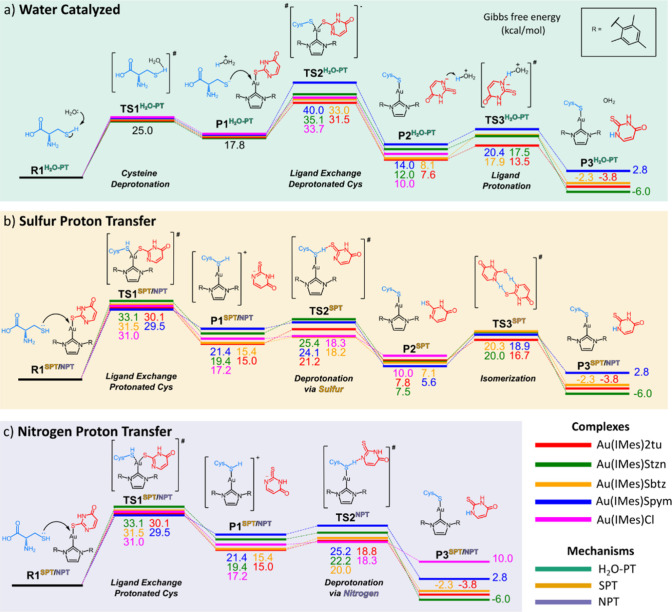 Figure 2
 Figure 3
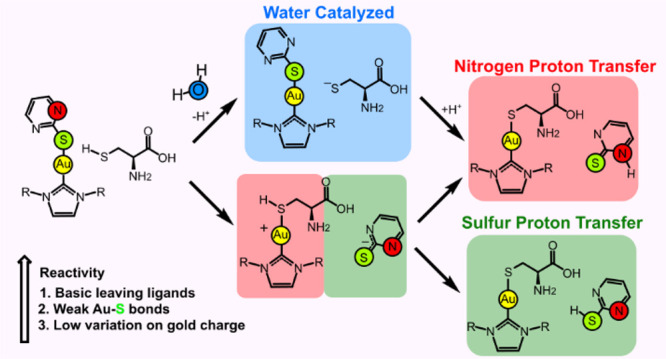 Figure 4
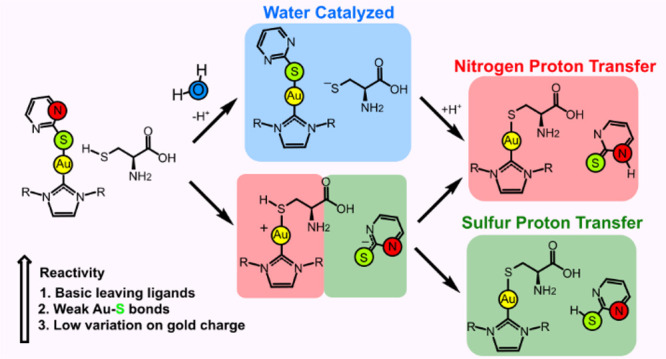 Figure 5
 Figure 6
 Figure 7
Peer Reviews
No public reviews on file for this paper yet. If you reviewed it on a platform where reviews are public (OpenReview, ICLR, NeurIPS, ICML), you can paste yours below so the community can read it here.
Videos
No videos yet. Explain this paper in a talk, walkthrough, or lecture? Add one.
Taxonomy
TopicsN-Heterocyclic Carbenes in Organic and Inorganic Chemistry · Click Chemistry and Applications · Asymmetric Hydrogenation and Catalysis