Exploring the Limits of Passive Macromolecular Translocation through Phospholipid Membranes
Ekaterina Kostyurina, Ralf Biehl, Margarita Kruteva, Alexandros Koutsioubas, Henrich Frielinghaus, Nageshwar Rao Yepuri, Stephan Förster, Jürgen Allgaier

TL;DR
This paper investigates how alternating amphiphilic polymers can passively move through lipid membranes, revealing how their structure affects translocation speed and behavior.
Contribution
The study introduces alternating amphiphilic polymers as a tunable model to explore passive translocation through lipid membranes.
Findings
AAPs with small hydrophilic/hydrophobic units show homopolymer-like behavior and high membrane solubility.
Increasing hydrophilic unit size reduces membrane solubility and translocation speed.
AAPs with balanced hydrophilic and hydrophobic units exhibit fast translocation due to strong amphiphilic character.
Abstract
Transportation of active macromolecules through cell membranes is an essential biological process. However, for hydrophilic macromolecules, the hydrophobic interior of lipid bilayers suppresses the passive translocation, and there are only few cases reported. We use alternating amphiphilic polymers (AAPs) in which the sizes of the hydrophilic and hydrophobic units can be varied over a broad range, keeping the polymers water-soluble. For small units, the macromolecules show a homopolymer-like character. Pulse field gradient NMR and neutron reflectivity measurements show that the chains have a high solubility in the membrane hydrophobic interior that allows the chains to passively translocate. Increasing the length of the hydrophilic units leads to more polar AAPs with low membrane solubility and a reduced translocation speed. If hydrophilic and hydrophobic moieties are increased in size,…
Genes, proteins, chemicals, diseases, species, mutations and cell lines named across the full text — each resolved to its canonical identifier and authoritative record.
Click any figure to enlarge with its caption.
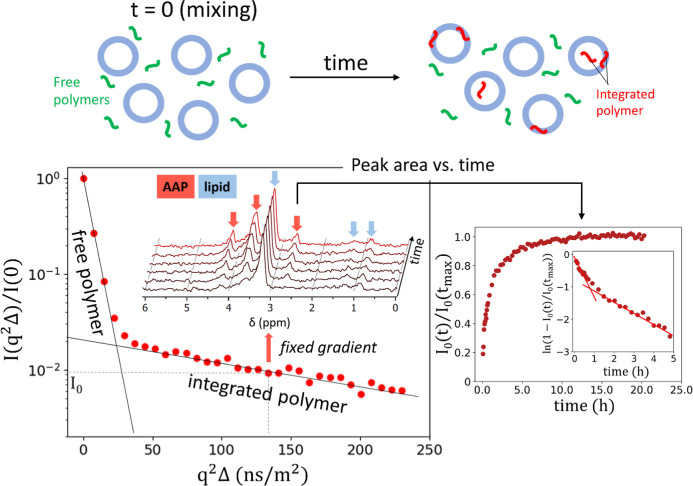 Figure 1
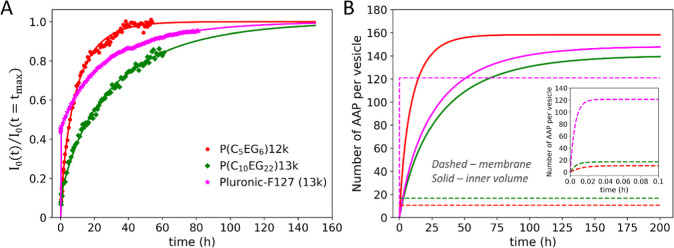 Figure 2
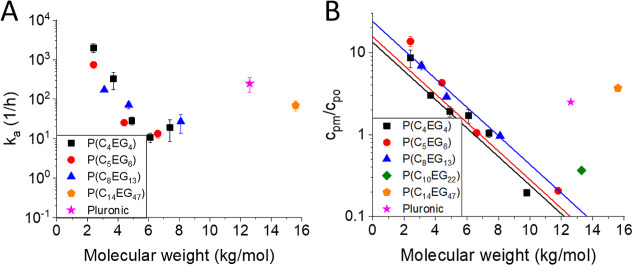 Figure 3
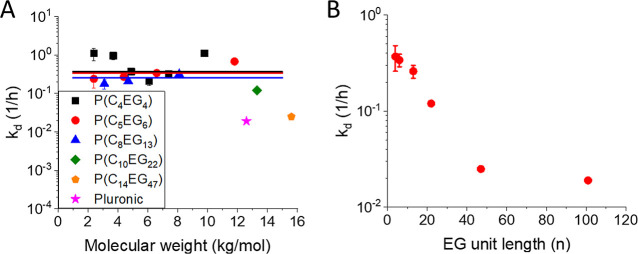 Figure 4
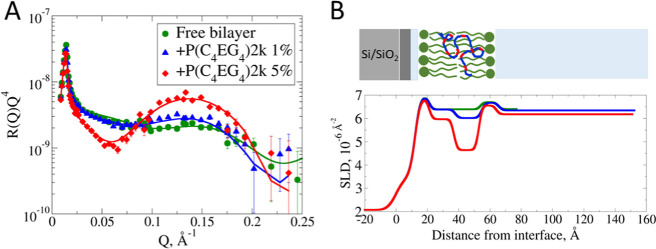 Figure 5
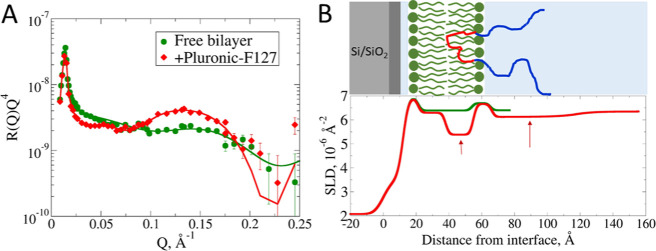 Figure 6
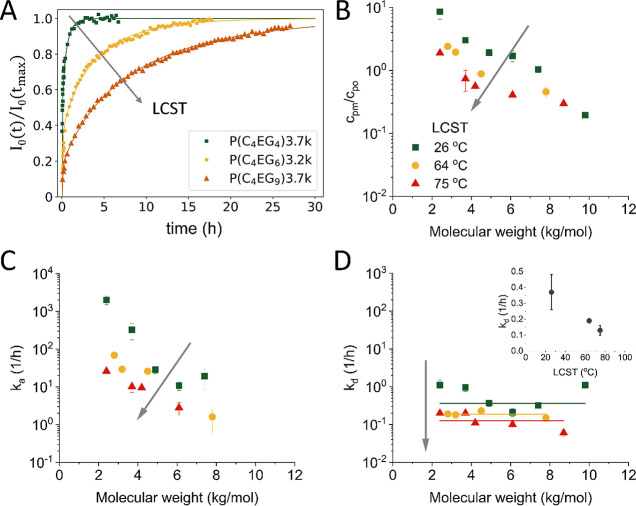 Figure 7
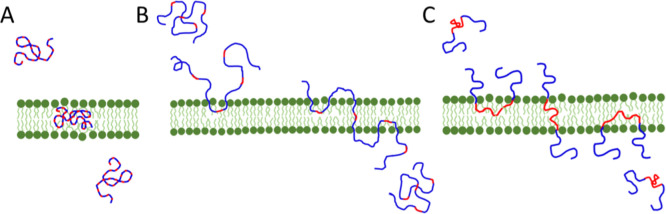 Figure 8
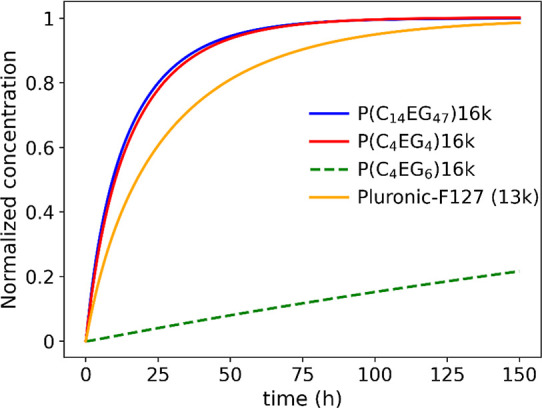 Figure 9
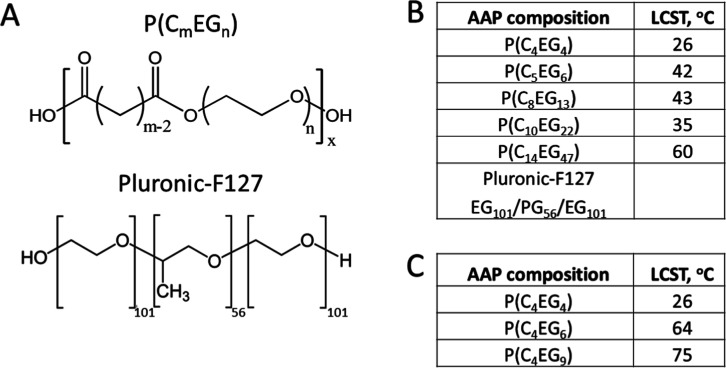 Figure 10
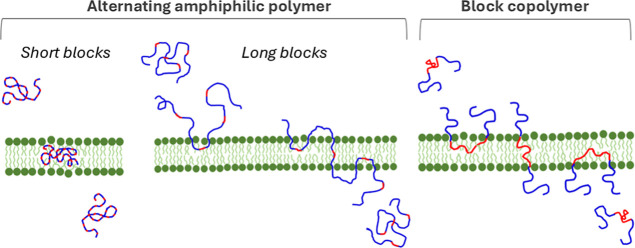 Figure 11
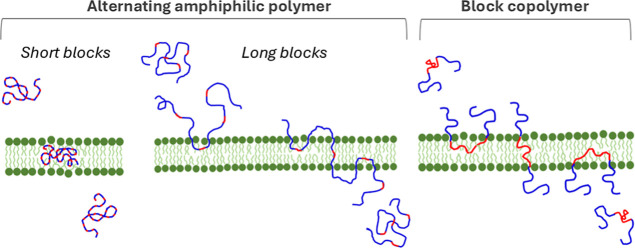 Figure 12
Peer Reviews
No public reviews on file for this paper yet. If you reviewed it on a platform where reviews are public (OpenReview, ICLR, NeurIPS, ICML), you can paste yours below so the community can read it here.
Videos
No videos yet. Explain this paper in a talk, walkthrough, or lecture? Add one.
Taxonomy
TopicsLipid Membrane Structure and Behavior · RNA Interference and Gene Delivery · Molecular Sensors and Ion Detection