Real-Time Monitoring of the Formation and Culture of Hybrid Cell-Microbiomaterial Spheroids Using Non-Faradaic Electrical Impedance Spectroscopy
Maria G. Fois, Seppe Bormans, Thijs Vandenryt, Alexander P. M. Guttenplan, Yousra Alaoui Selsouli, Clemens van Blitterswijk, Zeinab Tahmasebi Birgani, Stefan Giselbrecht, Pamela Habibović, Ronald Thoelen, Roman K. Truckenmüller

TL;DR
A new microfluidic device uses electrical impedance to monitor cell spheroid formation and culture in real time.
Contribution
A novel microfluidic bioreactor with non-Faradaic EIS for nondestructive real-time monitoring of hybrid cell-microbiomaterial spheroids.
Findings
The device can distinguish between 2D cultures, spheroids, and hybrid spheroids using impedance and capacitance data.
Differences in electrical properties were observed based on culture duration and the presence of biomaterials.
The system can detect the spatial arrangement of cells and micro-sized biomaterials over time.
Abstract
Cellular spheroids are considered a popular option for modeling healthy and diseased tissues in vitro and as injectable therapies. The formation and culture of spheroids can make use of different three-dimensional (3D) culture platforms, but the spheroids’ analysis often has to rely on endpoint assays. In this study, we propose a microfluidic bioreactor to culture and nondestructively monitor human mesenchymal stem cell (hMSC) spheroids over time using non-Faradaic electr(ochem)ical impedance spectroscopy (EIS). For this, an array of porous microwells thermoformed from ion track-etched thin films and a pair of sensing electrodes from transparent indium tin oxide are integrated into the flow and culture chamber of the bioreactor. To measure the spheroid’s electrical properties, the electrodes are connected to a frequency response analyzer (FRA), with a multiplexer in between to enable…
Genes, proteins, chemicals, diseases, species, mutations and cell lines named across the full text — each resolved to its canonical identifier and authoritative record.
Click any figure to enlarge with its caption.
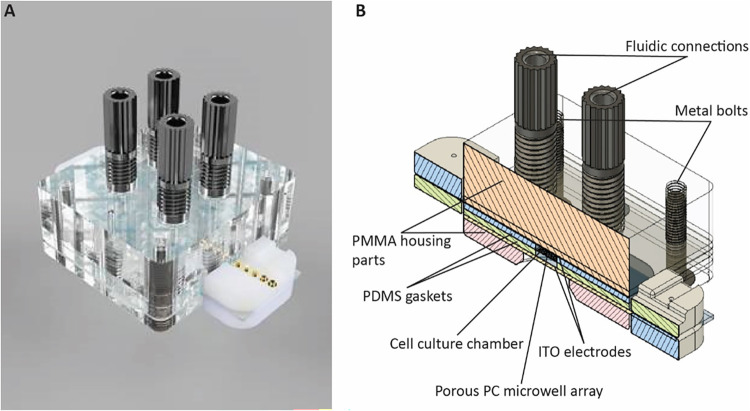 Figure 1
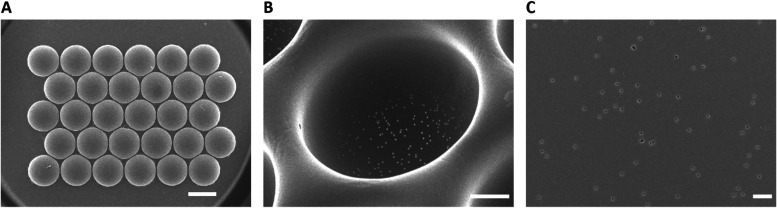 Figure 2
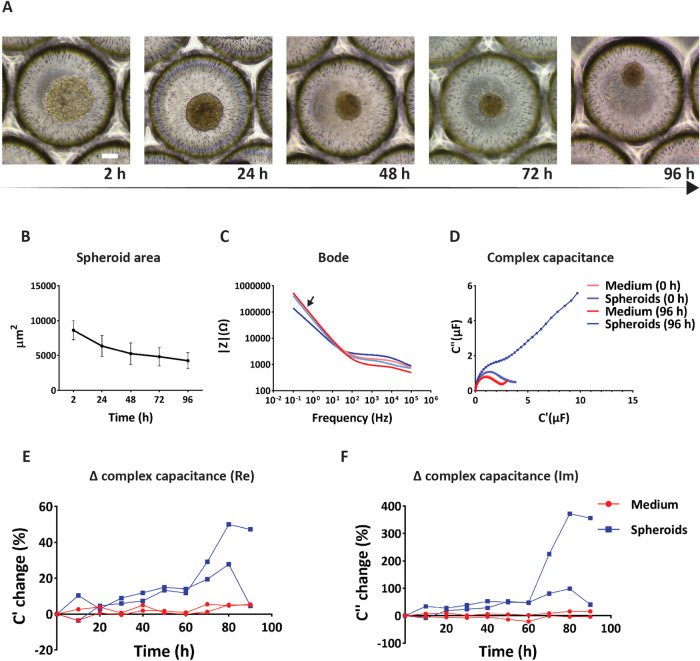 Figure 3
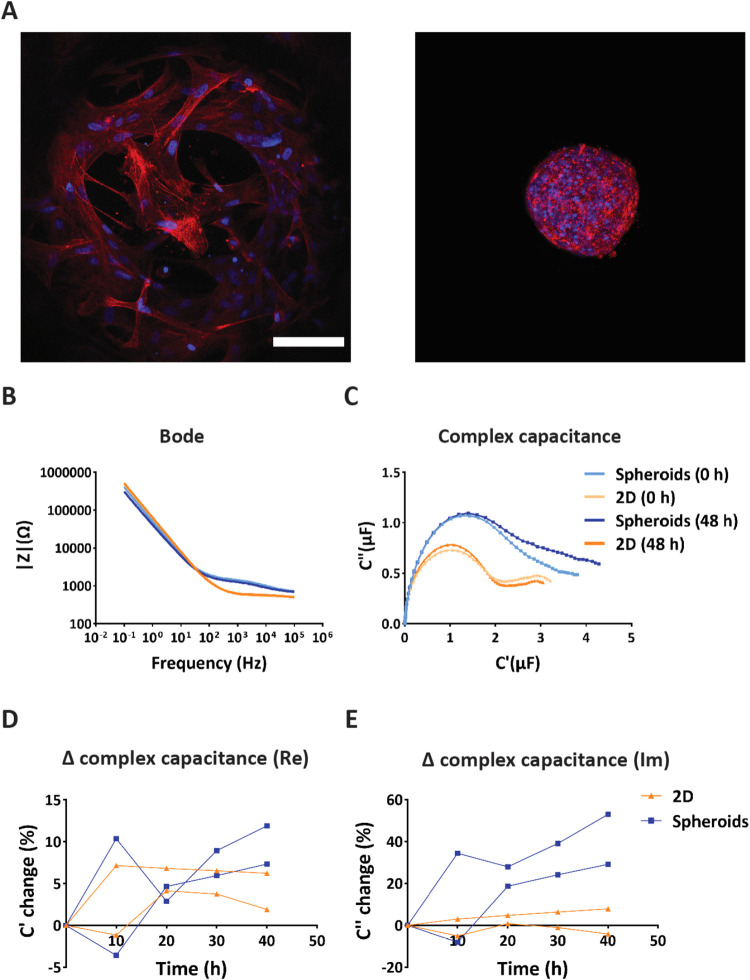 Figure 4
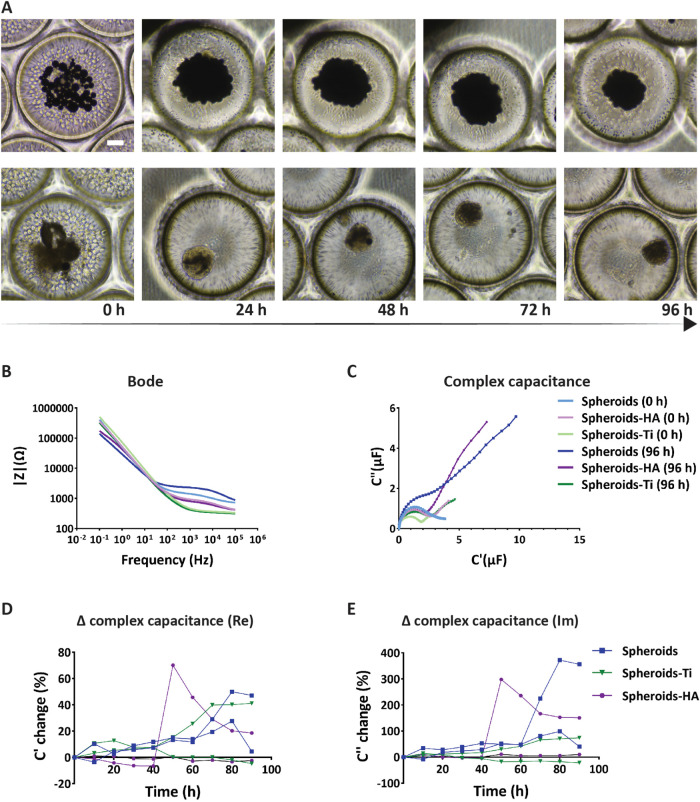 Figure 5
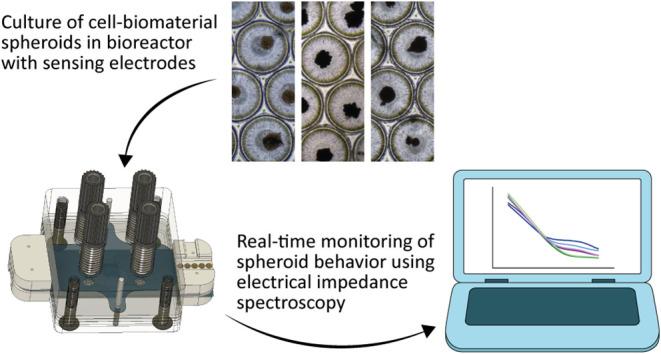 Figure 6
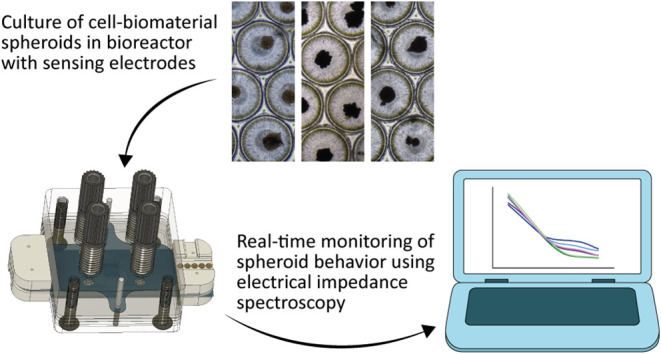 Figure 7
Peer Reviews
No public reviews on file for this paper yet. If you reviewed it on a platform where reviews are public (OpenReview, ICLR, NeurIPS, ICML), you can paste yours below so the community can read it here.
Videos
No videos yet. Explain this paper in a talk, walkthrough, or lecture? Add one.
Taxonomy
TopicsMicrofluidic and Bio-sensing Technologies · 3D Printing in Biomedical Research · Electrical and Bioimpedance Tomography