Direct Evidence for Cannibalistic Necrophagy as a Way of Nitrogen Recycling in Ants
Ádám Lőrincz, Kata Anna Bán, Tamás Maruzs, István Elek Maák

TL;DR
Ants can recycle nitrogen by eating their dead nestmates, a behavior that helps them survive when food is scarce.
Contribution
This study provides the first direct evidence of cannibalistic necrophagy in ants for nitrogen recycling.
Findings
Ants consume fluorescently marked corpses, confirming cannibalistic necrophagy.
Necrophagy helps meet nitrogen needs when food is scarce.
Nitrogen recycling through this behavior may contribute to ant colony success.
Abstract
Adequate nitrogen sources are indispensable for the development and reproduction of most animals. Some observations suggest that eusocial insects, such as termites or ants, can cover the protein requirements of their growing larvae by consuming the corpses of their own nestmates, a behavior known as cannibalistic necrophagy. While termites commonly utilize this food source, its occurrence in ants remains controversial and has so far been supported only by indirect observations (e.g., substantial weight loss of corpses or the presence of gnawed‐out holes on the abdomen of the corpses). This behavior might be a crucial tool for survival under suboptimal conditions; however, long‐standing evidence supporting its presence in ants is limited. In this study, we assessed whether cannibalistic necrophagy indeed occurs in ants by offering fluorescently marked corpses to their nestmates and…
Genes, proteins, chemicals, diseases, species, mutations and cell lines named across the full text — each resolved to its canonical identifier and authoritative record.
Click any figure to enlarge with its caption.
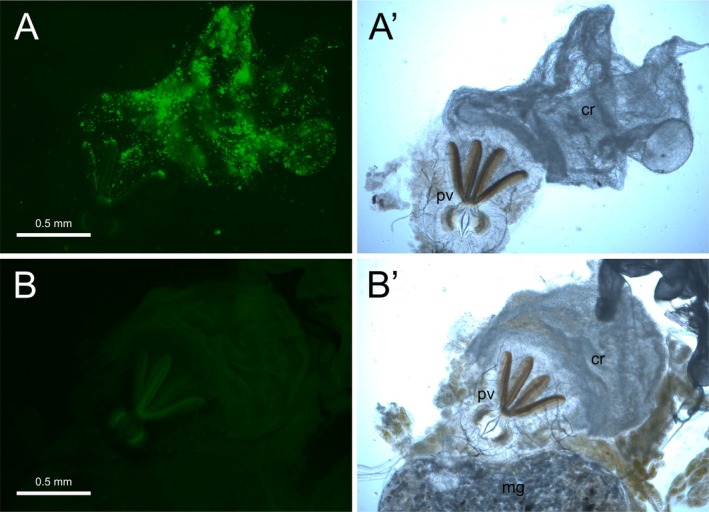 Figure 1
 Figure 2
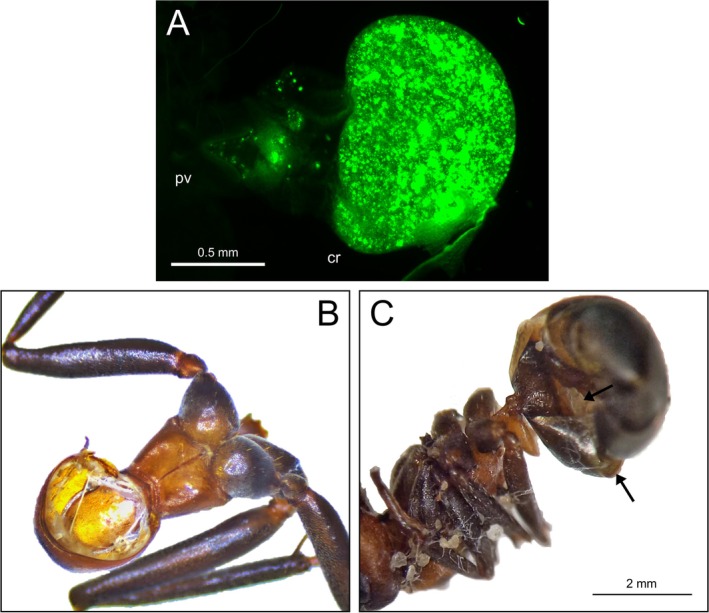 Figure 3
Peer Reviews
No public reviews on file for this paper yet. If you reviewed it on a platform where reviews are public (OpenReview, ICLR, NeurIPS, ICML), you can paste yours below so the community can read it here.
Videos
No videos yet. Explain this paper in a talk, walkthrough, or lecture? Add one.
Taxonomy
TopicsInsect and Arachnid Ecology and Behavior · Plant and animal studies · Neurobiology and Insect Physiology Research