Rodent indent not self-evident: a case of mistaken identity of the ‘Chicago Rat Hole’
Michael C. Granatosky, Gabby Guilhon, Noah D. Chernik, Stratos J. Kantonis, Christine J. Lee, Edwin Dickinson

TL;DR
A viral 'rat hole' in Chicago was likely made by a squirrel, not a rat, showing how public assumptions can be misleading.
Contribution
This study provides the first formal analysis of the 'Chicago Rat Hole' using statistical methods to identify the likely tracemaker.
Findings
Univariate tests found no significant differences between the imprint and tree squirrels in key measurements.
Discriminant function analysis suggested a 98.67% likelihood that the imprint was made by a squirrel.
Eastern grey squirrel is the most likely species based on local population density and statistical results.
Abstract
The ‘Chicago Rat Hole’ is a remarkable full body impression ostensibly created by a brown rat (Rattus norvegicus) crossing fresh concrete in Chicago’s Roscoe Village that became a viral sensation. While the public attributed the mark to a brown rat, no formal analysis had been conducted to confirm its identity. Using clear anatomical landmarks, we compared measurements from the ‘Chicago Rat Hole’ to eight sympatric rodent species using univariate and multivariate analyses. Univariate tests showed no significant differences in snout-to-tail length, head width, tail-base width or third digit length between the imprint and members of the genus Sciurus (i.e. tree squirrels). Discriminant function analysis indicated a 98.67% likelihood that the ‘Chicago Rat Hole’ was a squirrel, with classifications split between the eastern grey squirrel (50.67%) and the fox squirrel (48.00%). Given local…
Genes, proteins, chemicals, diseases, species, mutations and cell lines named across the full text — each resolved to its canonical identifier and authoritative record.
Click any figure to enlarge with its caption.
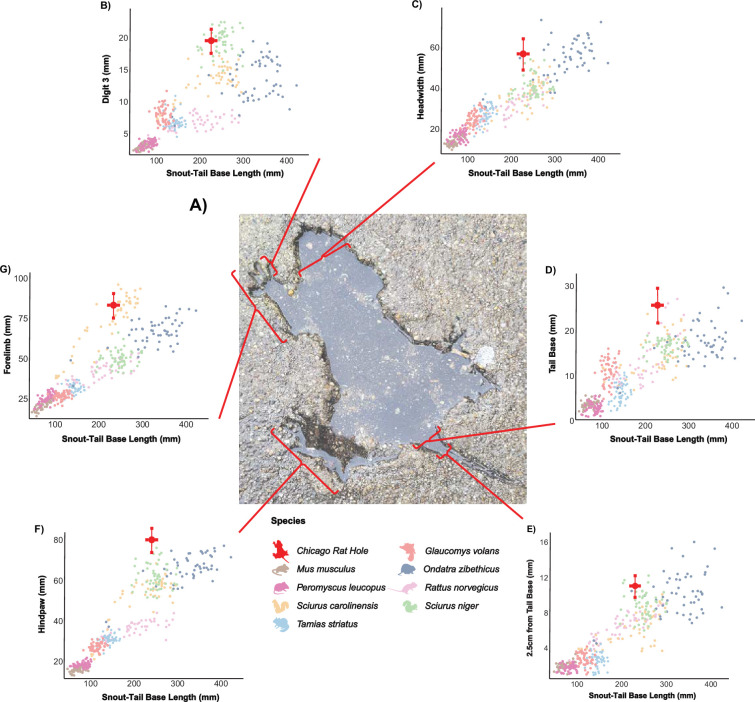 Figure 1
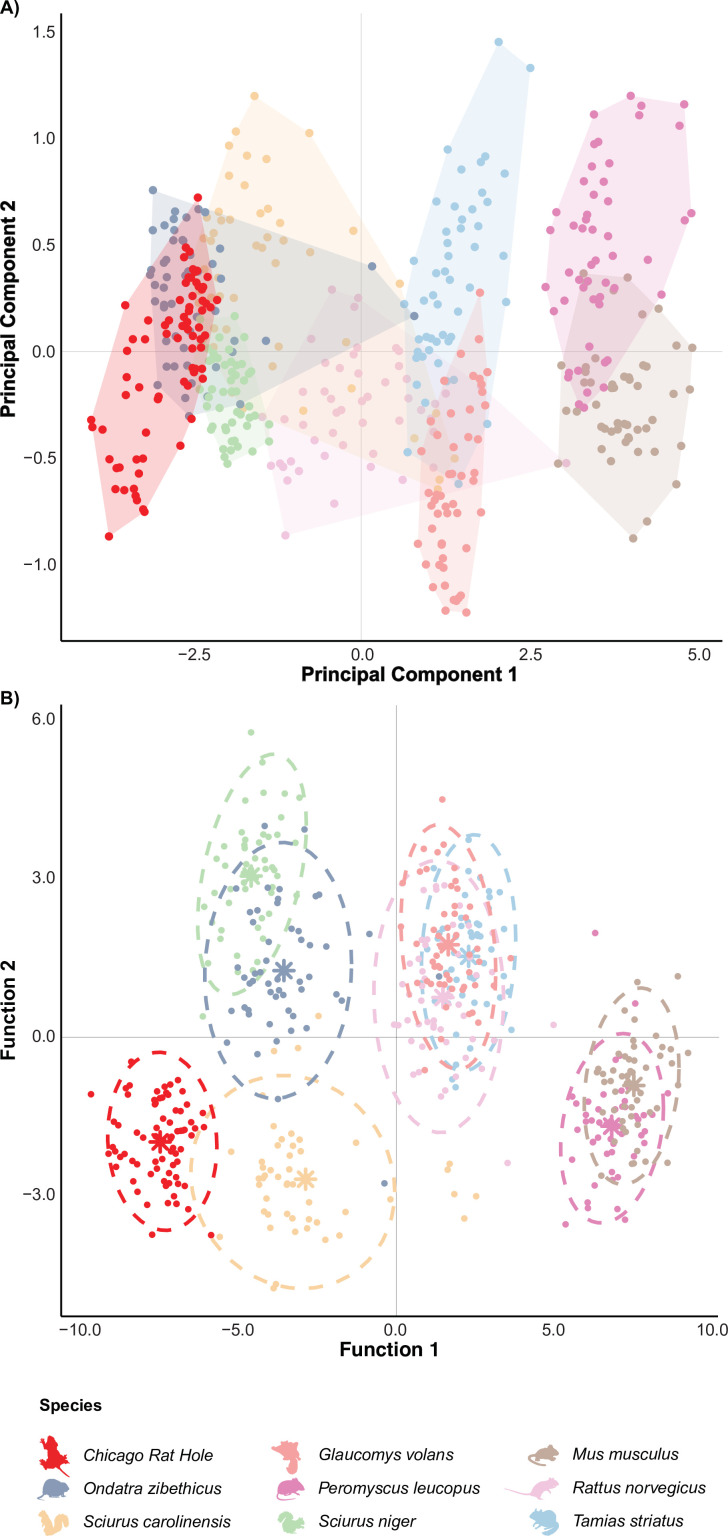 Figure 2
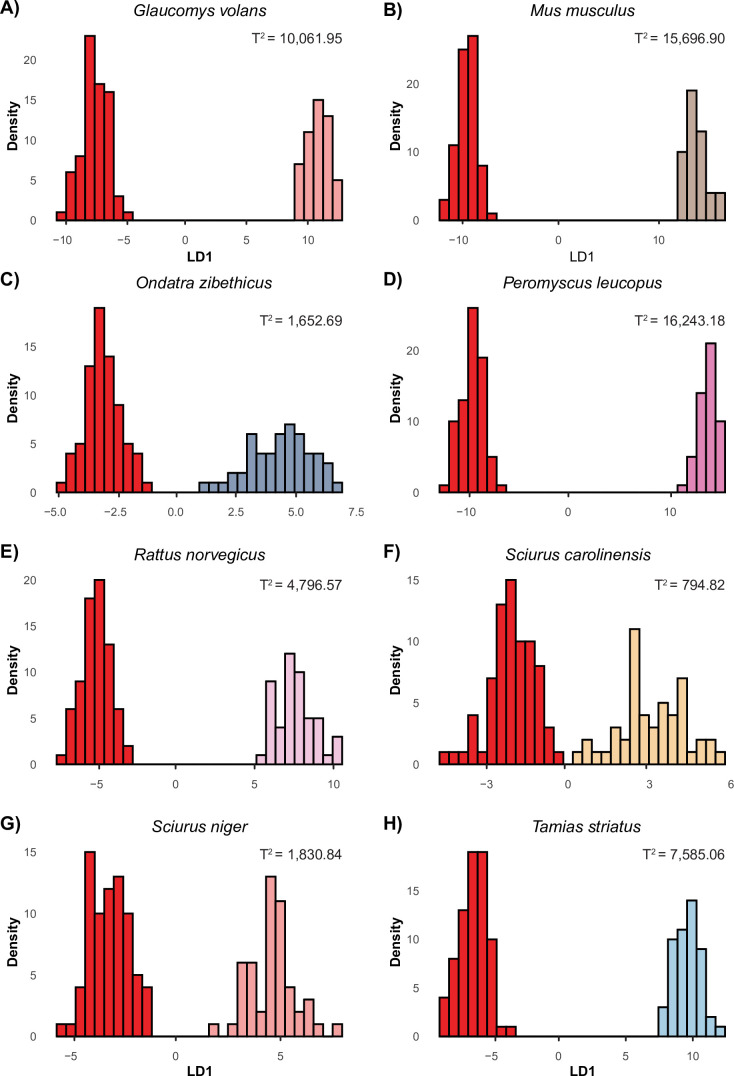 Figure 3
Peer Reviews
No public reviews on file for this paper yet. If you reviewed it on a platform where reviews are public (OpenReview, ICLR, NeurIPS, ICML), you can paste yours below so the community can read it here.
Videos
No videos yet. Explain this paper in a talk, walkthrough, or lecture? Add one.
Taxonomy
TopicsAnimal Ecology and Behavior Studies · Species Distribution and Climate Change · Yersinia bacterium, plague, ectoparasites research