Dicyanopyrazine: 10th Anniversary in Photoredox Catalysis
Zuzana Burešová, Filip Bureš

TL;DR
This paper reviews the development and use of dicyanopyrazine as a photocatalyst over the past decade, highlighting its role in various photoredox reactions.
Contribution
The paper provides a comprehensive overview of dicyanopyrazine's evolution and its catalytic mechanism in photoredox chemistry.
Findings
Dicyanopyrazine undergoes photocyclization to form an active quinoxaline derivative.
The catalyst exhibits a long-lived triplet state and reversible first reduction.
It enables two-photon photoredox catalysis for substrate oxidation or reduction.
Abstract
The last decade unveiled dicyanopyrazine as a purely organic photocatalyst capable of initiating a variety of unprecedented photoredox transformations. The latest discoveries also pointed to a facile Mallory‐type photocyclization of the catalyst to quinoxaline‐2,3‐dicarbonitrile derivative, which proved to be the active catalytic species. Its principal photochemical properties involve the absorption band covering the blue spectral region, a sufficiently long‐lived triplet, and the reversible first reduction accompanied by the formation of the corresponding radical anion. Hence, two‐photon photoredox catalysis via (consecutive) photoinduced electron transfer can be conveniently accomplished to either oxidize or reduce various substrates. This review summarizes the first synthetic attempts toward dicyanopyrazine catalyst, its further improvements, structural modifications, photochemical…
Genes, proteins, chemicals, diseases, species, mutations and cell lines named across the full text — each resolved to its canonical identifier and authoritative record.
Click any figure to enlarge with its caption.
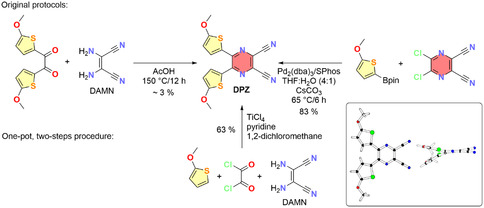 Figure 1
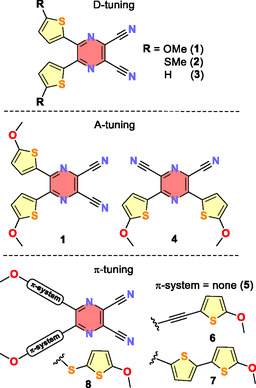 Figure 2
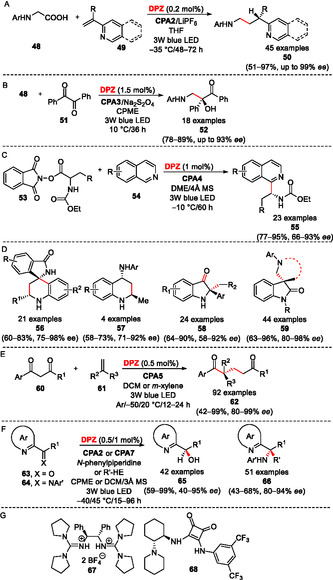 Figure 3
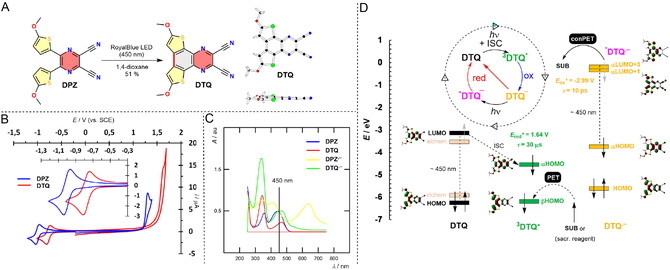 Figure 4
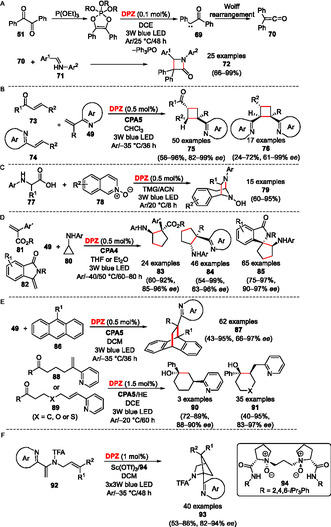 Figure 5
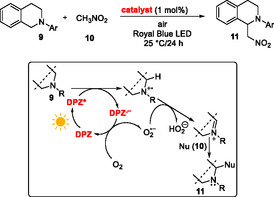 Figure 6
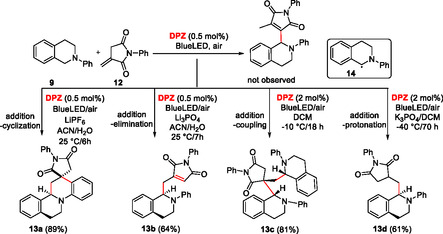 Figure 7
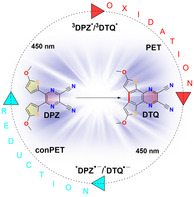 Figure 8
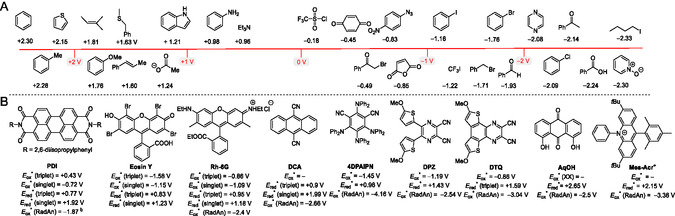 Figure 9
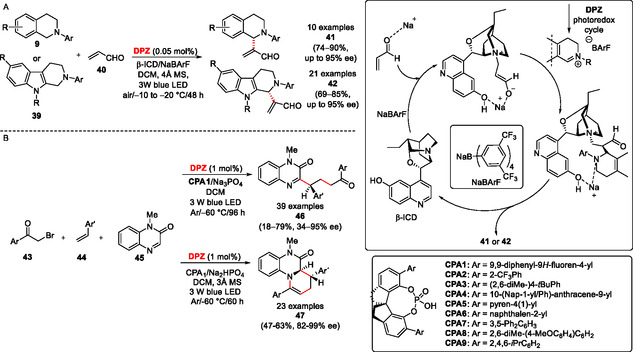 Figure 10
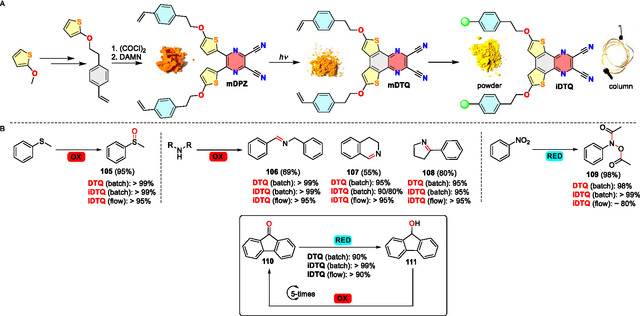 Figure 11
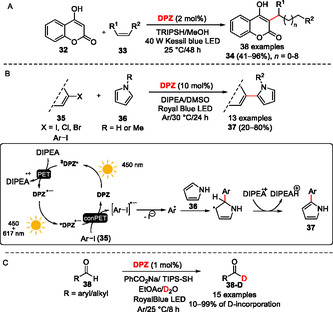 Figure 12
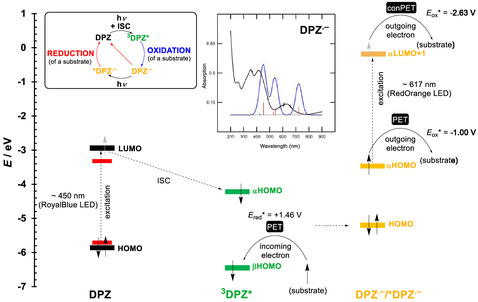 Figure 13
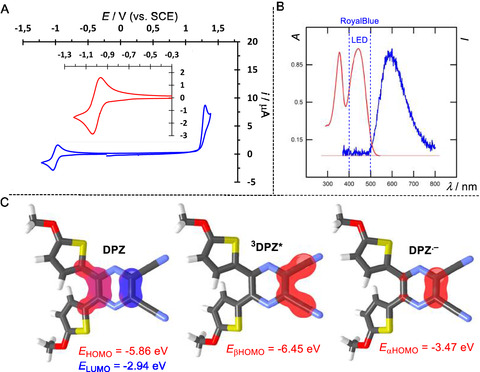 Figure 14
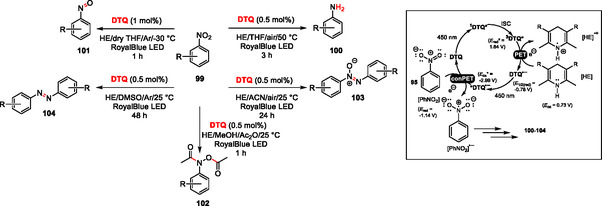 Figure 15
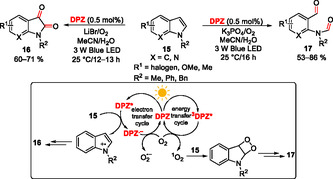 Figure 16
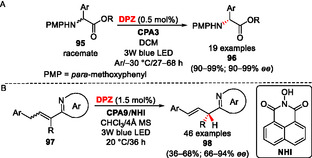 Figure 17
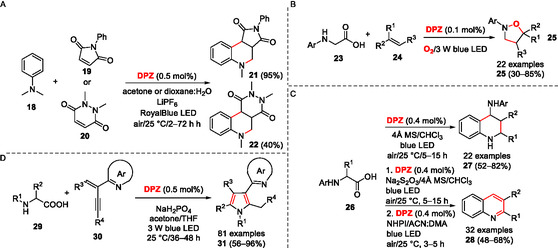 Figure 18
Peer Reviews
No public reviews on file for this paper yet. If you reviewed it on a platform where reviews are public (OpenReview, ICLR, NeurIPS, ICML), you can paste yours below so the community can read it here.
Videos
No videos yet. Explain this paper in a talk, walkthrough, or lecture? Add one.
Taxonomy
TopicsRadical Photochemical Reactions · Oxidative Organic Chemistry Reactions · Synthesis and Biological Evaluation