Safe Laparoscopic Pancreatectomy in a Patient with Rare Superior Mesenteric Artery-Derived Gastroduodenal Artery: A Case Report and Technical Considerations
Takayuki Miura, Shuichiro Hayashi, Shingo Yoshimachi, Hideaki Sato, Akiko Kusaka, Mitsuhiro Shimura, Shuichi Aoki, Masahiro Iseki, Daisuke Douchi, Shimpei Maeda, Masaharu Ishida, Masamichi Mizuma, Takashi Kamei, Michiaki Unno

TL;DR
A rare blood vessel variation was safely managed during laparoscopic surgery for a pancreatic tumor, emphasizing the need for detailed preoperative imaging.
Contribution
Demonstrates safe laparoscopic distal pancreatectomy in a patient with a rare SMA-derived GDA anomaly.
Findings
Laparoscopic distal pancreatectomy was successfully performed without vascular injury.
The preserved GDA remained patent postoperatively, confirmed by follow-up imaging.
A postoperative pancreatic fistula occurred but was managed conservatively.
Abstract
Although several studies have highlighted the importance of recognizing gastroduodenal artery (GDA) anomalies during pancreaticoduodenectomy, their relevance during distal pancreatectomy has not been explored. Herein, we describe the safe performance of laparoscopic distal pancreatectomy in a patient with a rare vascular anomaly, specifically a GDA originating from the superior mesenteric artery (SMA). A 63-year-old woman presented with recurrent pancreatitis due to a cystic lesion in the pancreatic body. Imaging suggested a branch-duct intraductal papillary mucinous neoplasm with substantial ductal stenosis. Multidetector CT (MDCT) revealed a rare anatomical variant: the GDA, arising from the SMA and traversing along the inferior border of the pancreas. Laparoscopic distal pancreatectomy was performed after placing an endoscopic nasopancreatic drainage tube. The aberrant GDA was…
Genes, proteins, chemicals, diseases, species, mutations and cell lines named across the full text — each resolved to its canonical identifier and authoritative record.
Click any figure to enlarge with its caption.
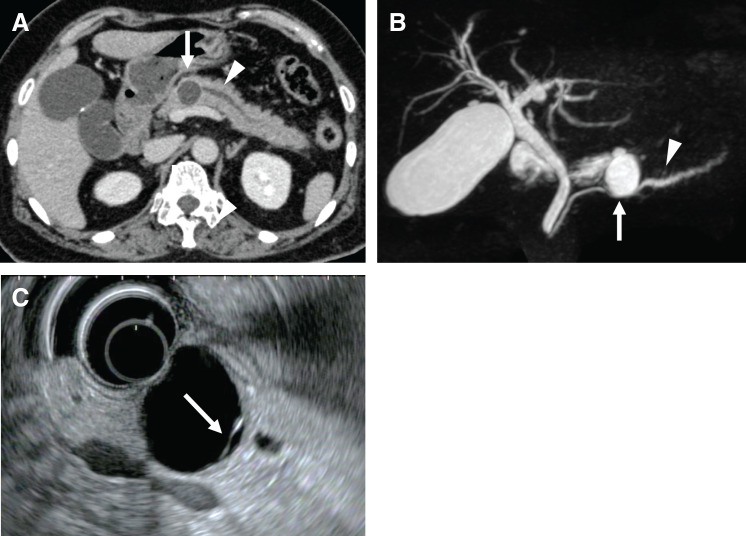 Figure 1
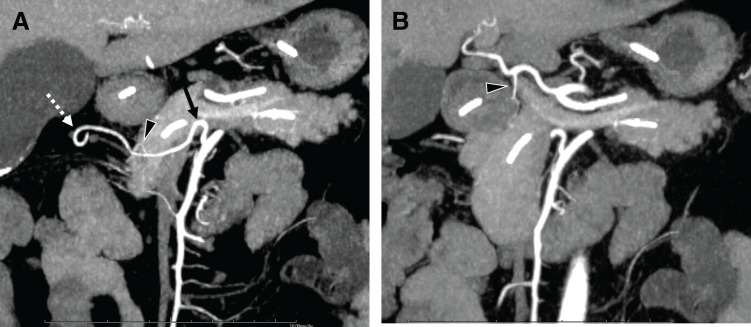 Figure 2
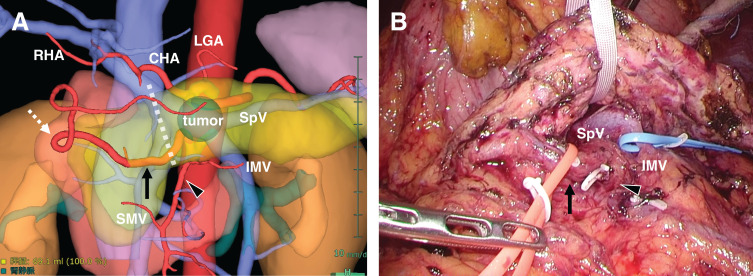 Figure 3
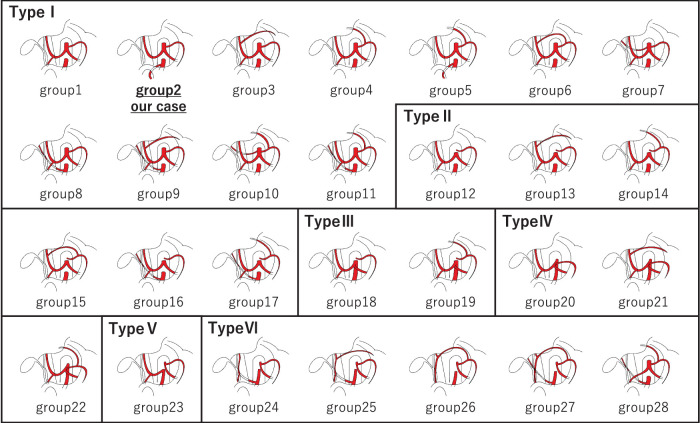 Figure 4
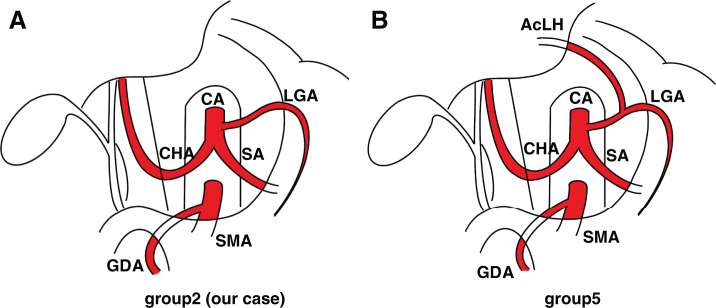 Figure 5
Peer Reviews
No public reviews on file for this paper yet. If you reviewed it on a platform where reviews are public (OpenReview, ICLR, NeurIPS, ICML), you can paste yours below so the community can read it here.
Videos
No videos yet. Explain this paper in a talk, walkthrough, or lecture? Add one.
Taxonomy
TopicsAbdominal vascular conditions and treatments · Esophageal and GI Pathology · Gallbladder and Bile Duct Disorders