Trichosporon Urinary Tract Infections: A Hidden Menace Revealed
Ahmad Elmimoghaddam, Mahmoud Vahidi, Reza Heidari, Mahdi Ghorbani, Peyman Aslani

TL;DR
This review highlights the risks and challenges of Trichosporon urinary tract infections, especially in vulnerable patients, and emphasizes the need for accurate diagnosis and effective treatment.
Contribution
The study identifies T. asahii G1 as the main cause of Trichosporon UTIs and evaluates drug resistance patterns and diagnostic methods.
Findings
T. asahii G1 is the most common Trichosporon species causing UTIs.
Prolonged hospitalization and immunosuppressive drug use are key risk factors.
Voriconazole shows the best in vitro activity against T. asahii isolates.
Abstract
Urinary tract infections (UTIs) caused by Trichosporon are a significant concern for hospitalized patients and those with weakened immune systems. This narrative review study aims to provide a comprehensive overview of UTIs caused by Trichosporon, including its frequency, risk factors, laboratory diagnostic aspects, drug resistance, and the importance of accurate identification in clinical settings. A search of international databases was conducted to identify relevant studies, and it was found that Trichosporon asahii, specifically the G1 type, is the predominant causative agent of UTIs among various Trichosporon species. Prolonged hospitalization and immunosuppressive drug use were identified as significant risk factors for this fungal infection. Conventional methods for laboratory identification are commonly used. Still, rapid and accurate tools such as Matrix-Assisted Laser…
Genes, proteins, chemicals, diseases, species, mutations and cell lines named across the full text — each resolved to its canonical identifier and authoritative record.
Click any figure to enlarge with its caption.
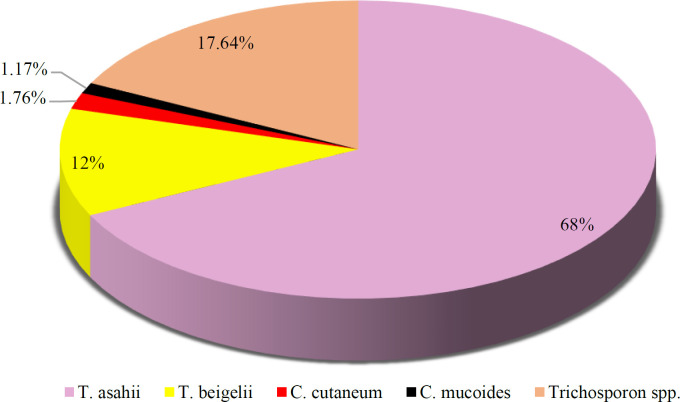 Figure 1
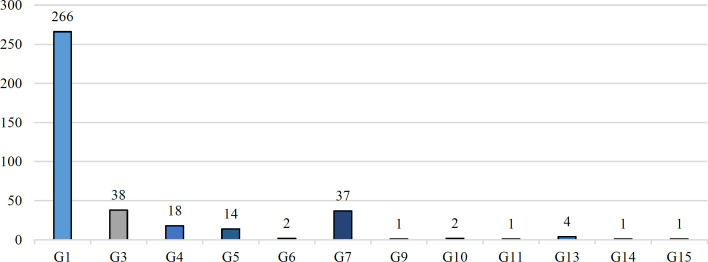 Figure 2
Peer Reviews
No public reviews on file for this paper yet. If you reviewed it on a platform where reviews are public (OpenReview, ICLR, NeurIPS, ICML), you can paste yours below so the community can read it here.
Videos
No videos yet. Explain this paper in a talk, walkthrough, or lecture? Add one.
Taxonomy
TopicsInfectious Disease Case Reports and Treatments