miR-100-5p and miR-203a-3p suppress esophageal squamous cell carcinoma progression by targeting FKBP5
Hiroto Tanaka, Suguru Maruyama, Katsutoshi Shoda, Yoshihiko Kawaguchi, Yudai Higuchi, Takaomi Ozawa, Takashi Nakayama, Ryo Saito, Wataru Izumo, Koichi Takiguchi, Kensuke Shiraishi, Shinji Furuya, Hidetake Amemiya, Hiromichi Kawaida, Daisuke Ichikawa

TL;DR
This study shows that miR-100-5p and miR-203a-3p reduce the spread of esophageal cancer by targeting FKBP5, a protein linked to worse outcomes.
Contribution
Identifies miR-100-5p and miR-203a-3p as tumor suppressors targeting FKBP5 in poorly differentiated esophageal cancer.
Findings
miR-100-5p and miR-203a-3p are downregulated in poorly differentiated ESCC and linked to worse survival.
Overexpression of these miRNAs reduces cancer cell migration and invasion.
FKBP5 is a common target, and its high expression correlates with poor patient outcomes.
Abstract
Poorly differentiated cancers, including esophageal squamous cell carcinoma (ESCC), exhibit higher malignant potential and worse prognoses than well-differentiated types. The present study aimed to identify microRNAs (miRNAs or miRs) involved in ESCC progression and their target mRNAs, focusing on tumor differentiation. miRNA candidates were selected using a miRNA array-based approach and GEO datasets, comparing expression levels between poorly and non-poorly differentiated ESCC. Clinical samples (n=61) and cell lines were analyzed to determine the significance and function of the selected miRNAs and their target mRNA. miR-100-5p and miR-203a-3p were significantly downregulated in poorly differentiated ESCC, with lower expression strongly associated with poorer overall survival (OS) (miR-100-5p: P=0.02; miR-203a-3p: P=0.05) and relapse-free survival (RFS) (miR-100-5p: P=0.04;…
Genes, proteins, chemicals, diseases, species, mutations and cell lines named across the full text — each resolved to its canonical identifier and authoritative record.
Click any figure to enlarge with its caption.
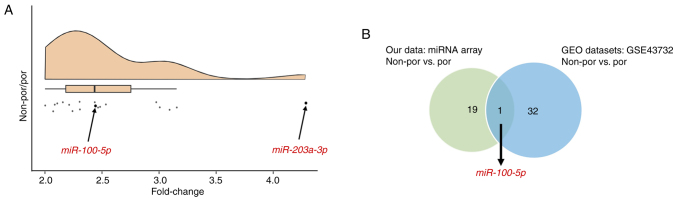 Figure 1
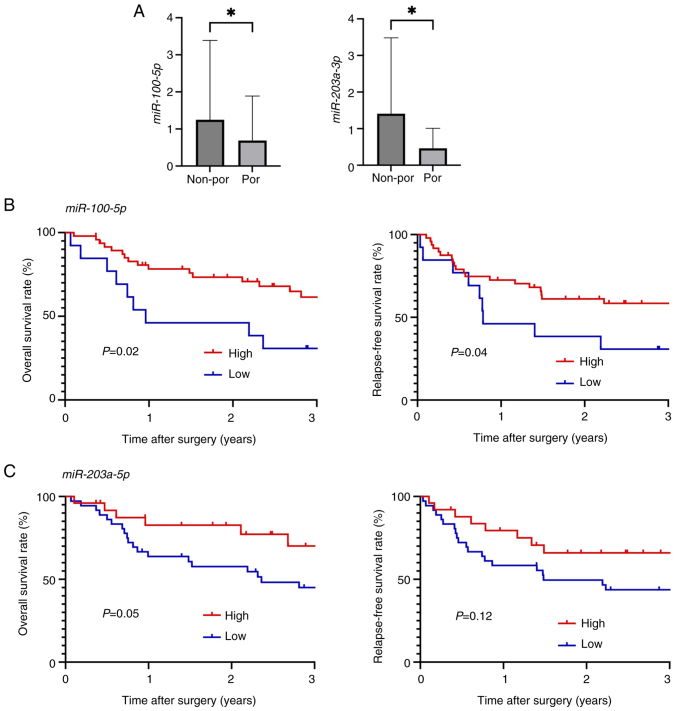 Figure 2
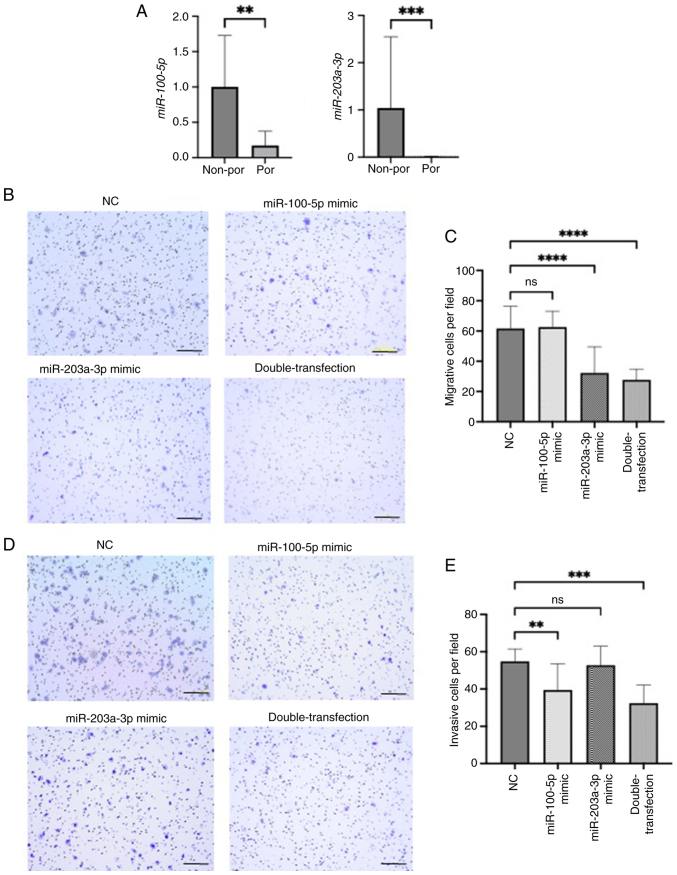 Figure 3
 Figure 4
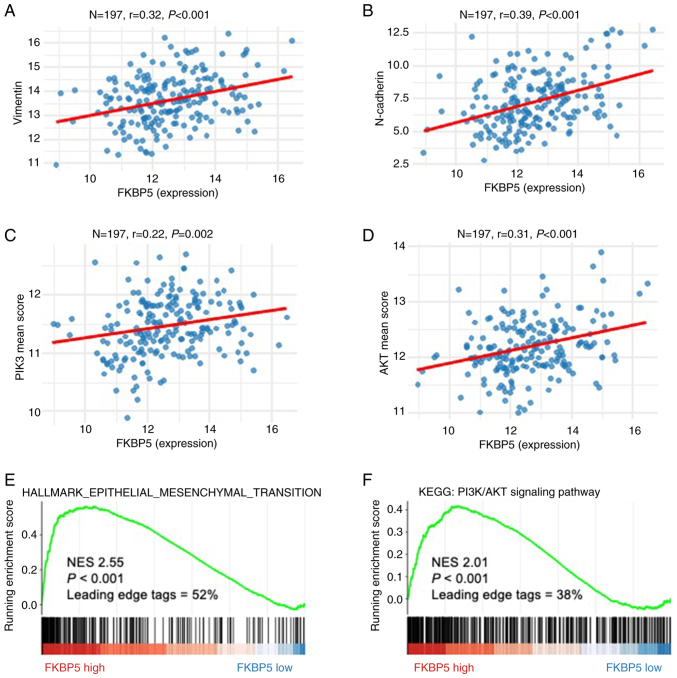 Figure 5
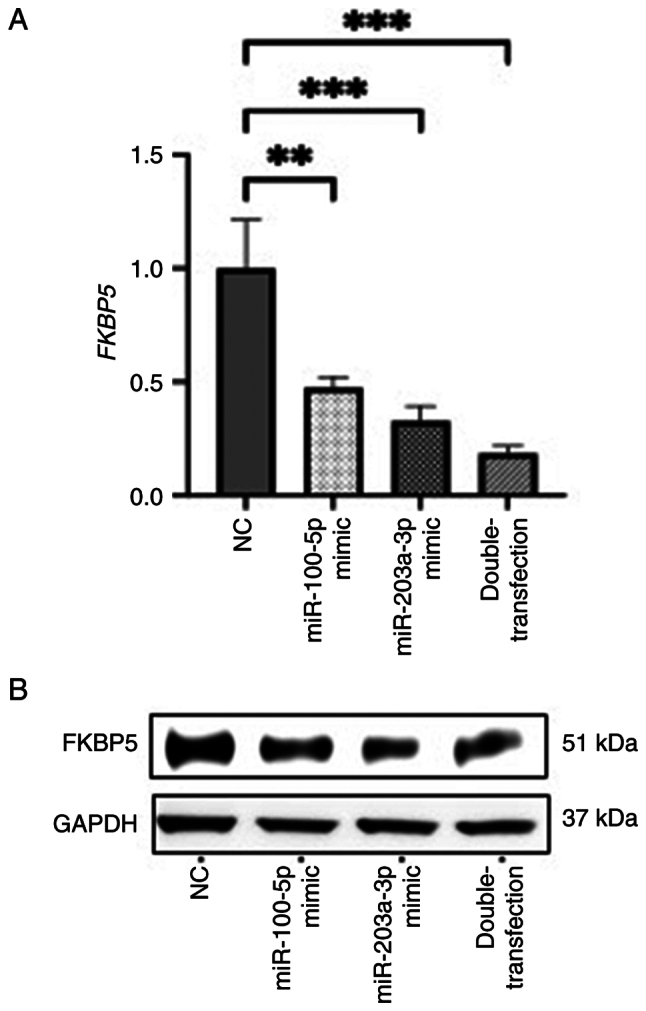 Figure 6
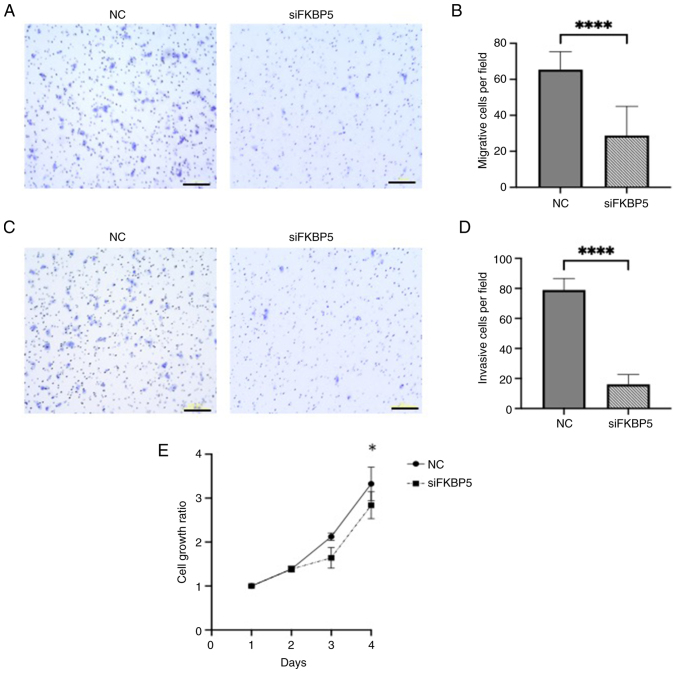 Figure 7
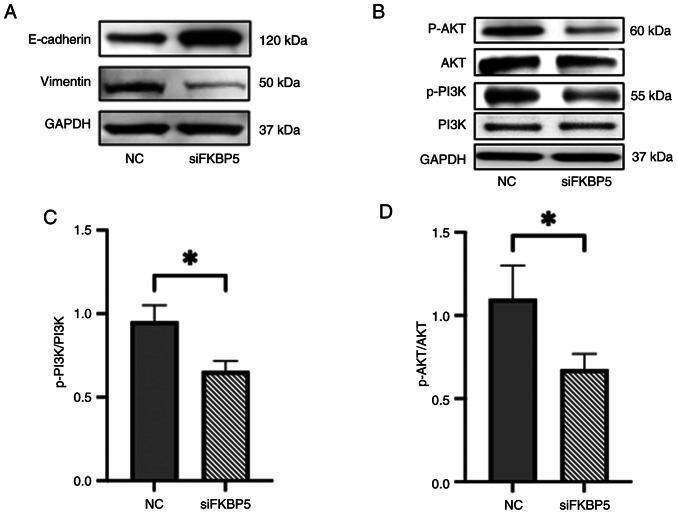 Figure 8
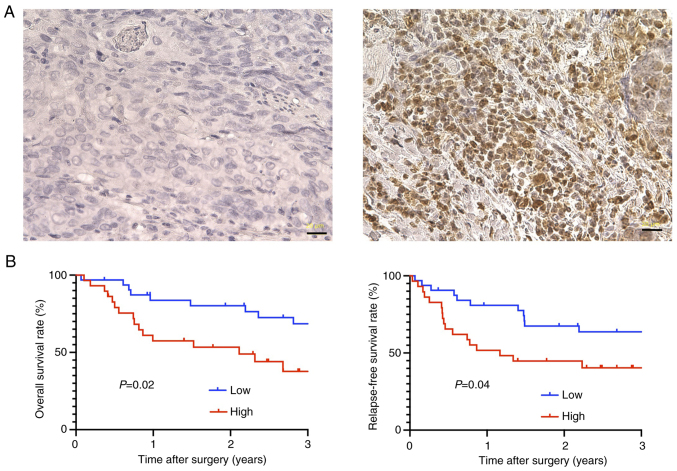 Figure 9
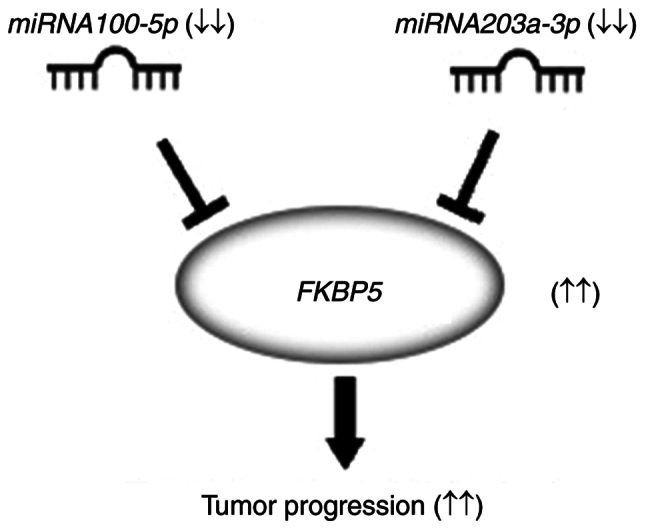 Figure 10
Peer Reviews
No public reviews on file for this paper yet. If you reviewed it on a platform where reviews are public (OpenReview, ICLR, NeurIPS, ICML), you can paste yours below so the community can read it here.
Videos
No videos yet. Explain this paper in a talk, walkthrough, or lecture? Add one.
Taxonomy
TopicsSignaling Pathways in Disease · Cardiac Structural Anomalies and Repair · Cancer-related gene regulation