Cost-effectiveness of HLX01 (Hanlikang®) vs. rituximab combined with CHOP in treatment-naive diffuse large B-Cell lymphoma: a partitioned survival model analysis
Chang Wang, Yuanqing Huang, Langling Rao, Chunling Yu, Yingxin Zhang, Yingtao Lin

TL;DR
This study compares the cost-effectiveness of Hanlikang and rituximab in treating diffuse large B-cell lymphoma, finding Hanlikang to be more cost-effective in non-transplant-eligible patients.
Contribution
The study introduces a partitioned survival model to assess the cost-effectiveness of a rituximab biosimilar in DLBCL treatment.
Findings
Hanlikang-CHOP provided 7.11 QALYs versus 6.50 QALYs for rituximab-CHOP over 10 years.
The ICER for non-transplant-eligible patients ranged from US$7,079 to US$17,095 per QALY.
CAR-T therapy significantly increased the ICER to US$356,793 per QALY.
Abstract
This study evaluates the cost-effectiveness of Hanlikang (HLX01), a biosimilar of rituximab, compared to rituximab (MabThera), both combined with the cyclophosphamide, doxorubicin, vincristine, and prednisone (CHOP) regimen, for treatment-naive diffuse large B-cell lymphoma (DLBCL) patients. With biosimilars becoming more prominent in oncology, understanding their economic impact is crucial for optimizing treatment strategies and healthcare resource allocation. A partitioned survival model was built using data from the HLX01-NHL03 trial, analyzing clinical outcomes in three health states—progression-free survival, progressive disease, and terminal state—over a 10-year time horizon. The incremental cost-effectiveness ratio (ICER) and quality-adjusted life years (QALYs) were compared across transplant-eligible and non-transplant-eligible patient subgroups. Sensitivity analyses were…
Genes, proteins, chemicals, diseases, species, mutations and cell lines named across the full text — each resolved to its canonical identifier and authoritative record.
Click any figure to enlarge with its caption.
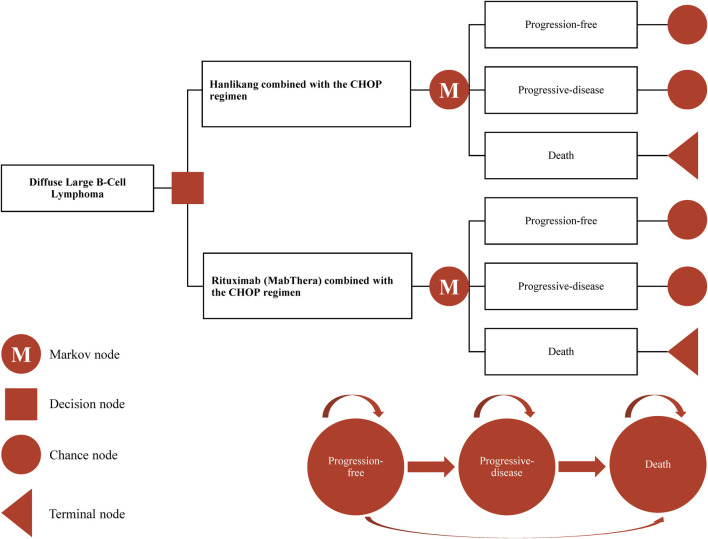 Figure 1
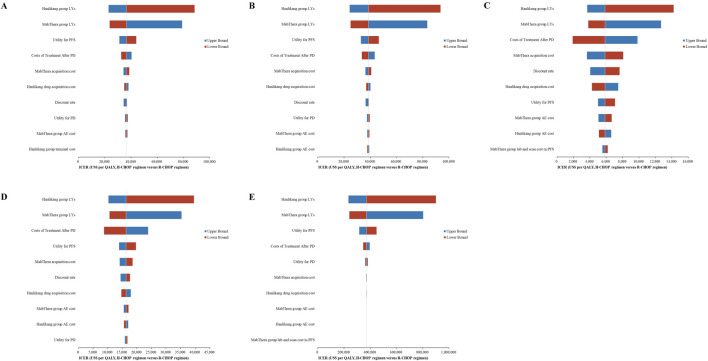 Figure 2
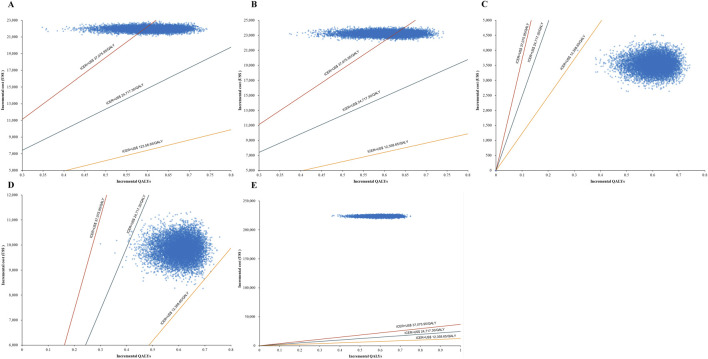 Figure 3
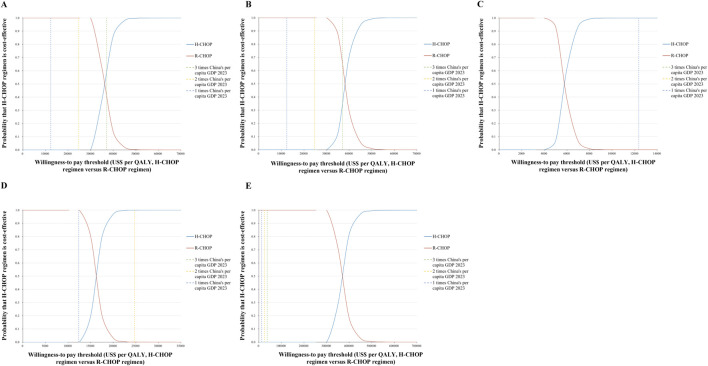 Figure 4
Peer Reviews
No public reviews on file for this paper yet. If you reviewed it on a platform where reviews are public (OpenReview, ICLR, NeurIPS, ICML), you can paste yours below so the community can read it here.
Videos
No videos yet. Explain this paper in a talk, walkthrough, or lecture? Add one.
Taxonomy
TopicsCAR-T cell therapy research · Lymphoma Diagnosis and Treatment · Biosimilars and Bioanalytical Methods