Genome‐wide association study identifies quantitative trait loci associated with resistance to Verticillium dahliae race 3 in tomato
Tika B. Adhikari, Bode A. Olukolu, Anju Pandey, Ashley N. Philbrick, Dilip R. Panthee, Reza Shekasteband, Randolph G. Gardner, Ralph A. Dean, Frank J. Louws

TL;DR
This study identifies genetic loci linked to resistance against a new strain of Verticillium wilt in tomatoes, offering tools to breed more resilient varieties.
Contribution
The discovery of two novel resistance loci on chromosome 5 and the demonstration of GWAS-assisted genomic prediction's improved accuracy for tomato breeding.
Findings
Four candidate genes associated with VW resistance were identified, including two novel loci on chromosome 5.
GWAS-assisted genomic prediction improved predictive ability for VW resistance by up to 16.4% compared to standard models.
The candidate genes are involved in plant defense and cell wall modification.
Abstract
Verticillium wilt (VW) disease, caused by Verticillium dahliae Kleb., is a major threat to tomato (Solanum lycopersicum L.) production. Identifying loci associated with VW resistance can accelerate breeding efforts and support sustainable disease management. Although the Ve1 and Ve2 genes confer resistance to V. dahliae races 1 and 2, the emergence of race 3 in the United States poses a new challenge. To investigate the genetic basis of quantitative resistance to the race 3 strain KJ14a, we evaluated 250 diverse tomato accessions. Disease severity and incidence were assessed weekly over 5 weeks, using chlorosis/necrosis percentage (CN_perc) and the number of symptomatic leaves (LC) as phenotypes. OmeSeq quantitative reduced‐representation sequencing yielded 42,941 high‐quality single nucleotide polymorphism and insertion‐deletion markers. Genome‐wide association study (GWAS) and local…
Genes, proteins, chemicals, diseases, species, mutations and cell lines named across the full text — each resolved to its canonical identifier and authoritative record.
Click any figure to enlarge with its caption.
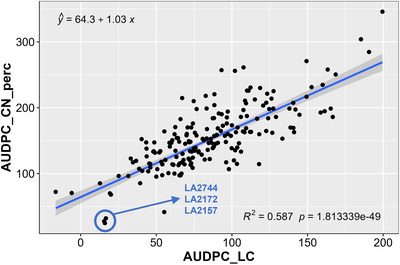 Figure 1
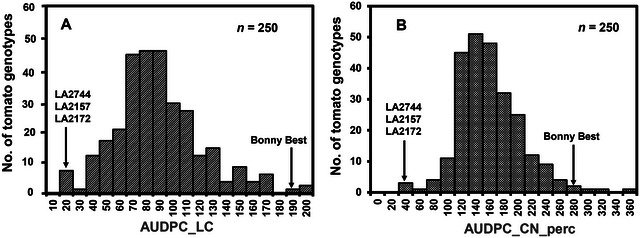 Figure 2
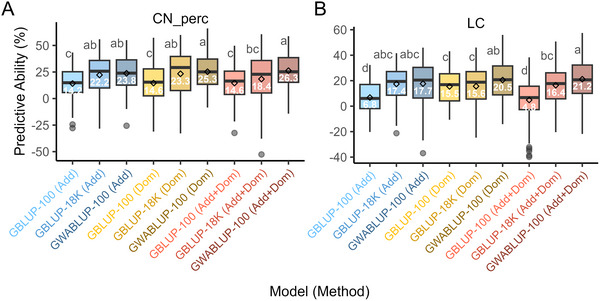 Figure 3
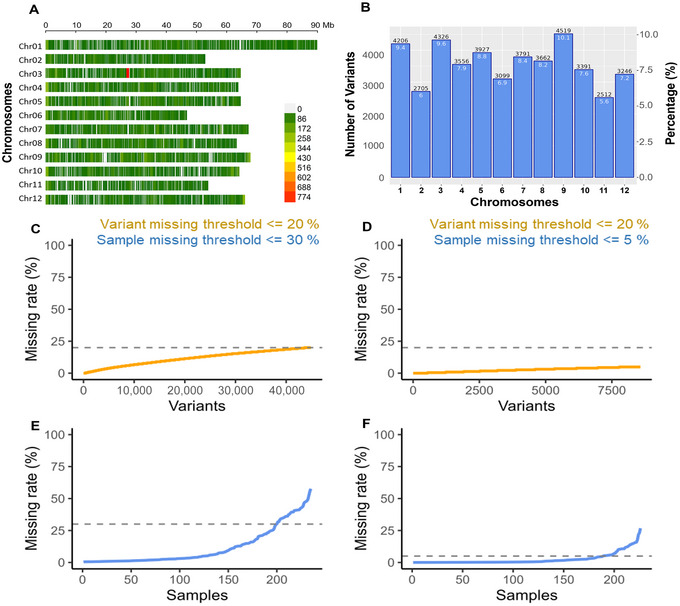 Figure 4
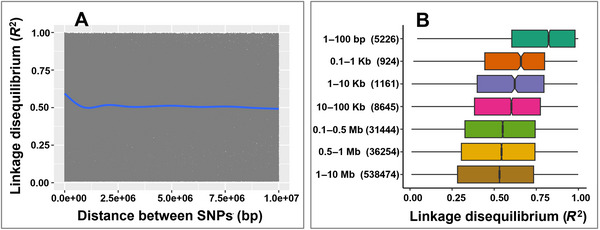 Figure 5
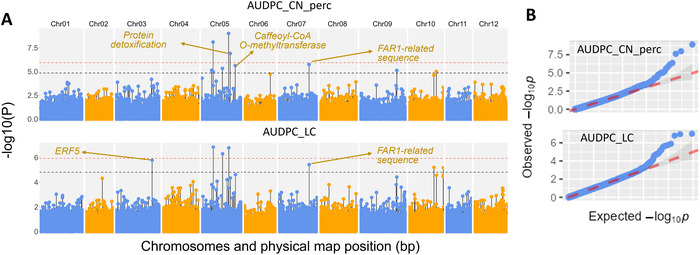 Figure 6
Peer Reviews
No public reviews on file for this paper yet. If you reviewed it on a platform where reviews are public (OpenReview, ICLR, NeurIPS, ICML), you can paste yours below so the community can read it here.
Videos
No videos yet. Explain this paper in a talk, walkthrough, or lecture? Add one.
Taxonomy
TopicsPlant Disease Resistance and Genetics · Plant Pathogenic Bacteria Studies · Plant pathogens and resistance mechanisms