Community awareness, perception, and perceived behaviors regarding the impacts of advanced technology on the environment among residents of the eastern region, Saudi Arabia: a cross-sectional study
Yousif M. Elmosaad, Ahmed M. Al Rajeh, Maria Blesilda B. Llaguno, Safia Belal, Bothaina H. Hassan, Mohammad Aatif, Ahmad Ibrahim, Munerah Almulhem, Humood Fahm Albugami, Abdel Moneim S. Elhassan, Eduardo L. Fabella, Heba M. Arakeep, Edwin C. Cancino, Edric D. Estrella

TL;DR
This study explores how residents in eastern Saudi Arabia perceive the environmental impacts of advanced technology and their willingness to adopt eco-friendly behaviors.
Contribution
The study provides insights into community perceptions and behaviors related to advanced technology's environmental impact in eastern Saudi Arabia.
Findings
More than half of participants showed good awareness and positive perceptions, especially among males, younger people, and urban residents.
Younger, highly educated individuals with good awareness were more likely to have positive perceptions of advanced technology's environmental impact.
Participants with positive perceptions were more likely to donate unused equipment and use technology alternatives.
Abstract
Technology is a major and indispensable part of everyone’s life, but the negative utilization of advanced technology has caused numerous global environmental problems, such as declining biodiversity, climate change, ozone depletion, overpopulation, and hazardous waste. The current study primarily aims to assess environmental awareness perceptions and perceived behaviors held by the community toward the Impacts of Advanced Technology on the Environment. An analytical cross-sectional study design was conducted among 310 residents of the three administrative areas of Al-Ahsa (Al-Hofuf, Al-Mubaraz, and Al-Gourah) in eastern Saudi Arabia from January to February 2024 with a response rate of 80.7%. A researcher-developed questionnaire consisting of four sections was utilized with a Cronbach’s alpha test result of (0.81). The data was analyzed using SPSS version 24, which included descriptive…
Genes, proteins, chemicals, diseases, species, mutations and cell lines named across the full text — each resolved to its canonical identifier and authoritative record.
Click any figure to enlarge with its caption.
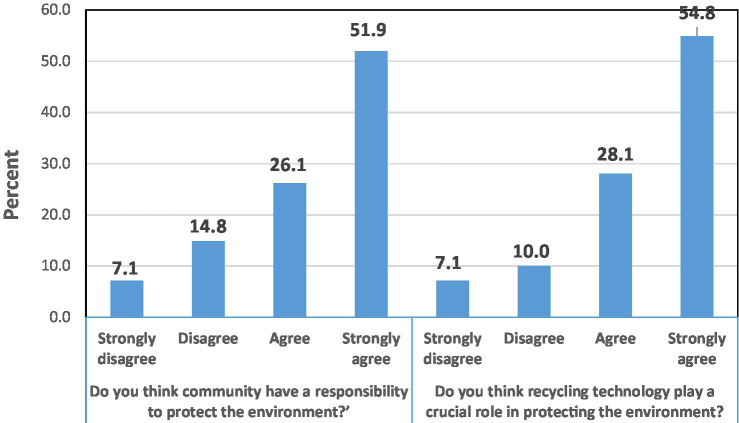 Figure 1
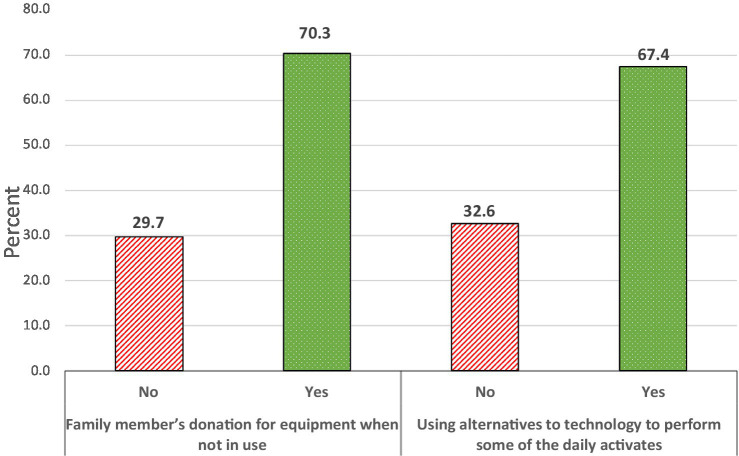 Figure 2
Peer Reviews
No public reviews on file for this paper yet. If you reviewed it on a platform where reviews are public (OpenReview, ICLR, NeurIPS, ICML), you can paste yours below so the community can read it here.
Videos
No videos yet. Explain this paper in a talk, walkthrough, or lecture? Add one.
Taxonomy
TopicsEnvironmental Education and Sustainability · Air Quality and Health Impacts · Environmental Sustainability in Business