Host S100A6 inhibits ZIKV replication by degrading NS3 through lysosomal pathway
Jiao Peng, WeiHao Zou, Lijuan Zhou, Runchun Liu, Hong-Juan Peng

TL;DR
The study shows that the host protein S100A6 inhibits Zika virus replication by degrading a viral protein through the lysosomal pathway.
Contribution
The novel finding is that S100A6 specifically targets ZIKV NS3 for lysosomal degradation, inhibiting viral replication.
Findings
S100A6 overexpression significantly inhibits ZIKV replication without affecting viral entry.
S100A6 binds to ZIKV NS3 and induces its degradation via the lysosomal pathway.
S100A6 knockdown increases ZIKV replication, highlighting its anti-viral role.
Abstract
Zika virus (ZIKV) is a mosquito-borne arbovirus. Maternal infection may cause severe complications such as neonatal microcephaly and neurological defects. To date, there is no clinically approved vaccine or specific drug against ZIKV infection. The host calcium-binding protein, S100A6, is a member of S100 protein family, regulates various cellular processes, and has been recognized as a host-dependent factor for Flavivirus infection. S100A6 expression in host cells after ZIKV infection was detected by western blotting (WB). The effects of host S100A6 on ZIKV replication as indicated by the RNA and protein levels of nonstructural protein 3 (NS3) were detected by qRT-PCR, plaque assay, immunofluorescence assay (IFA), and WB respectively. The interaction and co-localization of S100A6 with NS3 were examined through co-immunoprecipitation (Co-IP) and IFA. Proteasome inhibitor and lysosomal…
Genes, proteins, chemicals, diseases, species, mutations and cell lines named across the full text — each resolved to its canonical identifier and authoritative record.
Click any figure to enlarge with its caption.
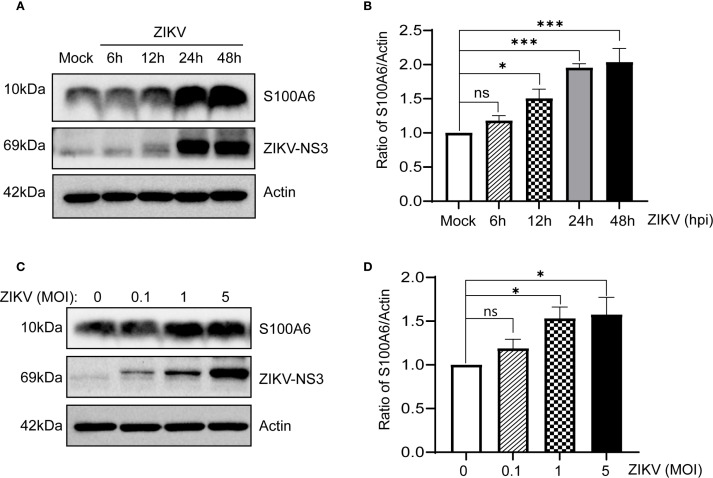 Figure 1
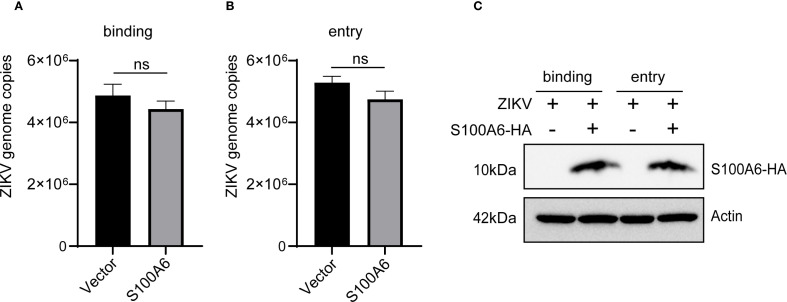 Figure 2
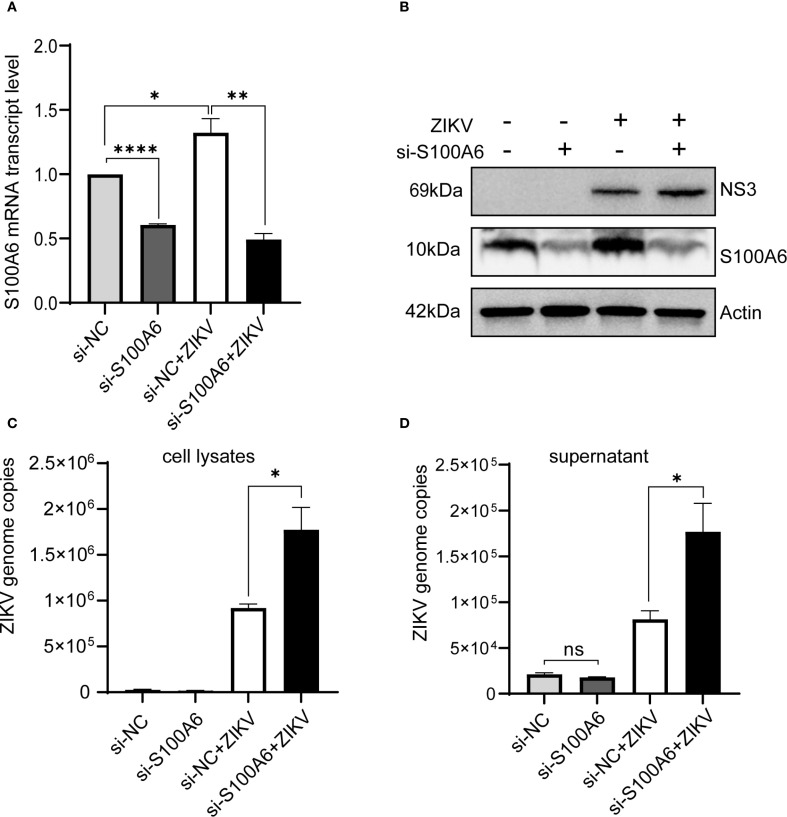 Figure 3
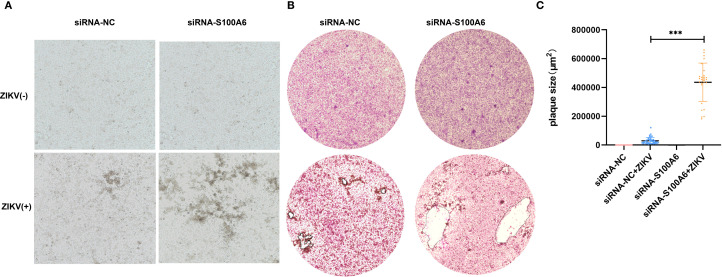 Figure 4
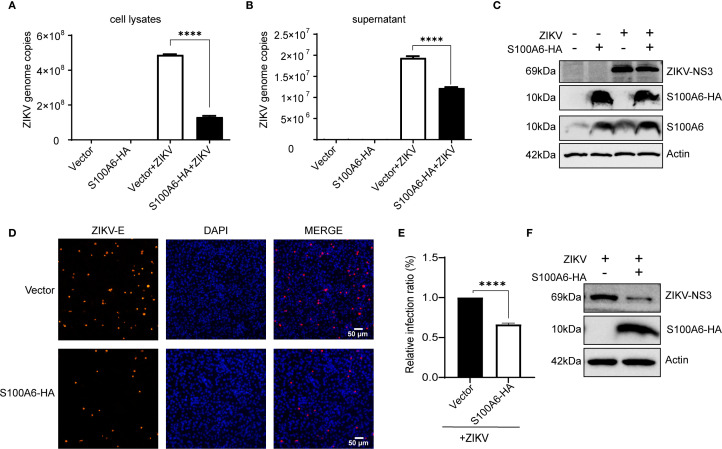 Figure 5
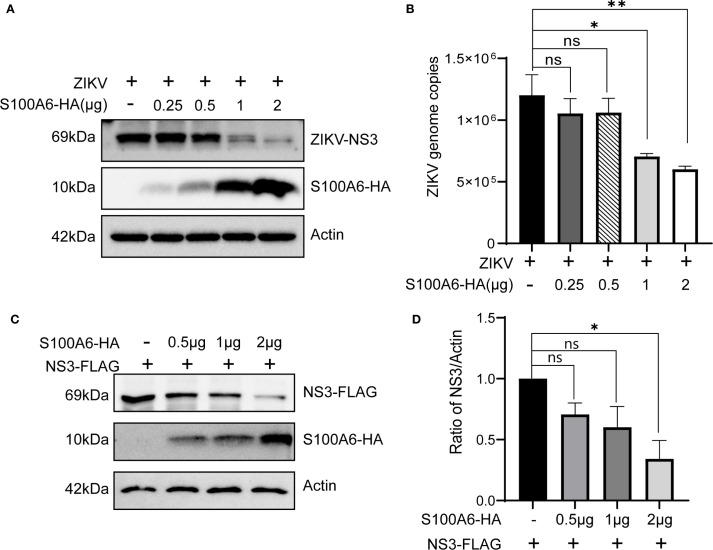 Figure 6
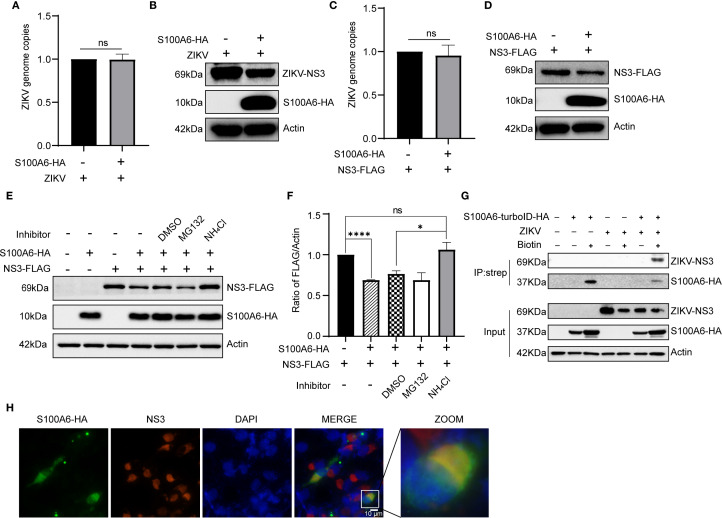 Figure 7
Peer Reviews
No public reviews on file for this paper yet. If you reviewed it on a platform where reviews are public (OpenReview, ICLR, NeurIPS, ICML), you can paste yours below so the community can read it here.
Videos
No videos yet. Explain this paper in a talk, walkthrough, or lecture? Add one.
Taxonomy
TopicsMosquito-borne diseases and control · S100 Proteins and Annexins · Venomous Animal Envenomation and Studies