A SARS-CoV-2 variant‑adjusted threshold of protection model for monoclonal antibody pre-exposure prophylaxis against COVID-19
Rhiannon Edge, Sam Matthews, Bahar Ahani, Anastasia A. Aksyuk, Lindsay Clegg, John L. Perez, Mark T. Esser, Lee-Jah Chang, Ian Hirsch, Tonya Villafana, John Pura, Oleg Stepanov, Katie Streicher, Tom White, Taylor S. Cohen, Dean Follmann, Peter B. Gilbert, Seth Seegobin

TL;DR
This paper introduces a model to predict the effectiveness of monoclonal antibodies against SARS-CoV-2 variants by adjusting for viral changes, using data from clinical trials.
Contribution
A novel variant-adjusted threshold of protection model for monoclonal antibody efficacy in pre-exposure prophylaxis against SARS-CoV-2.
Findings
The ToP model accurately predicted variant-specific efficacies with high concordance in external validation.
The model integrates neutralizing antibody titers against multiple SARS-CoV-2 variants into a single framework.
It can serve as a surrogate endpoint in immunobridging studies for faster regulatory approval of mAbs.
Abstract
Clinical development of monoclonal antibodies (mAbs) against severe acute respiratory syndrome coronavirus 2 (SARS-CoV-2) is challenging due to rapid changes in the variant landscape. This study identified a threshold model for neutralising antibody (nAb) titres associated with clinically relevant protection against symptomatic COVID-19 for vulnerable populations. Using efficacy data from the phase 3 PROVENT pre-exposure prophylaxis trial of tixagevimab–cilgavimab (NCT04625725), individual nAb ID50 titres were predicted by dividing serum mAb concentration by prevalence-adjusted tixagevimab–cilgavimab potency (from in vitro IC50 values combined with viral surveillance data) and related to efficacy with a Cox model. The Threshold of Protection (ToP) Cox model was externally validated using data from the phase 3 SUPERNOVA trial (NCT05648110), which assessed sipavibart efficacy against…
Genes, proteins, chemicals, diseases, species, mutations and cell lines named across the full text — each resolved to its canonical identifier and authoritative record.
Click any figure to enlarge with its caption.
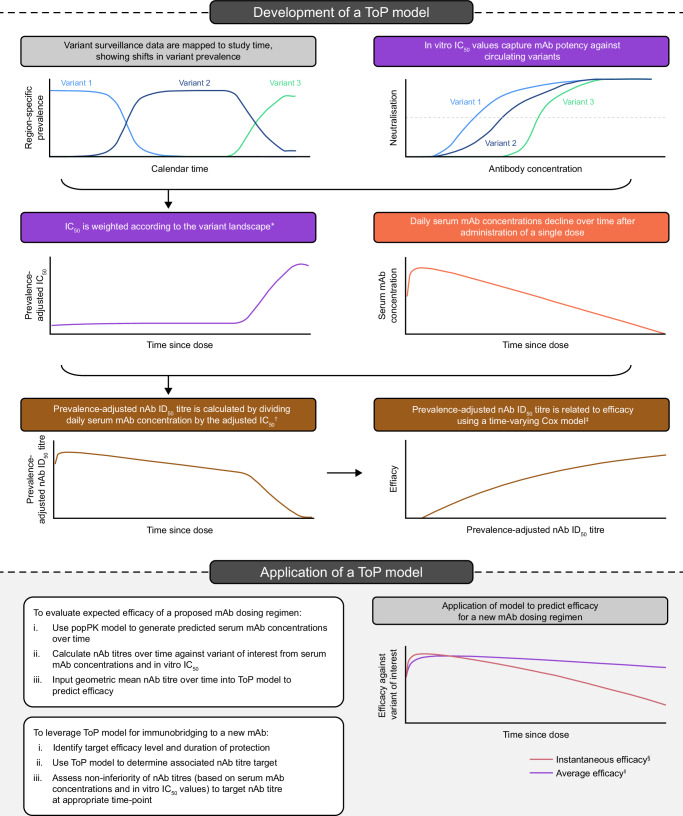 Figure 1
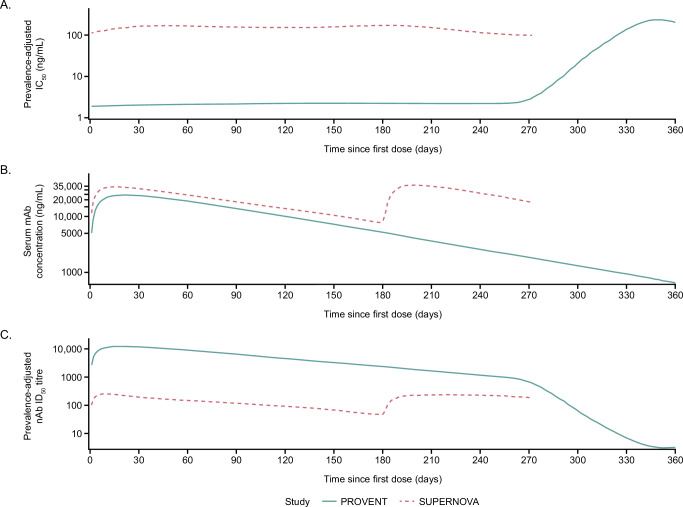 Figure 2
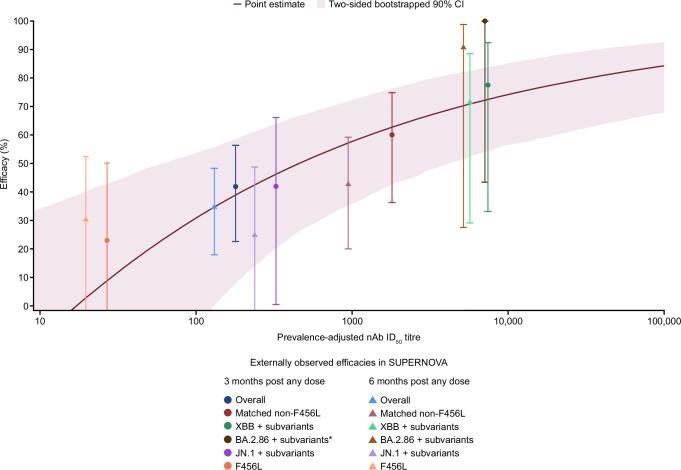 Figure 3
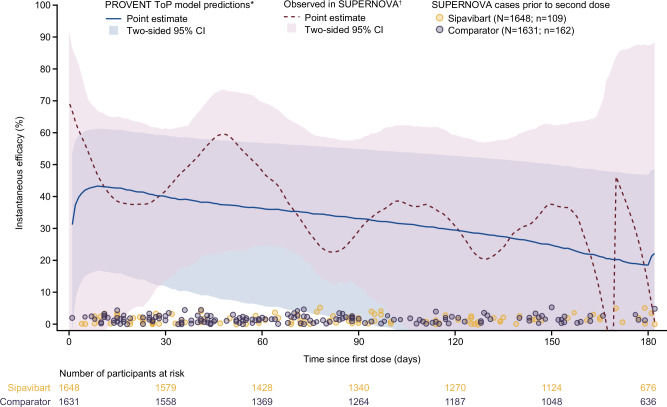 Figure 4
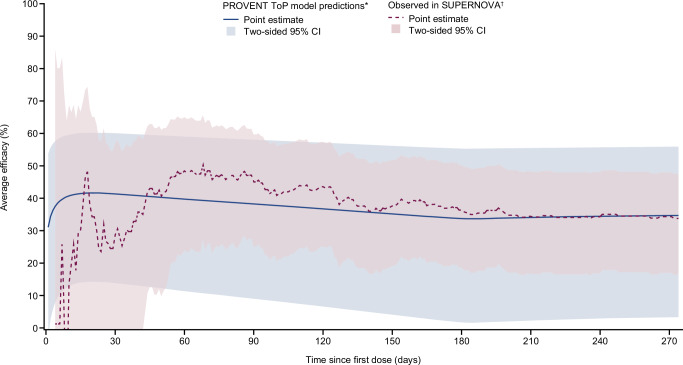 Figure 5
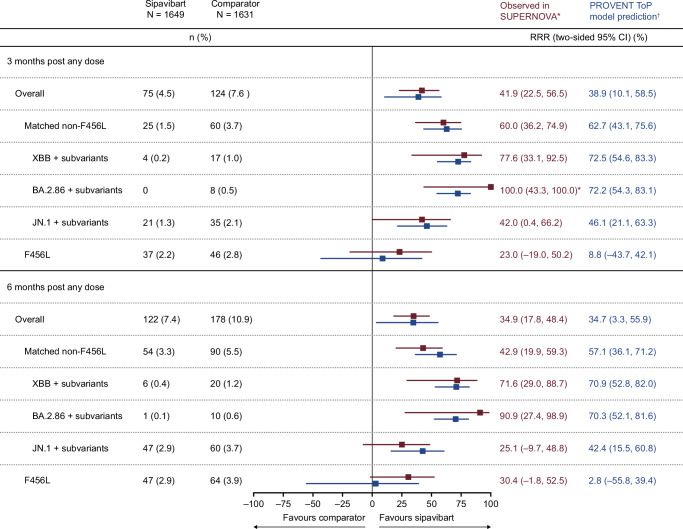 Figure 6
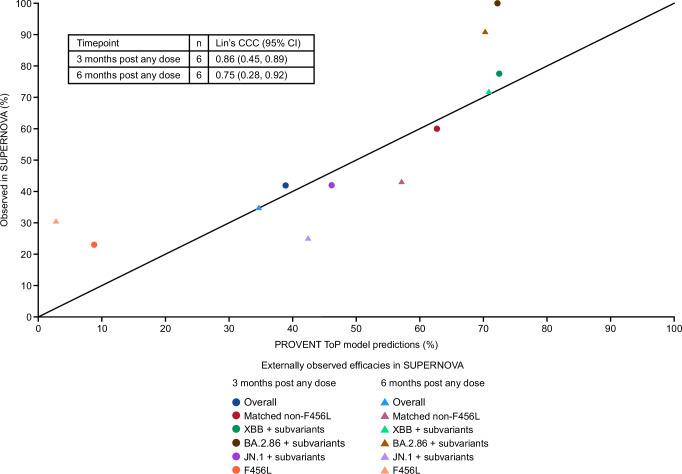 Figure 7
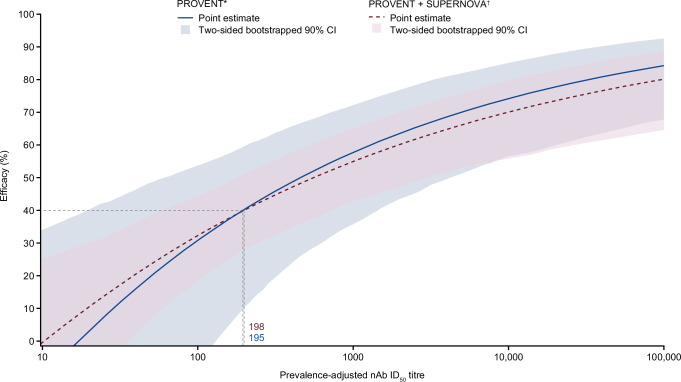 Figure 8
Peer Reviews
No public reviews on file for this paper yet. If you reviewed it on a platform where reviews are public (OpenReview, ICLR, NeurIPS, ICML), you can paste yours below so the community can read it here.
Videos
No videos yet. Explain this paper in a talk, walkthrough, or lecture? Add one.
Taxonomy
TopicsSARS-CoV-2 and COVID-19 Research · COVID-19 Clinical Research Studies · SARS-CoV-2 detection and testing