Machine Learning Quantifies Fine‐Scale Hairiness in Shore Flies (Diptera: Ephydridae)
Shawn M. Abraham, Marcos Rodriguez, Victoria Hristova, Felix A. H. Sperling

TL;DR
This paper introduces a machine learning method to efficiently measure tiny hairs on shore flies, helping compare species traits related to water resistance.
Contribution
A novel machine learning workflow using Ilastik and Fiji for quantifying microtrichia in small insects.
Findings
The workflow produces results consistent with manual counts of microtrichia in shore flies.
Paracoenia species from hot springs have more but shorter hairs compared to Parydra species.
Percent coverage of microtrichia per unit area did not differentiate species except at the anterior thoracic spiracle.
Abstract
Morphological analysis of fine structures on small insects is often labor intensive, scale‐limited, and biased by sampling or organismal life history. We used a pixel classification machine‐learning workflow with the open source programs Ilastik and Fiji to identify and quantify microtrichia in semiaquatic shore flies (Ephydridae). This methodology semi‐automates quantification of hairs by counting objects or groups of class‐assigned pixels and determining their percent coverage at a given magnification using scanning electron micrographs. Our results are consistent with manual counts, with Paracoenia species that tolerate hot springs having more hairs than less aquatic Parydra. However, Paracoenia hairs tend to be shorter, and the percent coverage of microtrichia per unit surface area did not differentiate species except for the anterior thoracic spiracle. Our workflow is adaptable for…
Genes, proteins, chemicals, diseases, species, mutations and cell lines named across the full text — each resolved to its canonical identifier and authoritative record.
Click any figure to enlarge with its caption.
 Figure 1
 Figure 2
 Figure 3
 Figure 4
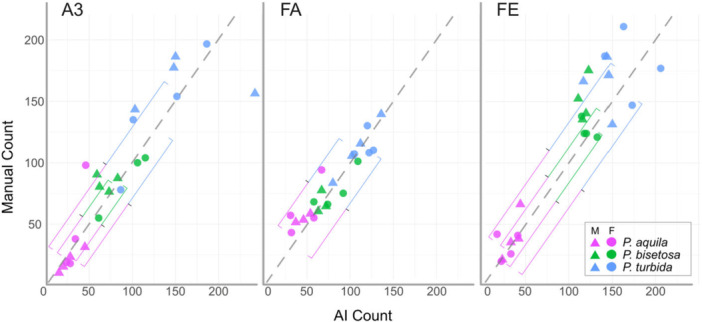 Figure 5
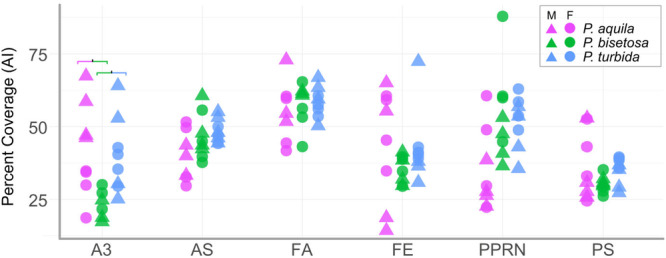 Figure 6
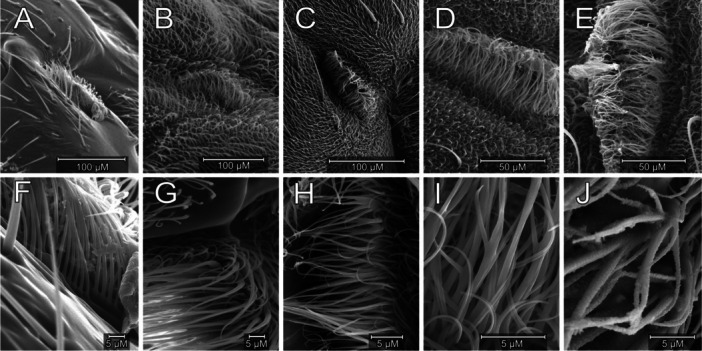 Figure 7
Peer Reviews
No public reviews on file for this paper yet. If you reviewed it on a platform where reviews are public (OpenReview, ICLR, NeurIPS, ICML), you can paste yours below so the community can read it here.
Videos
No videos yet. Explain this paper in a talk, walkthrough, or lecture? Add one.
Taxonomy
TopicsDiptera species taxonomy and behavior · Forensic Entomology and Diptera Studies · Fossil Insects in Amber