Ataxia-Telangiectasia in Resource-Limited Settings: A Diagnostic Challenge
Ebenezer Adeyemi, Racheal Idowu, Adewale Adefolaji, Folasade Adeyemi, Paul Olowoyo

TL;DR
This paper discusses the diagnostic challenges of ataxia-telangiectasia in a child with symptoms but no access to genetic testing.
Contribution
The paper presents a clinical case highlighting the difficulties in diagnosing A-T without genetic confirmation in resource-limited settings.
Findings
The patient exhibited symptoms consistent with ataxia-telangiectasia, including gait issues and telangiectasias.
Elevated alpha-fetoprotein and cerebellar atrophy were observed, but ATM gene testing was unavailable.
The case underscores the need for accessible genetic testing in diagnosing rare disorders like A-T.
Abstract
Ataxia-telangiectasia (A-T) is a rare autosomal recessive disorder characterized by cerebellar ataxia and oculocutaneous telangiectasias, with increased malignancy risk from radiation-induced DNA double-strand breaks. Its multisystem involvement makes diagnosis challenging, and confirmation requires identifying biallelic pathogenic variants in the ATM gene. We report an eight-year-old boy with unsteady gait and bilateral ocular telangiectasia. He had no recurrent infections, and immunoglobulin (Ig) levels were normal, except for low IgA. Although serum alpha-fetoprotein was elevated and MRI demonstrated cerebellar atrophy, findings suggestive of A-T, definitive genetic testing for ATM mutations was not available
Genes, proteins, chemicals, diseases, species, mutations and cell lines named across the full text — each resolved to its canonical identifier and authoritative record.
Click any figure to enlarge with its caption.
 Figure 1
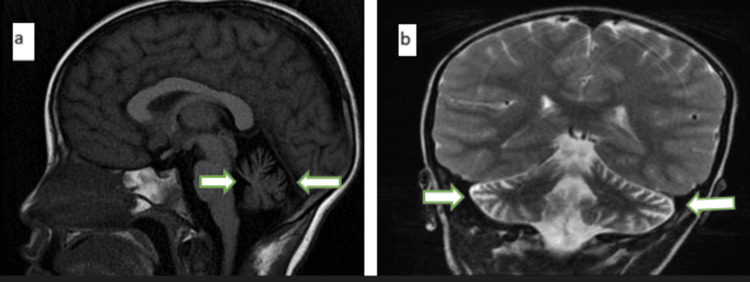 Figure 2
Peer Reviews
No public reviews on file for this paper yet. If you reviewed it on a platform where reviews are public (OpenReview, ICLR, NeurIPS, ICML), you can paste yours below so the community can read it here.
Videos
No videos yet. Explain this paper in a talk, walkthrough, or lecture? Add one.
Taxonomy
TopicsDNA Repair Mechanisms · Protist diversity and phylogeny · Carcinogens and Genotoxicity Assessment