Extruded Porous Protein–Lignocellulosic Blends as Fully Bio-Based Alternative to Single-Use Absorbent Plastics
Athanasios Latras, Pamela F. M. Pereira, Amparo Jiménez-Quero, Karin Odelius, Mercedes Jiménez-Rosado, Antonio J. Capezza

TL;DR
Researchers developed a fully bio-based, porous material from biomass waste that can absorb more saline solution than existing synthetic absorbents, offering a sustainable alternative to single-use plastics.
Contribution
A novel, fully bio-based absorbent material is created using extrusion of proteins and lignocellulosic waste, achieving record absorption performance.
Findings
Extruded materials with oat husk show 1.5 times higher saline absorption than the reference.
Delignified oat husk and wheat bran improve absorption by 2 times.
Adding 20% keratin fibers from food waste achieves 6.5 g/g absorbency, the highest reported for extruded protein-based materials.
Abstract
Sustainable technologies have enabled the production of degradable single-use plastics (SUPs) for various applications. However, environmentally friendly, porous disposable absorbents still lack the competitive functionality of synthetic options. In this work, we report the continuous extrusion of fully biopolymer-based porous absorbents derived from integrated proteins and lignocellulosic residues, all sourced from biomass waste. The results show that the saline absorption capacity of the extruded materials increases 1.5 times compared to the reference solely by including oat husk, a lignocellulosic byproduct from the food industry. The absorption was further improved 2 times by including a delignification step on the oat husk and wheat bran, demonstrating the importance of the biomass’s chemistry in increasing the material’s absorption. Here, the addition of 20 wt % of Keratin fibers…
Genes, proteins, chemicals, diseases, species, mutations and cell lines named across the full text — each resolved to its canonical identifier and authoritative record.
Click any figure to enlarge with its caption.
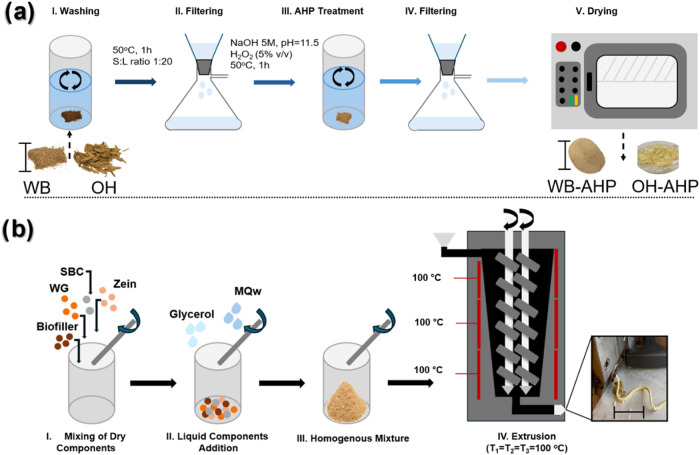 Figure 1
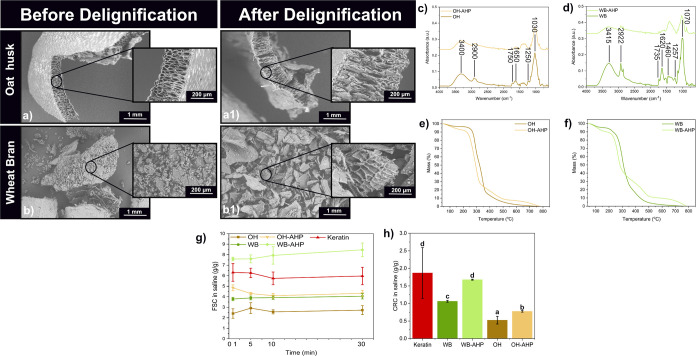 Figure 2
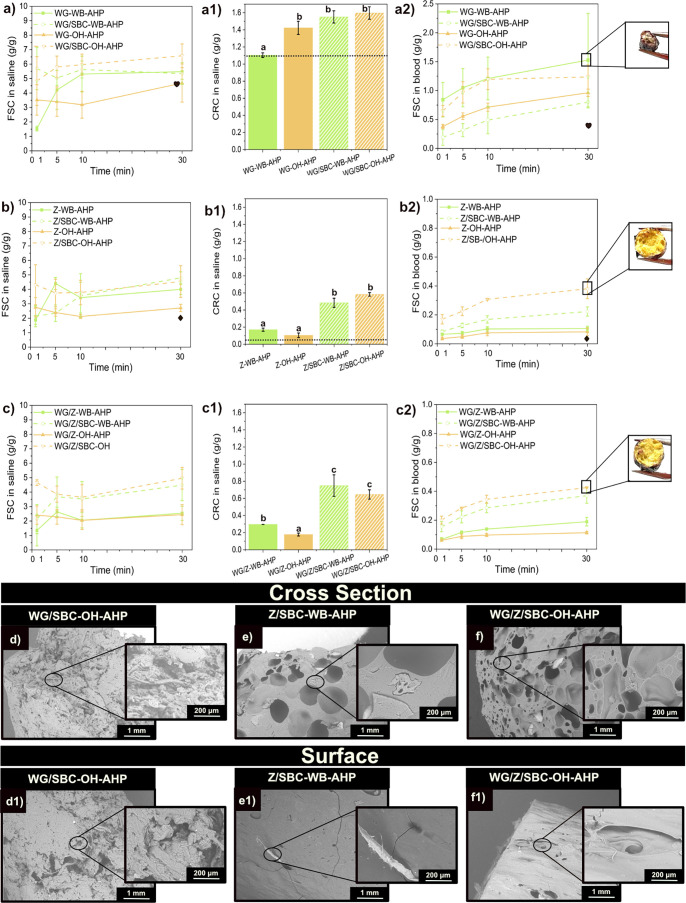 Figure 3
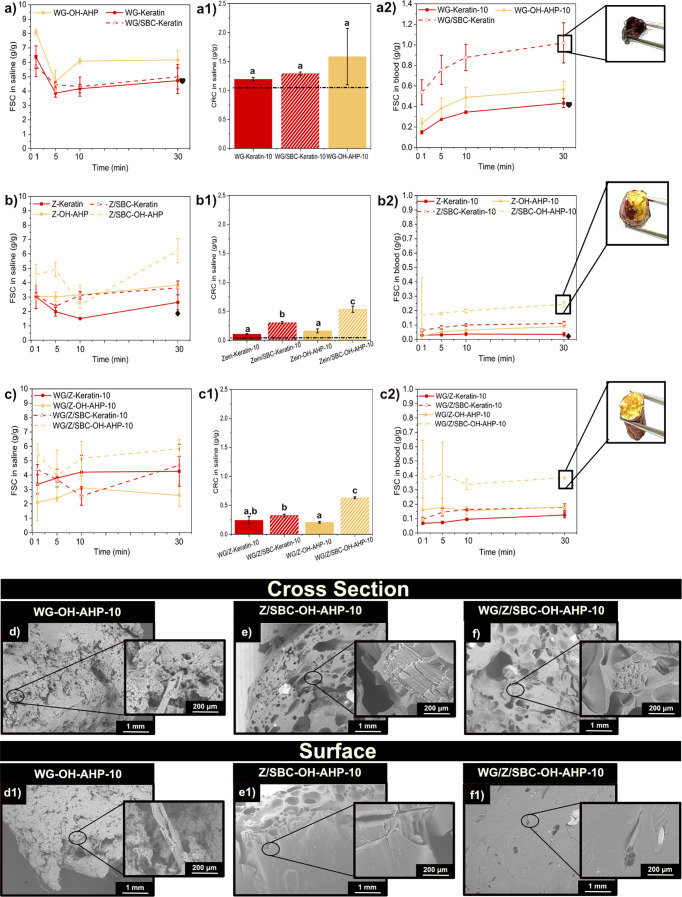 Figure 4
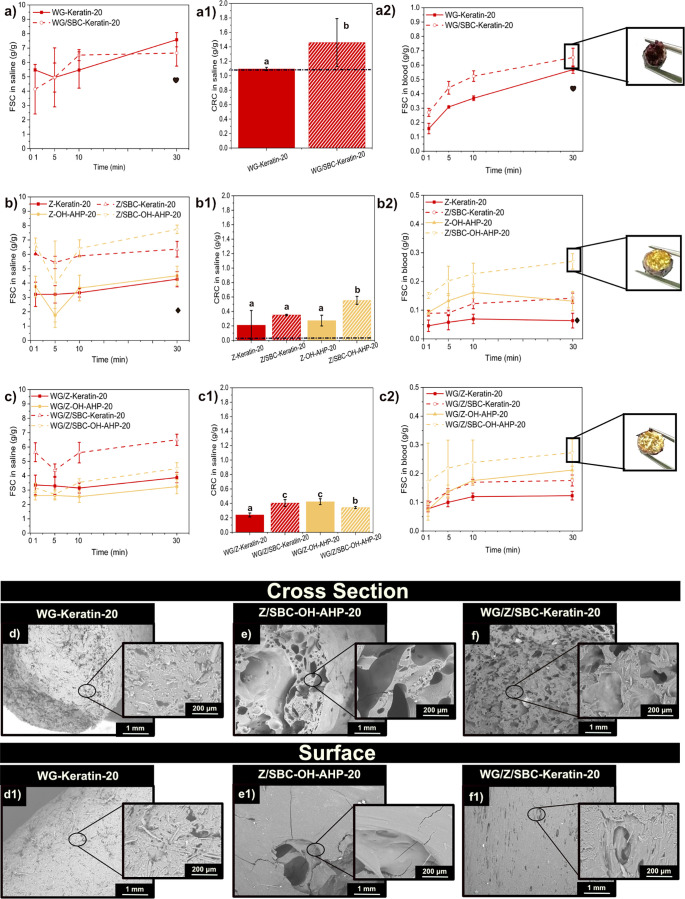 Figure 5
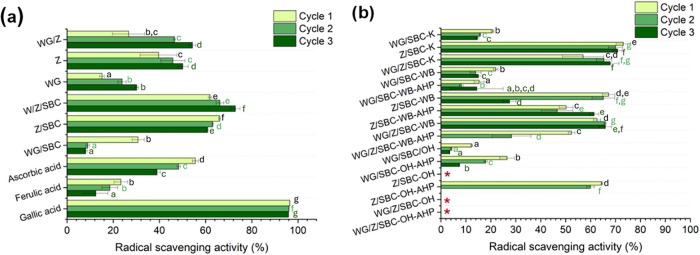 Figure 6
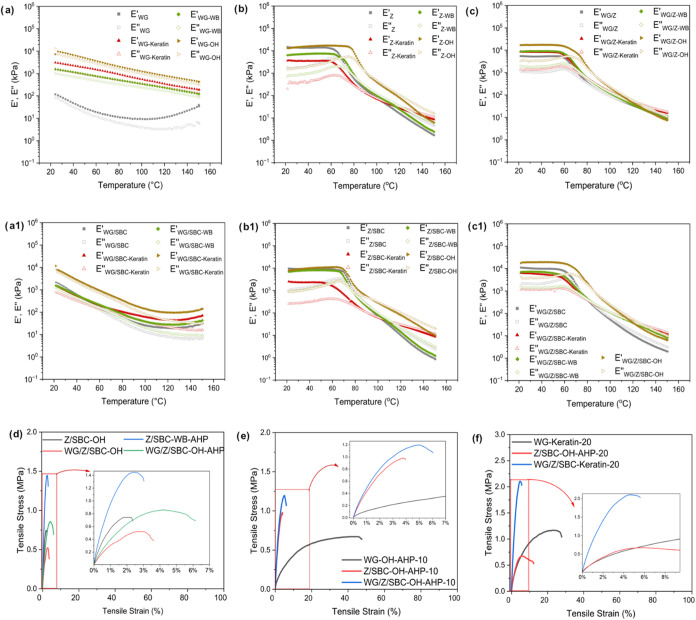 Figure 7
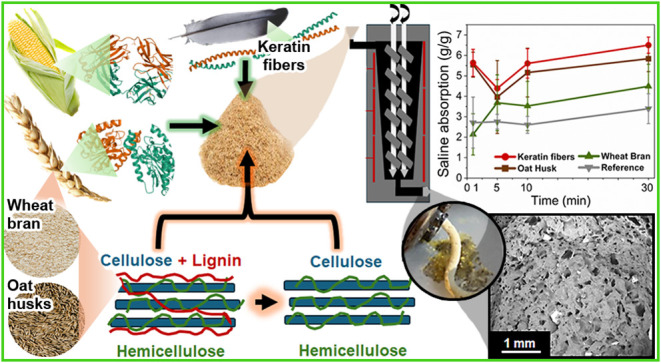 Figure 8
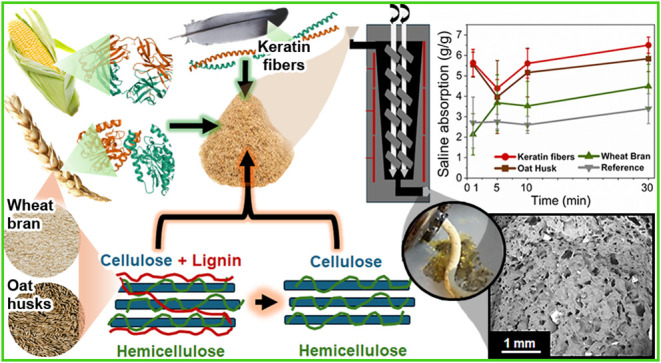 Figure 9
 Figure 10
 Figure 11
Peer Reviews
No public reviews on file for this paper yet. If you reviewed it on a platform where reviews are public (OpenReview, ICLR, NeurIPS, ICML), you can paste yours below so the community can read it here.
Videos
No videos yet. Explain this paper in a talk, walkthrough, or lecture? Add one.
Taxonomy
TopicsNatural Fiber Reinforced Composites · biodegradable polymer synthesis and properties · Additive Manufacturing and 3D Printing Technologies