Measuring religiosity: comparison of single-item measures with validated scales in a UK cohort study (ALSPAC)
Jimmy Morgan, Isaac Halstead, Jean Golding, Kate Northstone, Daniel Major-Smith, Telli Davoodi, Jimmy Morgan, Tom Clark, Jimmy Morgan

TL;DR
This study compares single-item and validated measures of religiosity in the ALSPAC cohort to understand how well they capture different aspects of religiosity.
Contribution
The paper evaluates the validity of single-item religiosity measures in ALSPAC and their alignment with theorised dimensions of religiosity.
Findings
Pre-validated religiosity measures did not always function as intended in ALSPAC.
Single-item measures grouped into belief-based and behaviour-based factors but did not align well with hypothesised dimensions.
Results were consistent across both parent and offspring generations in ALSPAC.
Abstract
Many studies use single-item variables to measure religiosity, such as religious belief, identity or service attendance. However, there are many different hypothesised dimensions of religiosity and it is often unclear how these single-item measures may map onto these theorised constructs. ALSPAC (Avon Longitudinal Study of Parents and Children) primarily relied on single-items to measure religiosity, but more recently has included validated questionnaires (DUREL [Duke University Religion Index] and I/EMSS [Intrinsic/Extrinsic Measurement: I/E-Revised and Single-Item Scales]). This paper aims to: i) confirm whether the validated measures work as intended in ALSPAC; and ii) understand which religiosity dimensions the single-item measures relate to. Twenty religiosity questions were asked to ALSPAC offspring and parents approximately 28 years after the offspring’s birth. We used three…
Genes, proteins, chemicals, diseases, species, mutations and cell lines named across the full text — each resolved to its canonical identifier and authoritative record.
Click any figure to enlarge with its caption.
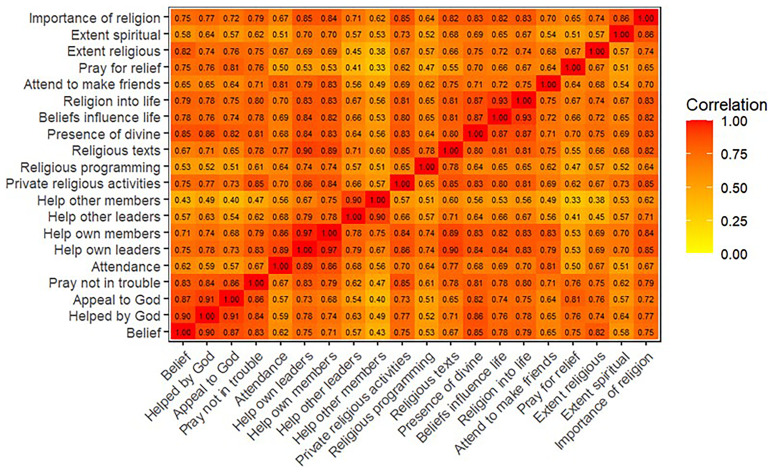 Figure 1
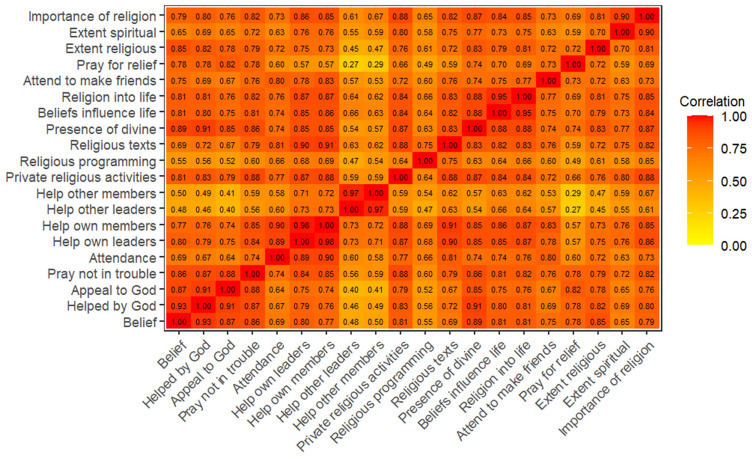 Figure 2
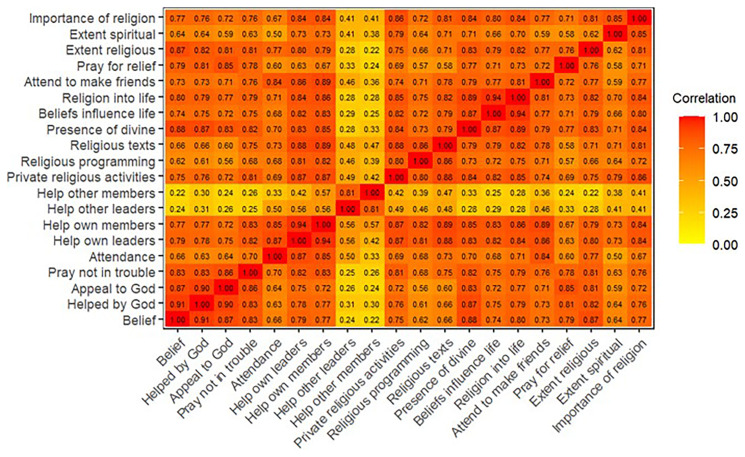 Figure 3
Peer Reviews
No public reviews on file for this paper yet. If you reviewed it on a platform where reviews are public (OpenReview, ICLR, NeurIPS, ICML), you can paste yours below so the community can read it here.
Videos
No videos yet. Explain this paper in a talk, walkthrough, or lecture? Add one.
Taxonomy
TopicsHealth, Environment, Cognitive Aging · Child Nutrition and Water Access · Energy and Environment Impacts