A comparison of applicant and accepted student characteristics to research training programs with implications for recruitment and selection strategy
Young-Hee Cho, Chi-Ah Chun, Hector Ramos, Paul Buonora, Vasanthy Narayanaswami, Kim-Phuong L. Vu

TL;DR
This study compares applicants and accepted students in research training programs to understand how to improve recruitment and selection strategies for underrepresented groups in STEM.
Contribution
The study provides insights into how holistic selection processes can support diversity in STEM training programs.
Findings
Underrepresented minority and female students applied to training programs at similar rates as other students.
Holistic selection favored applicants with higher grit and science interests.
Diverse recruitment and holistic selection can effectively support underrepresented groups in STEM.
Abstract
Very few studies have examined the relationship between student characteristics and their acceptance to research training programs that use holistic selection. The present study addressed this question using institutional and applicant data of three NIH undergraduate training programs at California State University, Long Beach. Its first aim was to examine whether the applicants to the training programs were representative of the broader campus population. Its second aim was to investigate whether applicants who were accepted to the programs using a holistic selection process differed in academic discipline, demographics, and psychosocial characteristics from applicants who were not accepted. Information on students’ majors, race/ethnicity, and gender was obtained from the university records or applications submitted by students. Majors were categorized as either biomedical or…
Genes, proteins, chemicals, diseases, species, mutations and cell lines named across the full text — each resolved to its canonical identifier and authoritative record.
Click any figure to enlarge with its caption.
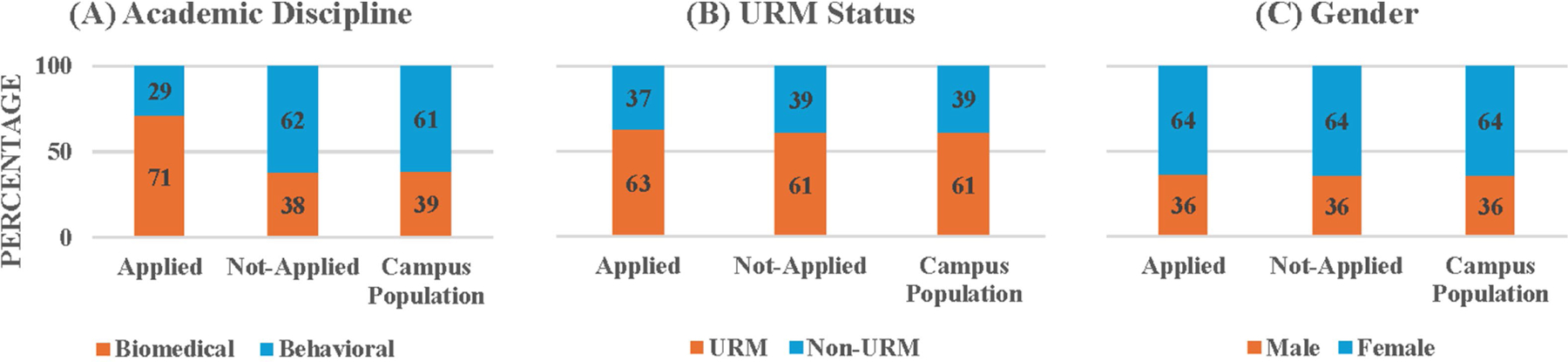 Figure 1
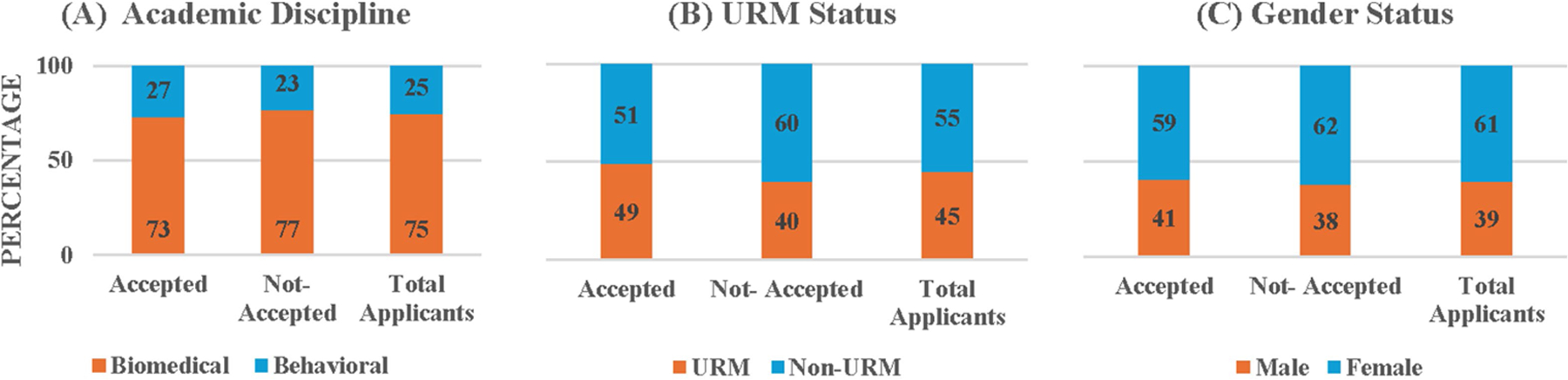 Figure 2
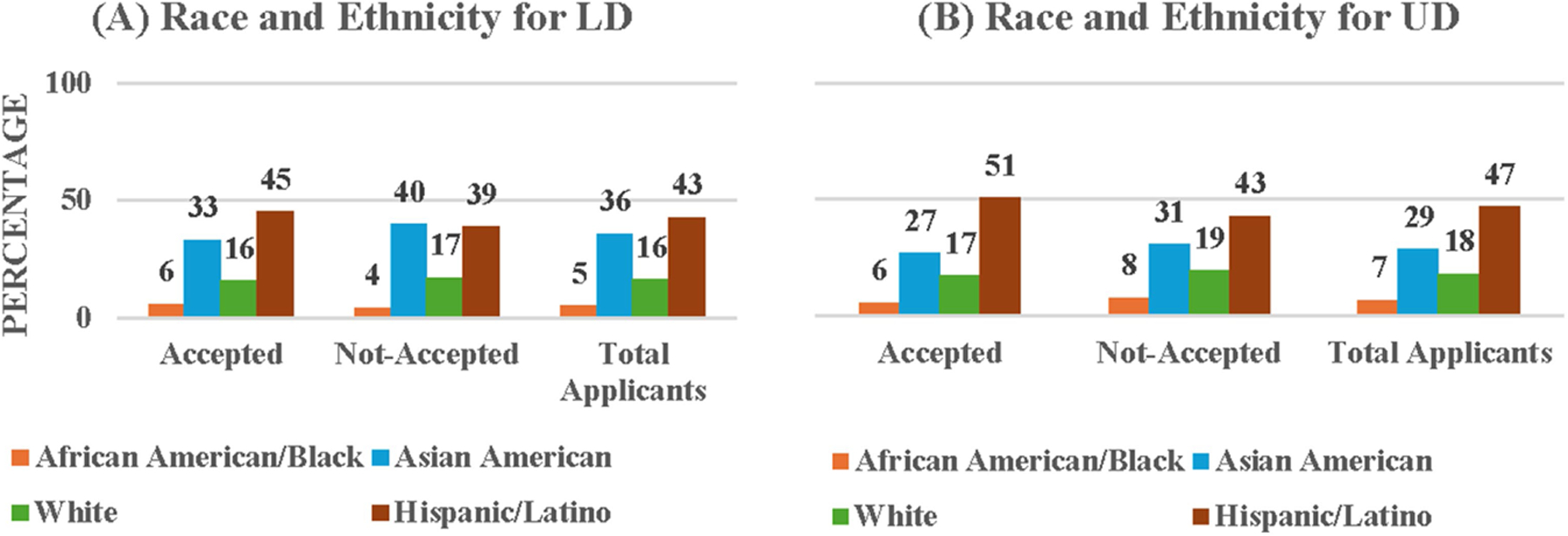 Figure 3
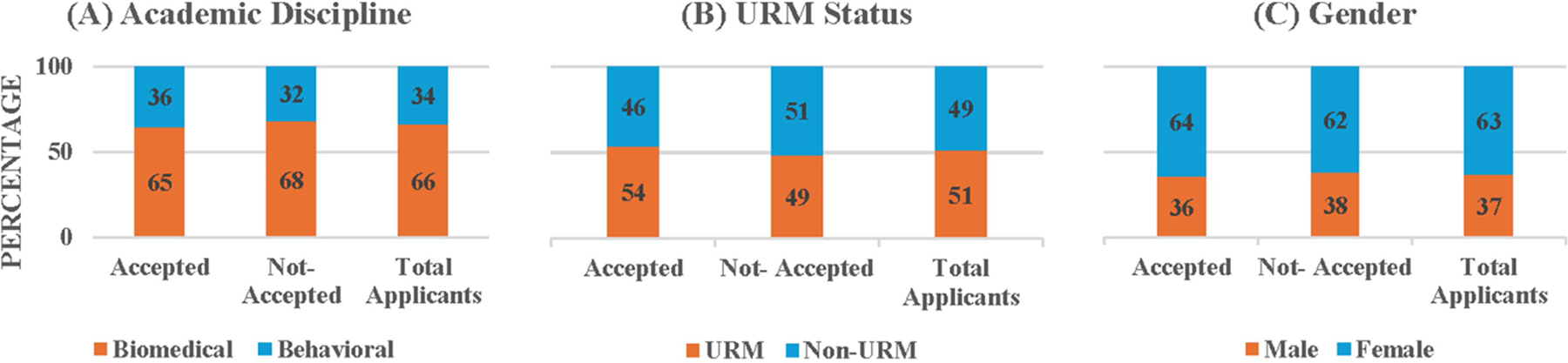 Figure 4
Peer Reviews
No public reviews on file for this paper yet. If you reviewed it on a platform where reviews are public (OpenReview, ICLR, NeurIPS, ICML), you can paste yours below so the community can read it here.
Videos
No videos yet. Explain this paper in a talk, walkthrough, or lecture? Add one.
Taxonomy
TopicsGrit, Self-Efficacy, and Motivation · Career Development and Diversity · Higher Education Research Studies