The association of human apolipoprotein ε4 with dementia, cognition, imaging, and plasma biomarkers of neurodegeneration in a sample of older adults in the Democratic Republic of the Congo
Jean Ikanga, Saranya Sundaram Patel, Megan Schwinne, Caterina Alessandra Obenauf, Emmanuel Epenge, Guy Gikelekele, Nathan Tshengele, Immaculee Kavugho, Samuel Mampunza, Lelo Mananga, Charlotte E. Teunissen, Julio C. Rojas, Brandon Chan, Argentina Lario Lago, Adam L. Boxer

TL;DR
This study found that the APOE ε4 allele is linked to dementia and cognitive decline in older adults from the Democratic Republic of the Congo.
Contribution
The study is one of the first to investigate APOE ε4's role in neurodegeneration in an African population.
Findings
APOE ε4 carriers showed greater cognitive decline and hippocampal atrophy.
Dementia cases had higher APOE ε4 prevalence and elevated plasma biomarker levels.
Findings highlight APOE ε4's significant impact on neurodegeneration in African populations.
Abstract
This study examined the association between the apolipoprotein E (APOE) ε4 allele and cognitive performance, neuroimaging, and plasma biomarkers in Congolese older adults in the Democratic Republic of the Congo (DRC). Eighty‐four participants (39 healthy controls [HCs], 45 with suspected dementia), aged 73.0 years on average, were assessed using the African Neuropsychology Battery, magnetic resonance imaging, and blood‐based biomarkers. Regression models adjusted for age, sex, and education evaluated APOE’s impact. APOE ε4 was more prevalent in dementia cases than in HCs. Overall, APOE ε4 status significantly affected naming and memory scores, mesial temporal and entorhinal cortex atrophy scores, and glial fibrillary acidic protein concentration levels. In HCs, it showed no significant impact on cognitive or neuroimaging tests, except for neurofilament light chain concentration…
Genes, proteins, chemicals, diseases, species, mutations and cell lines named across the full text — each resolved to its canonical identifier and authoritative record.
Click any figure to enlarge with its caption.
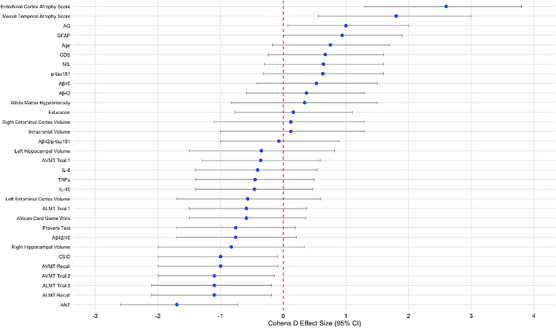 Figure 1
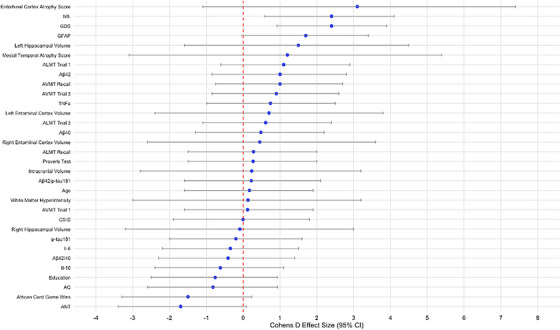 Figure 2
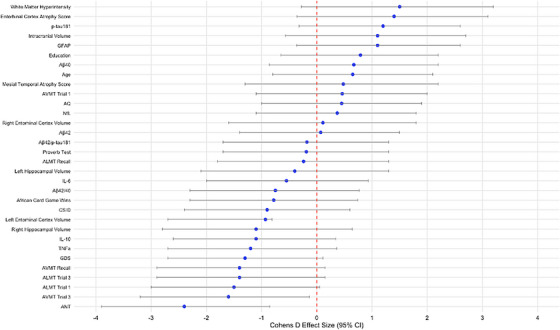 Figure 3
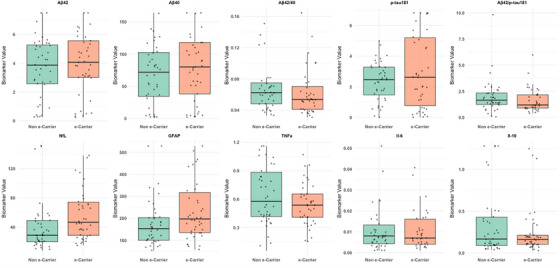 Figure 4
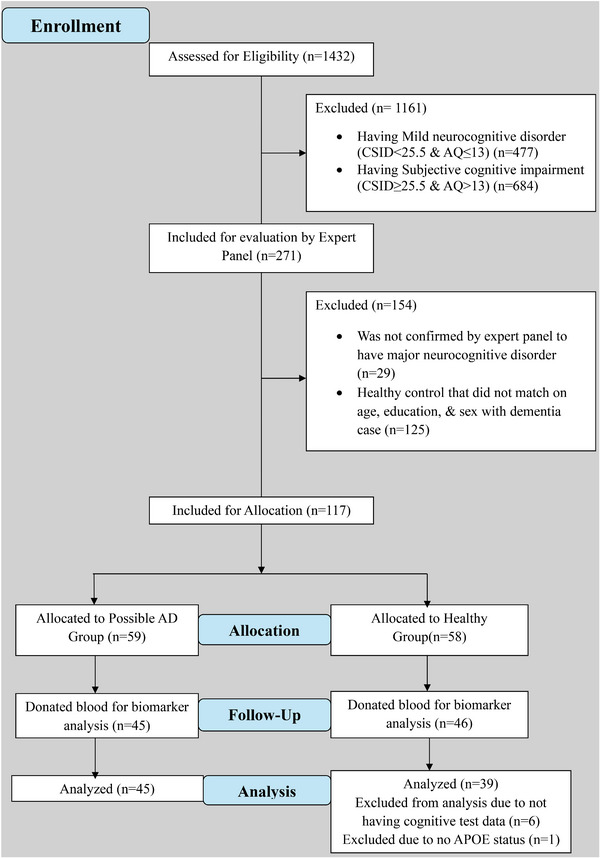 Figure 5
Peer Reviews
No public reviews on file for this paper yet. If you reviewed it on a platform where reviews are public (OpenReview, ICLR, NeurIPS, ICML), you can paste yours below so the community can read it here.
Videos
No videos yet. Explain this paper in a talk, walkthrough, or lecture? Add one.
Taxonomy
TopicsAlzheimer's disease research and treatments · Dementia and Cognitive Impairment Research · Neurological Disease Mechanisms and Treatments