Blood‐based pre‐screening in the SKYLINE secondary prevention Ph3 gantenerumab study
Alina Bauer, Christina Rabe, Courtney Schiffman, Fiona Rose, Gesine Respondek, Fabiana Gullotta, Laura Schlieker, Alexander Jethwa, Isabelle Schrurs, Ekaterina Manuilova, Susanne Ostrowitzki, Tobias Bittner

TL;DR
Blood-based biomarkers like pTau181 and ApoE4p can effectively pre-screen participants for amyloid positivity, reducing the need for PET or CSF tests.
Contribution
The study identifies the best-performing blood-based biomarker combination for pre-screening in Alzheimer's prevention trials.
Findings
pTau181 and ApoE4p were the highest-performing blood-based biomarker combination in pre-screening.
Clinical performance matched predictions from the A4 study in terms of screen-out rate and predictive values.
Pre-screening reduced participant burden by avoiding unnecessary PET or CSF testing.
Abstract
SKYLINE was a secondary prevention study that used blood‐based biomarker (BBBM) pre‐screening to screen out participants with a low likelihood of amyloid positivity by positron emission tomography (PET) or cerebrospinal fluid (CSF) testing. This retrospective analysis used data from SKYLINE (ClinicalTrials.gov: NCT05256134; terminated prematurely) and the Anti‐Amyloid Treatment in Asymptomatic Alzheimer's (A4) study to compare predicted and actual clinical performance characteristics of various biomarker combinations using prototype Elecsys® plasma immunoassays (Roche Diagnostics International Ltd, Rotkreuz, Switzerland). In >3500 participants screened in SKYLINE, tau phosphorylated at threonine 181 (pTau181) and apolipoprotein E4 protein (ApoE4p) was the highest‐performing BBBM combination. Actual clinical performance of the BBBM pre‐screening in SKYLINE was similar to predictions…
Genes, proteins, chemicals, diseases, species, mutations and cell lines named across the full text — each resolved to its canonical identifier and authoritative record.
Click any figure to enlarge with its caption.
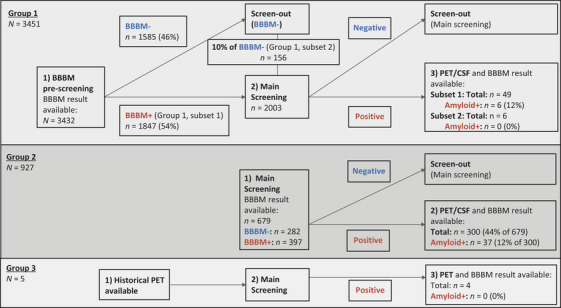 Figure 1
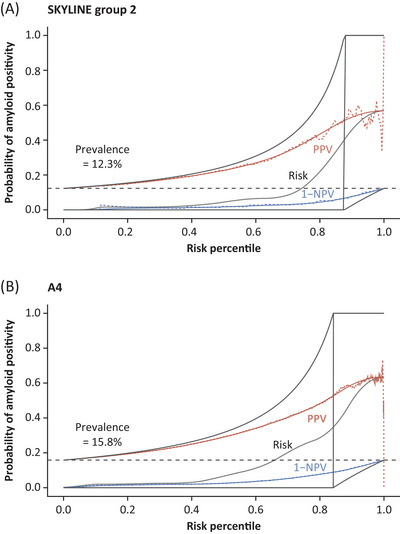 Figure 2
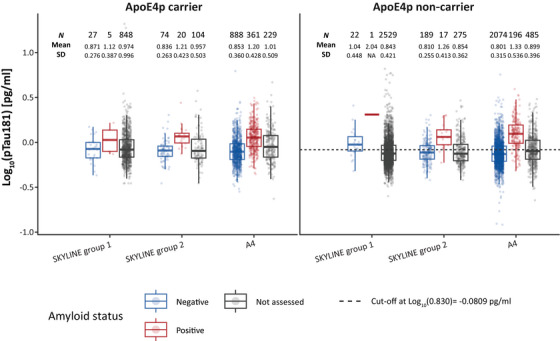 Figure 3
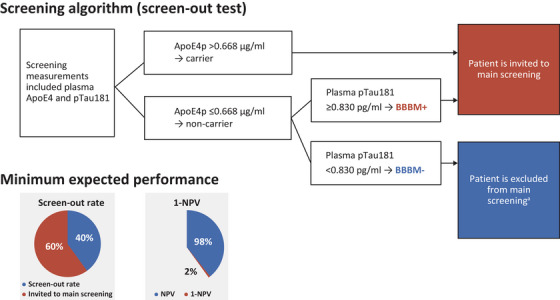 Figure 4
Peer Reviews
No public reviews on file for this paper yet. If you reviewed it on a platform where reviews are public (OpenReview, ICLR, NeurIPS, ICML), you can paste yours below so the community can read it here.
Videos
No videos yet. Explain this paper in a talk, walkthrough, or lecture? Add one.
Taxonomy
TopicsDementia and Cognitive Impairment Research · Alzheimer's disease research and treatments · Chronic Disease Management Strategies