Phylogenetic Relationships, Character Evolution, and Two New Species in Hemiboea (Didymocarpoideae, Trichosporeae)
Ping Liang, Xiao Wang, Fang Wen, Xin‐Xiang Bai, Jun Mu

TL;DR
This paper describes two new Hemiboea species from China and uses molecular and morphological data to clarify their evolutionary relationships and classification.
Contribution
The study introduces two new Hemiboea species and identifies key morphological traits for their classification.
Findings
The phylogenetic analysis groups Hemiboea into three major clades.
Eight morphological characters were traced to determine ancestral states.
H. fangii is identified as the most primitive species in the genus.
Abstract
Two new species, Hemiboea xishuiensis X.X. Bai and Hemiboea cehengensis X.X. Bai, from Guizhou, China, are described here. We performed a molecular phylogenetic analysis of the two new species and 28 taxa within Hemiboea based on ITS and trnL‐F, which shows that the phylogenetic tree of Hemiboea forms three major clades: H. fangii Chun ex Z.Yu Li occupies one clade exclusively (Clade I), H. xishuiensis, H. cehengensis, H. parvibracteata W.T. Wang & Z.Yu Li, H. ovalifolia (W.T. Wang) A. Weber & Mich. Möller, and H. kaiyangensis T. Peng & S.Z. He constitute a highly supported clade (Clade II), and the remaining taxa are clustered into the third clade (Clade III). Furthermore, this study traced the evolution of eight important morphological characters in Hemiboea and determined their ancestral states. The results show that the involucre is not early deciduous, the calyx is 5‐sect…
Genes, proteins, chemicals, diseases, species, mutations and cell lines named across the full text — each resolved to its canonical identifier and authoritative record.
Click any figure to enlarge with its caption.
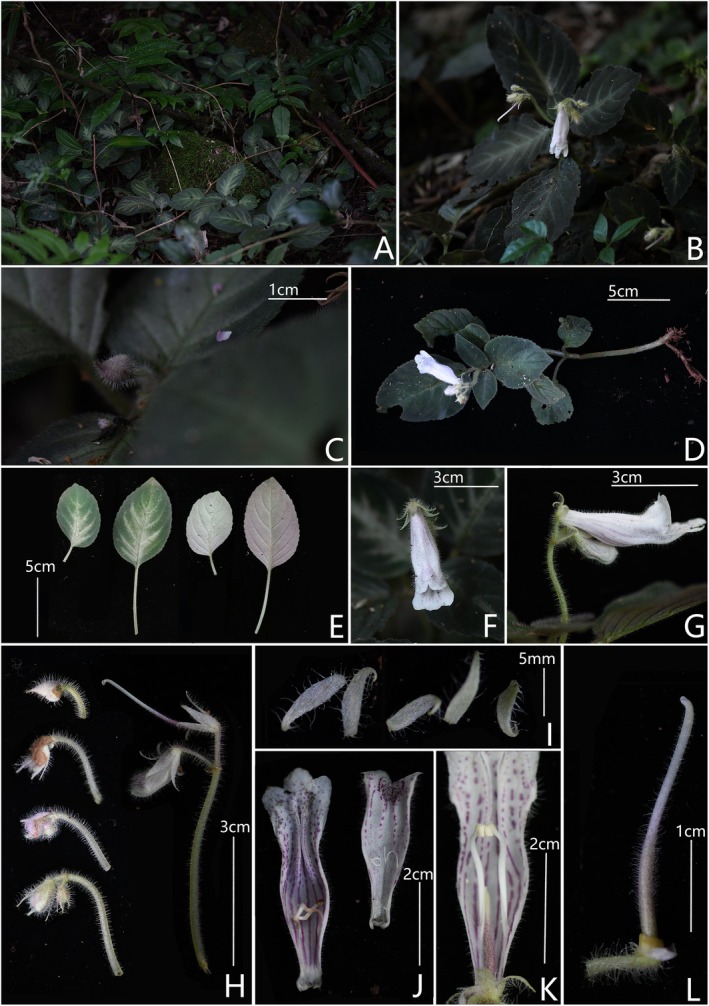 Figure 1
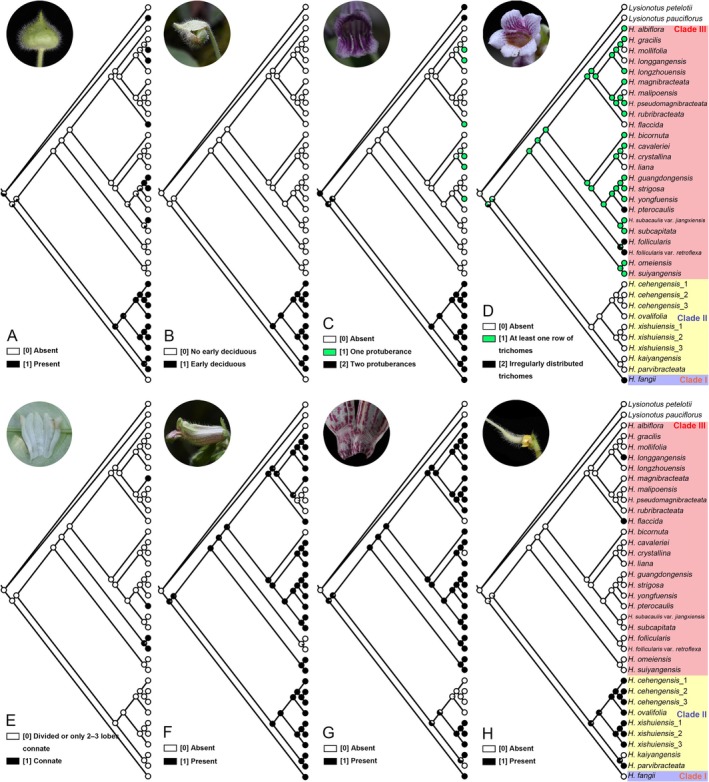 Figure 2
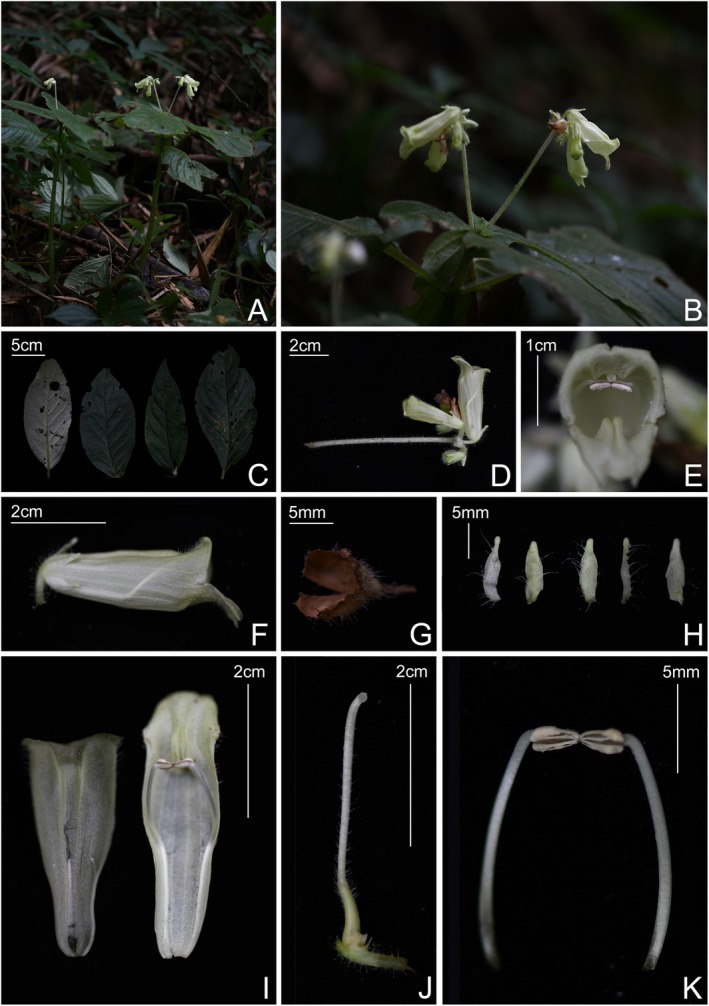 Figure 3
 Figure 4
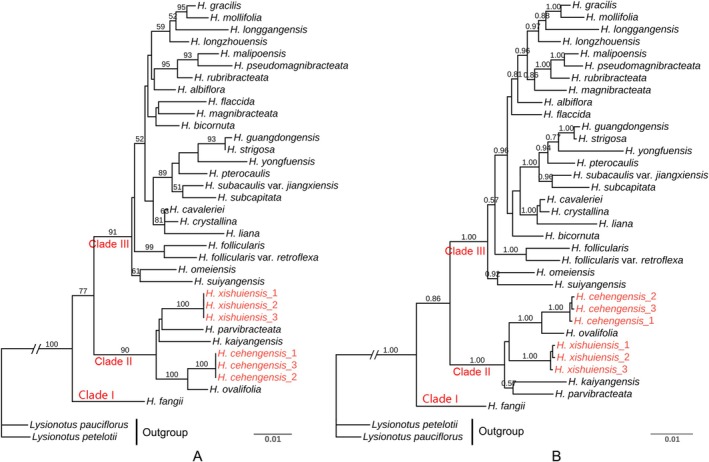 Figure 5
Peer Reviews
No public reviews on file for this paper yet. If you reviewed it on a platform where reviews are public (OpenReview, ICLR, NeurIPS, ICML), you can paste yours below so the community can read it here.
Videos
No videos yet. Explain this paper in a talk, walkthrough, or lecture? Add one.
Taxonomy
TopicsActinomycetales infections and treatment · Plant and Fungal Species Descriptions · Mycorrhizal Fungi and Plant Interactions