Far-UVC (222 nm) Enhances the Advanced Reduction Process for Per- and Polyfluoroalkyl Substance (PFAS) Destruction
Xiaoyue Xin, Jiaqi Li, Ching-Hua Huang

TL;DR
This study shows that using 222 nm UVC light with sulfite improves the breakdown of harmful PFAS chemicals in water more efficiently than traditional methods.
Contribution
The integration of far-UVC (222 nm) with sulfite-based advanced reduction processes significantly enhances PFAS degradation efficiency and energy performance.
Findings
UV222/sulfite systems generate more hydrated electrons, leading to better PFAS degradation.
UV222/sulfite achieved 85% PFOS removal and 66% defluorination in 6 hours.
Dissolved organic matter and carbonates strongly scavenge reactive species, reducing efficiency.
Abstract
The UV-based advanced reduction processes (ARPs) have emerged as an effective strategy to degrade PFAS contaminants in water. This study investigates PFAS degradation by integrating far-UVC irradiation at 222 nm with sulfite-based ARPs. Comparative analysis of UV222/sulfite and conventional UV254/sulfite revealed that UV222/sulfite systems significantly improve the performance by generation of more hydrated electrons (eaq –), the primary reactive species driving PFAS degradation, and exhibit superior energy efficiency, characterized by lower electrical energy per order (E EO ). The higher efficiency of UV222/sulfite can be attributed to stronger light absorption of sulfite and higher photon energy at 222 nm. Under optimized stepwise sulfite dosing conditions, the UV222/sulfite ARP achieved high perfluorooctyl sulfonic acid (PFOS) removal efficiency, nearly 85% reduction in parent…
Genes, proteins, chemicals, diseases, species, mutations and cell lines named across the full text — each resolved to its canonical identifier and authoritative record.
Click any figure to enlarge with its caption.
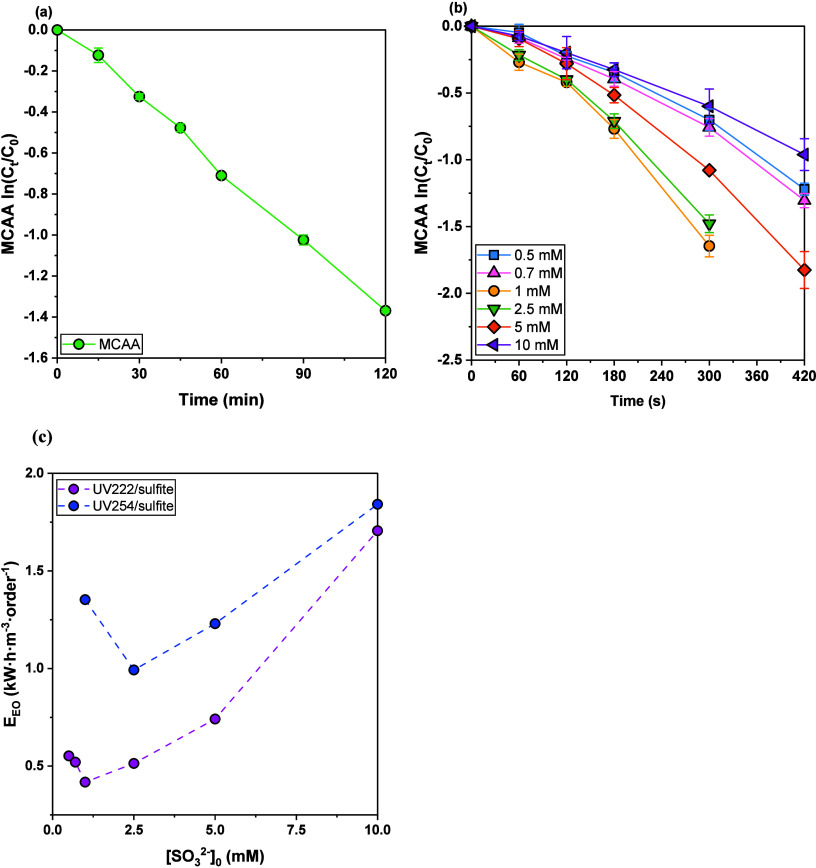 Figure 1
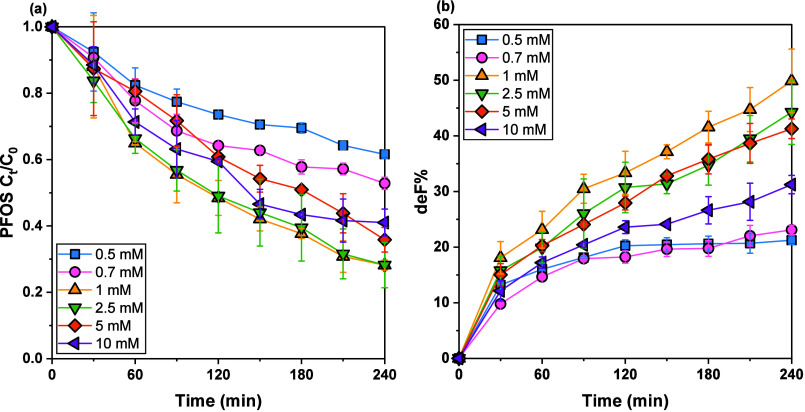 Figure 2
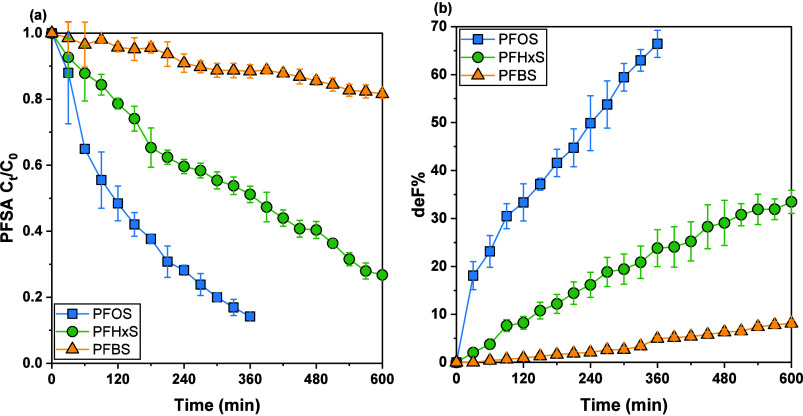 Figure 3
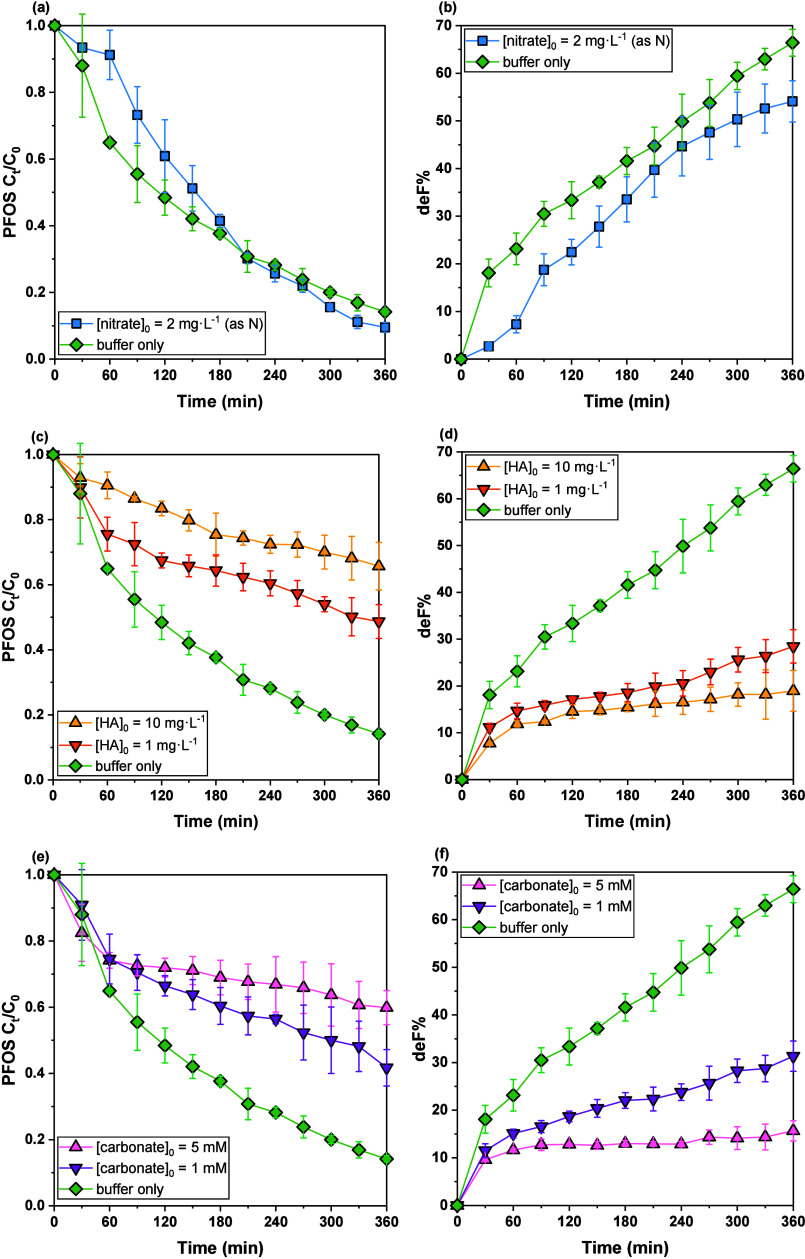 Figure 4
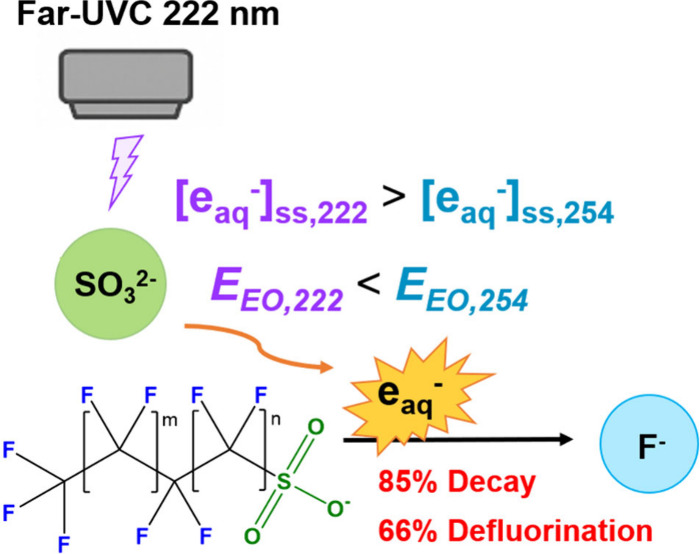 Figure 5
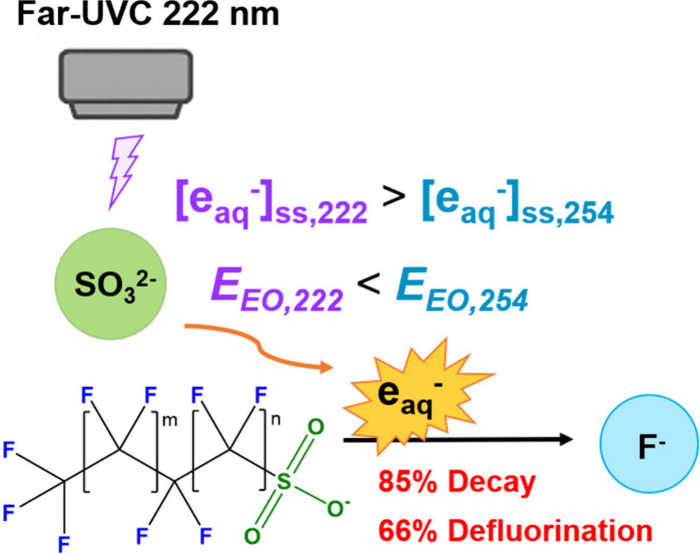 Figure 6
 Figure 7
 Figure 8
 Figure 9
 Figure 10
Peer Reviews
No public reviews on file for this paper yet. If you reviewed it on a platform where reviews are public (OpenReview, ICLR, NeurIPS, ICML), you can paste yours below so the community can read it here.
Videos
No videos yet. Explain this paper in a talk, walkthrough, or lecture? Add one.
Taxonomy
TopicsPer- and polyfluoroalkyl substances research · Atmospheric chemistry and aerosols · Toxic Organic Pollutants Impact