Photosulfoxidation Catalysis as the Driving Principle for Deazaoxaflavin Photoredox Catalyst Formation
Karolína Křížová, Rimeh Ismail, Tung Anh Nguyen, Marek Bříza, Anna O. Geleverya, Chiara Ciotta, Valentino L. P. Guerra, Petr Kovaříček

TL;DR
This paper introduces a self-forming photoredox catalyst system based on deazaoxaflavins, which can adapt and improve sustainability in chemical reactions.
Contribution
A novel, thermodynamically driven method for autonomously forming adaptable photoredox catalysts from deazaoxaflavins.
Findings
Deazaoxaflavins exhibit photocatalytic activity similar to flavins.
The reversible condensation pathway allows for catalyst adaptability by exchanging components.
The system can be applied to other photo/organocatalytic reactions under suitable conditions.
Abstract
Catalysts are essential for sustainability because they decrease energy and resource consumption in the production of high value-added products. The design of a novel catalyst is a challenging and expensive target, and a simplified methodology for catalyst development can trigger burgeoning progress in both academic and applied research. Here, we demonstrate a reaction network that autonomously yields the photoredox catalyst for the transformation of the provided substrate under applied catalytic conditions. The system stems from the reversible condensation pathway leading to deazaoxaflavins, 2H-chromeno[2,3-d]pyrimidine synthetic analogs of flavins, with which they share photoorganocatalytic activity. We report on the photocatalytic activity of deazaoxaflavins and their covalent dynamic behavior. The reversibility principle allows for the exchange of one of the deazaoxaflavin…
Genes, proteins, chemicals, diseases, species, mutations and cell lines named across the full text — each resolved to its canonical identifier and authoritative record.
Click any figure to enlarge with its caption.
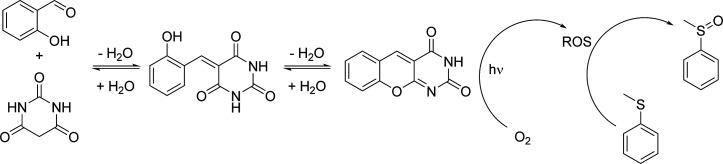 Figure 1
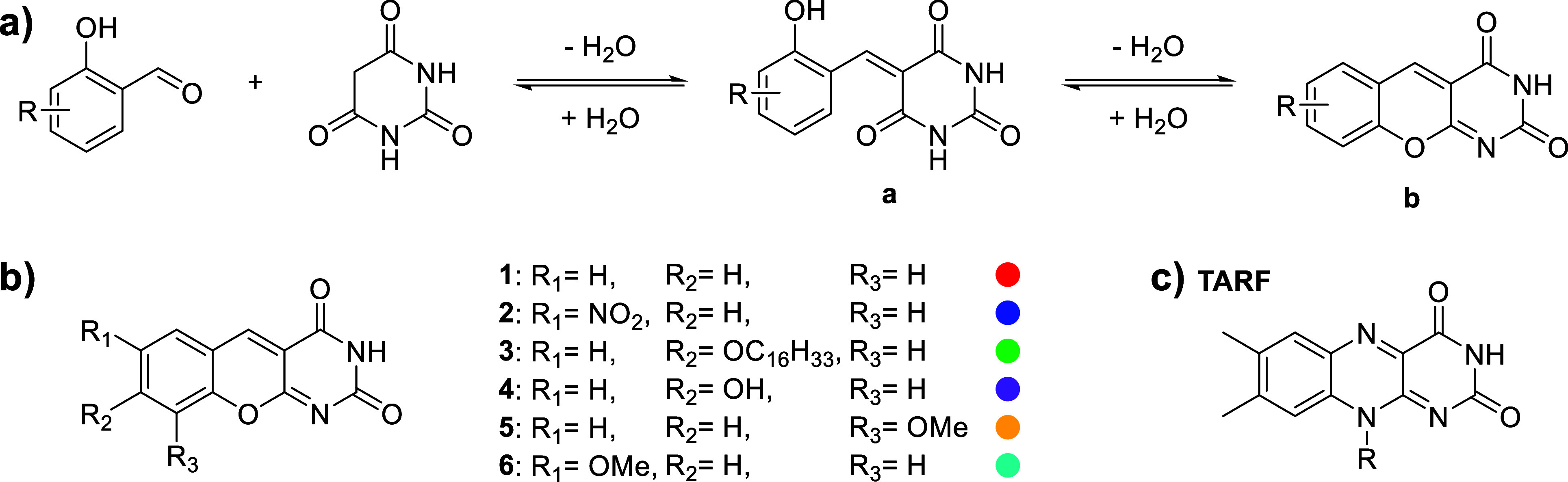 Figure 2
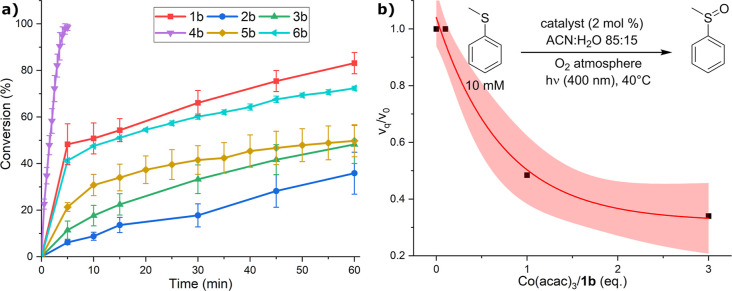 Figure 3
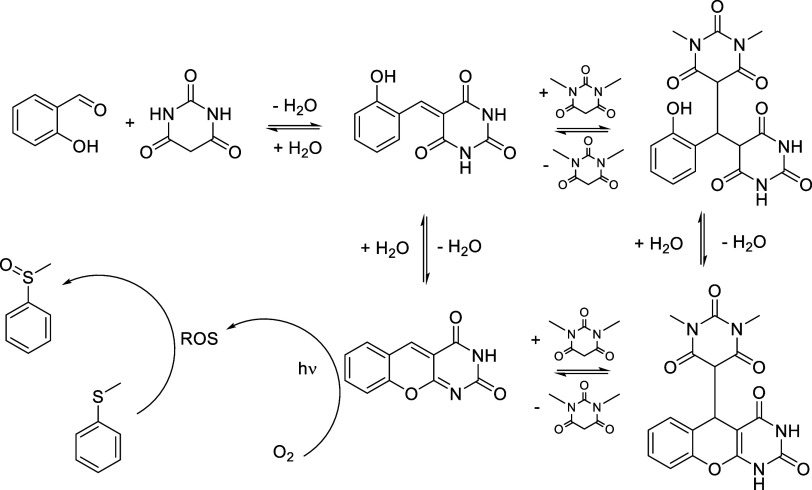 Figure 4
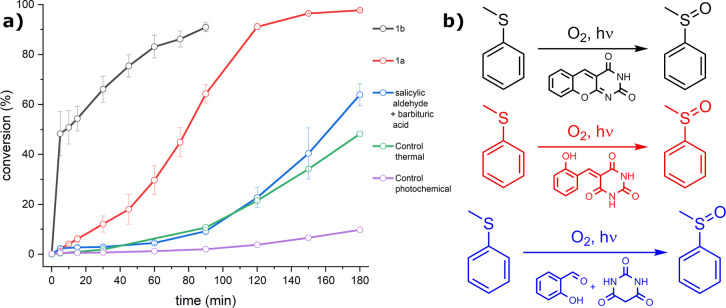 Figure 5
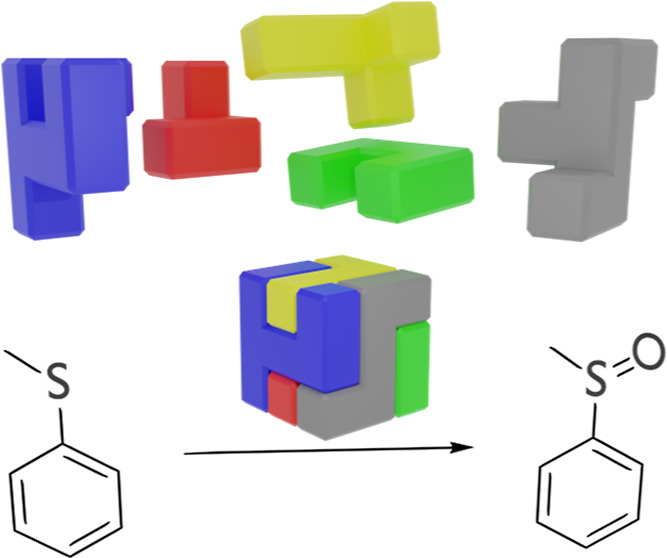 Figure 6
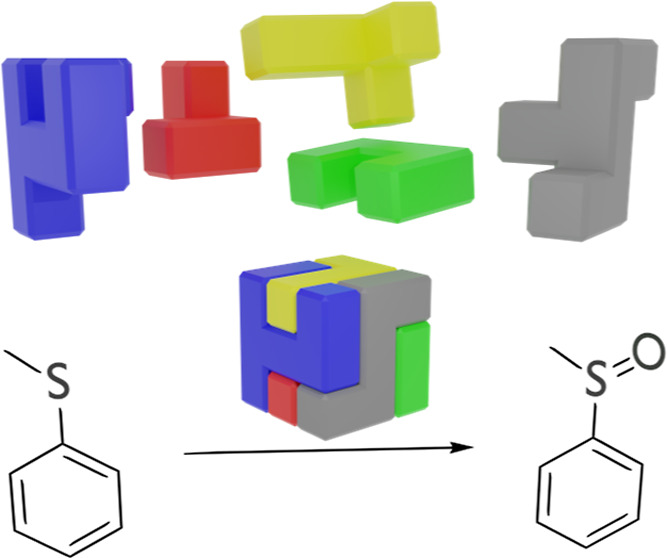 Figure 7
Peer Reviews
No public reviews on file for this paper yet. If you reviewed it on a platform where reviews are public (OpenReview, ICLR, NeurIPS, ICML), you can paste yours below so the community can read it here.
Videos
No videos yet. Explain this paper in a talk, walkthrough, or lecture? Add one.
Taxonomy
TopicsRadical Photochemical Reactions · Porphyrin and Phthalocyanine Chemistry · Photochromic and Fluorescence Chemistry