Biocompatible Guanidine-Functionalized Compounds with Biofilm and Membrane Disruptive Activity Against MRSA
Pamella Fukuda de Castilho, Luana Janaína de Campos, Audifás-Salvador Matus-Meza, Huihua Xing, Diana Liz Jimenez Rolão, Fernanda Galvão, Fabiana Gomes da Silva Dantas, Rongguo Ren, Cameron Dobrotka, Fábio Aguiar-Alves, Martin Conda-Sheridan, Kelly Mari Pires de Oliveira

TL;DR
This paper introduces new guanidine-based compounds that effectively combat MRSA by disrupting biofilms and bacterial membranes without causing toxicity.
Contribution
The study presents novel guanidine-functionalized compounds with dual mechanisms against MRSA biofilms and membranes.
Findings
The compounds showed bacteriostatic effects with MICs of 2.34–4.68 μg/mL against MRSA.
They reduced biofilm biomass and metabolic activity, confirmed by SEM and fluorescence microscopy.
The compounds exhibited synergistic effects with oxacillin and low resistance induction potential.
Abstract
Three guanidine-functionalized 3,4-dihydropyrimidin-2(1H)-imine compounds (5a, 5b, 5c) were synthesized from 3,5-diaryldiene-4-piperidone and evaluated for antibacterial and antibiofilm activity against Staphylococcus aureus, CA-MRSA and HA-MRSA. The compounds showed bacteriostatic effects (MICs: 2.34–4.68 μg/mL). In vitro antibiofilm potential was demonstrated by significant reductions in biomass and metabolic activity, and structural analyses via SEM and fluorescence microscopy. Ex vivo antibiofilm activity was confirmed in porcine skin model. RT-qPCR revealed downregulation of biofilm associated virulence genes, indicating a multifactorial mechanism. Confocal microscopy showed increased levels of extracellular DNA and proteins, suggesting disruption of the biofilm matrix. Membrane interaction assays demonstrated time- and dose-dependent effects, suggesting a complementary mechanism…
Genes, proteins, chemicals, diseases, species, mutations and cell lines named across the full text — each resolved to its canonical identifier and authoritative record.
Click any figure to enlarge with its caption.
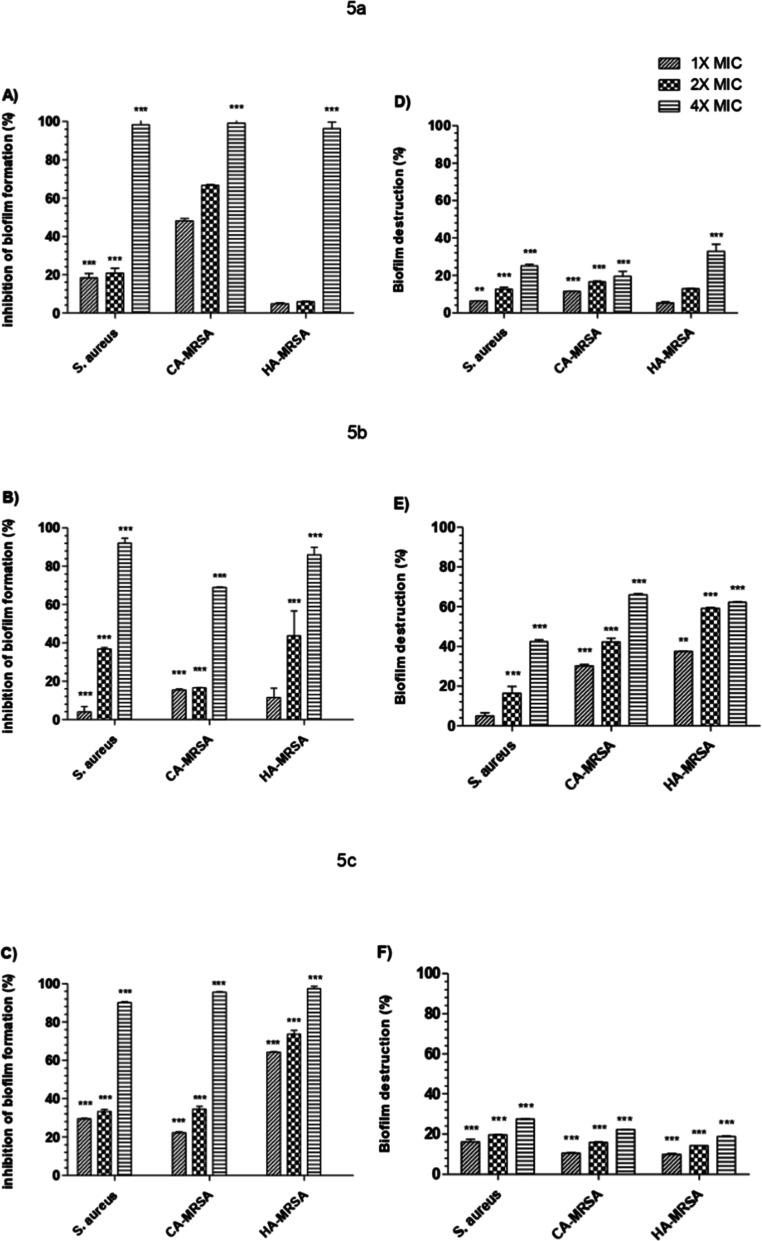 Figure 1
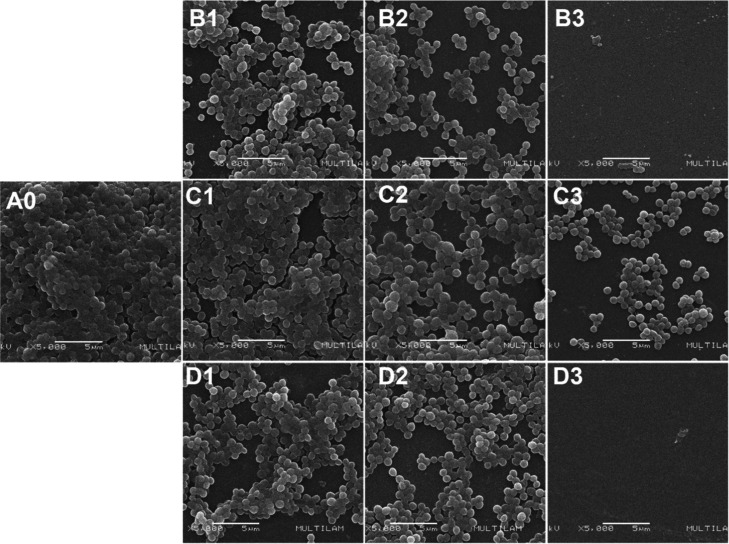 Figure 2
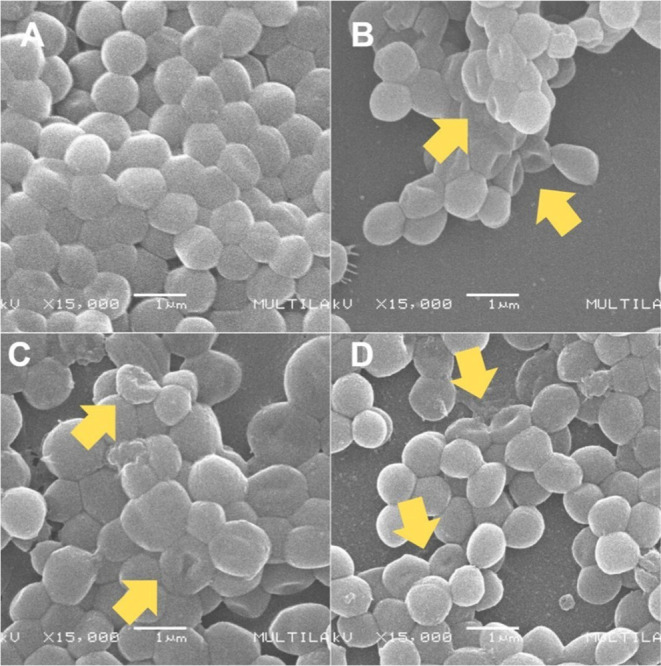 Figure 3
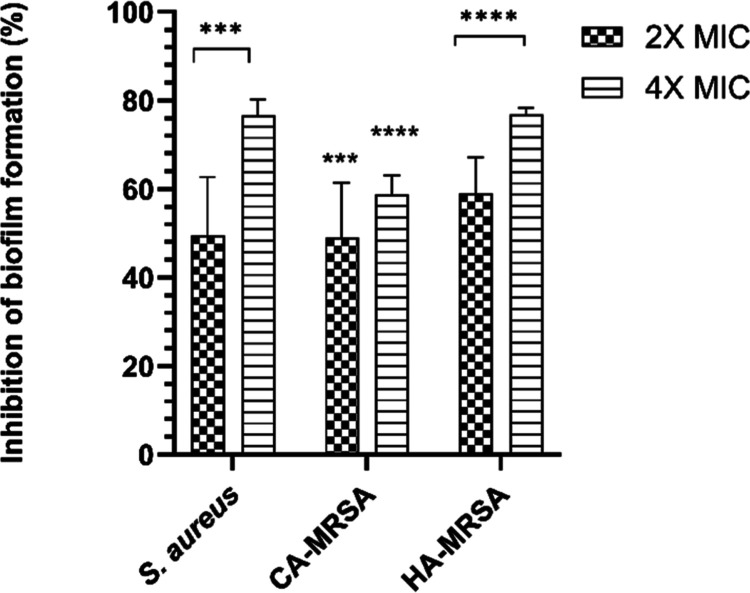 Figure 4
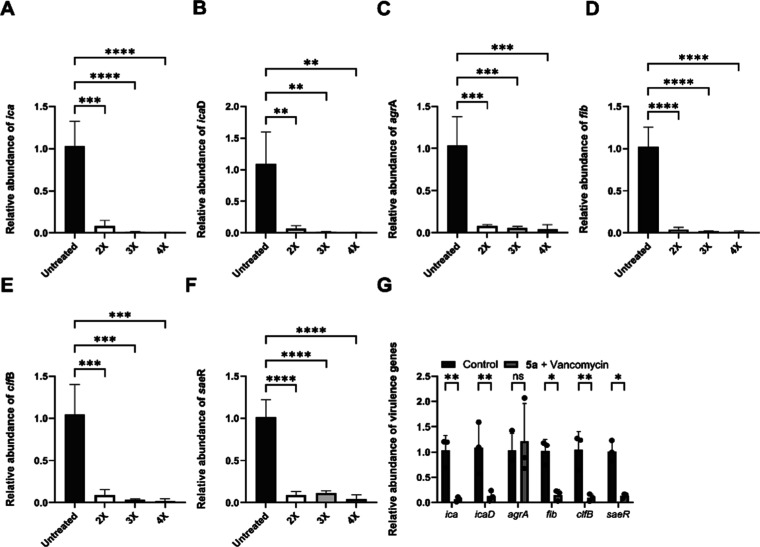 Figure 5
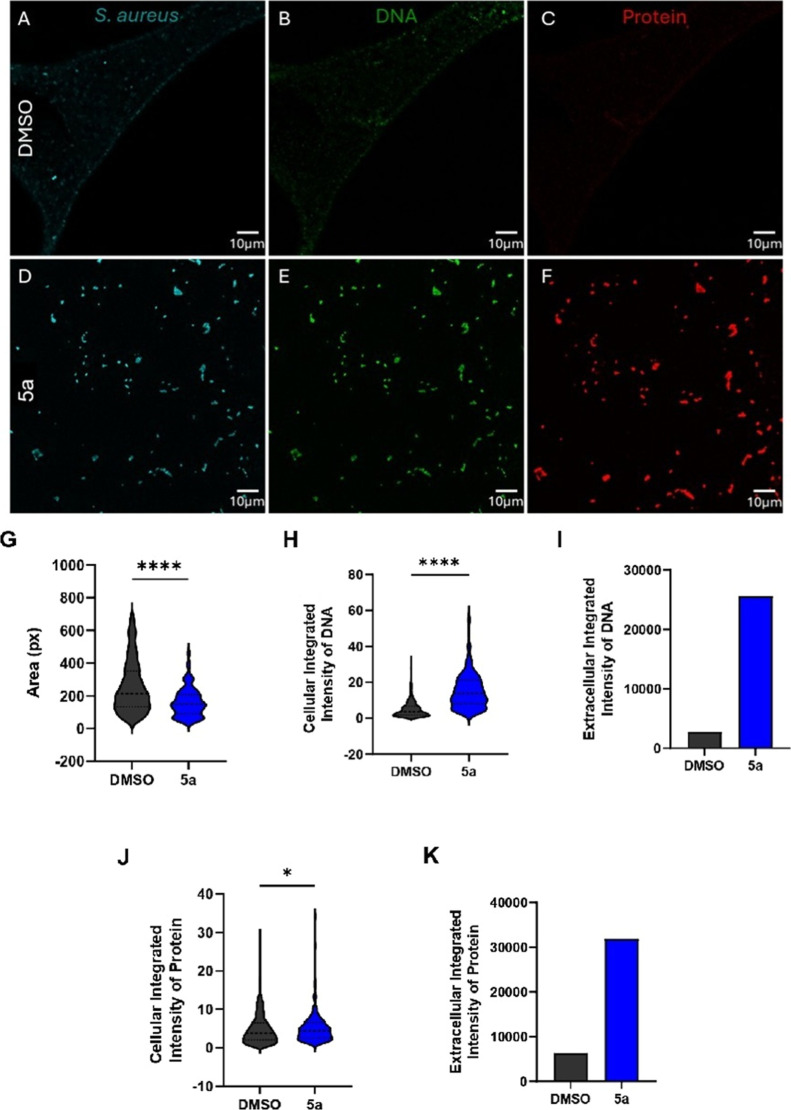 Figure 6
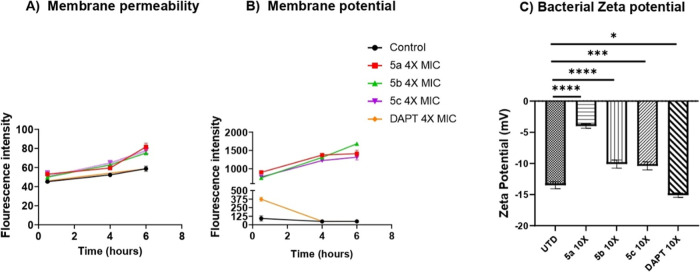 Figure 7
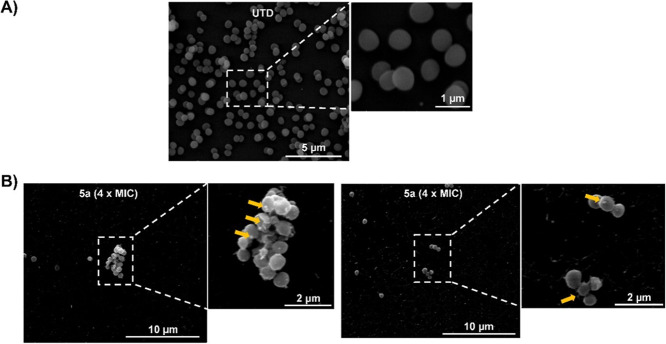 Figure 8
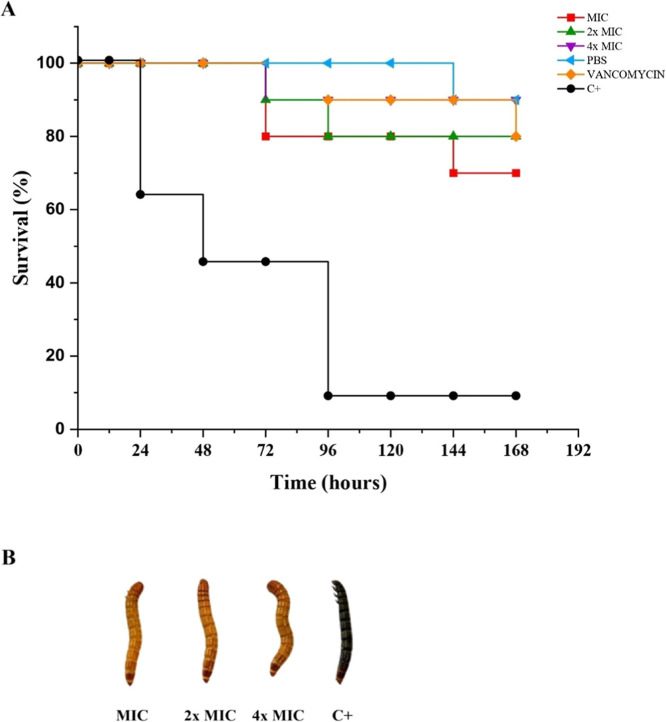 Figure 9
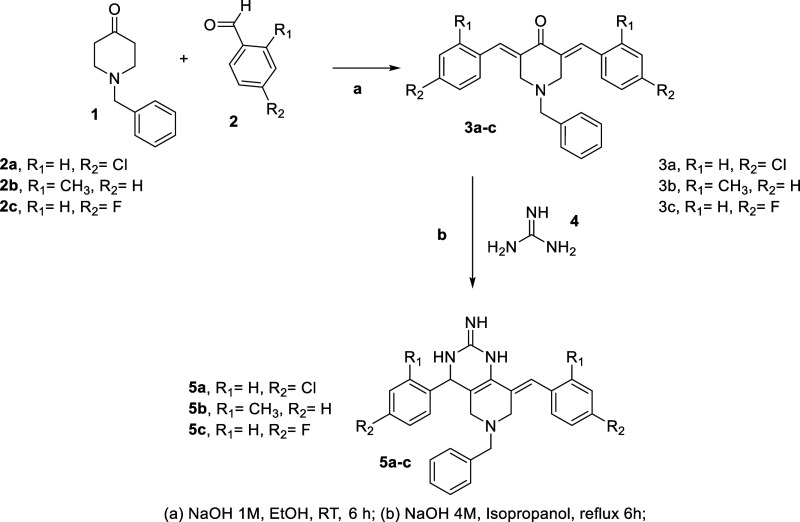 Figure 10
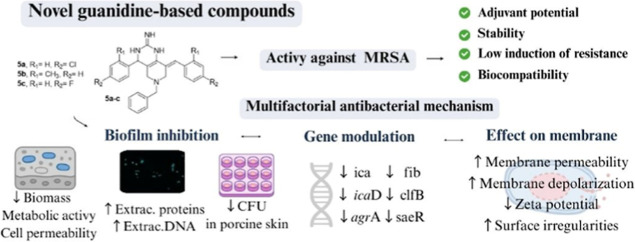 Figure 11
 Figure 12
Peer Reviews
No public reviews on file for this paper yet. If you reviewed it on a platform where reviews are public (OpenReview, ICLR, NeurIPS, ICML), you can paste yours below so the community can read it here.
Videos
No videos yet. Explain this paper in a talk, walkthrough, or lecture? Add one.
Taxonomy
TopicsAntimicrobial agents and applications · Click Chemistry and Applications · Antimicrobial Peptides and Activities