Competing Michael/Anti-Michael Addition of Silyl Ketene Acetals to β‑Nitrostyrenes Incorporating an Electron-Withdrawing Group
Mayte A. Martínez-Aguirre, Diego A. Cruz-Aguilar, Eduardo Hernández-Huerta, Dylan López-Barba, Ricardo Ballinas-Indili, Saulo César Rosales-Amezcua, Cecilio Álvarez-Toledano, Marcos Hernández-Rodríguez

TL;DR
This study explores how electron-withdrawing groups affect the reaction of β-nitrostyrenes with silyl ketene acetals, producing unexpected anti-Michael addition products.
Contribution
The paper reveals a novel vinylic SRN1 mechanism for anti-Michael addition products in reactions involving β-nitrostyrenes and silyl ketene acetals.
Findings
The yield of anti-Michael addition products depends on the position and nature of electron-withdrawing groups in the phenyl ring.
The anti-Michael product forms via a vinylic SRN1 mechanism, not an ionic pathway.
External factors like light or metal impurities do not influence the formation of the anti-Michael product.
Abstract
β-Nitrostyrenes are archetypal Michael acceptors due to the strong electron-withdrawing nature of the nitro group. However, we found that β-nitrostyrenes substituted with electron-withdrawing groups react with silyl ketene acetals, activated by stoichiometric Lewis bases (K2CO3 or TBAF), to produce a mixture of Michael addition (M) and anti-Michael addition (AM) products. The yield strongly depends on the position and nature of the electron-withdrawing group within the phenyl ring (e.g., p-nitro: 8% AM 2% M; o-nitro 70% AM, 26% M). The formation of the unexpected AM product cannot be explained by a higher electrophilicity of the α-carbon compared to the β-carbon (Parr’s indexes). Furthermore, we demonstrated that the formation of the AM product is not influenced by external factors such as light, metal impurities, or the nature of the Lewis base. Instead, it appears from the intrinsic…
Genes, proteins, chemicals, diseases, species, mutations and cell lines named across the full text — each resolved to its canonical identifier and authoritative record.
Click any figure to enlarge with its caption.
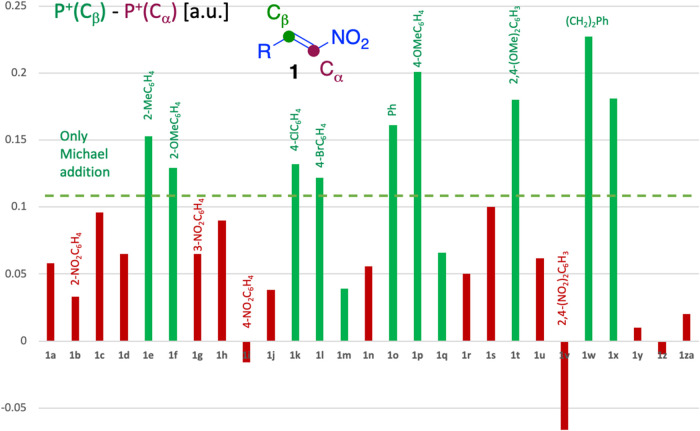 Figure 1
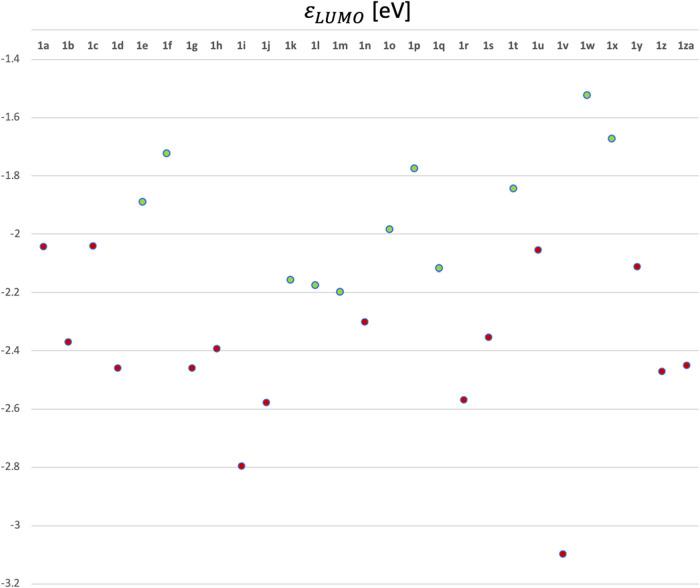 Figure 2
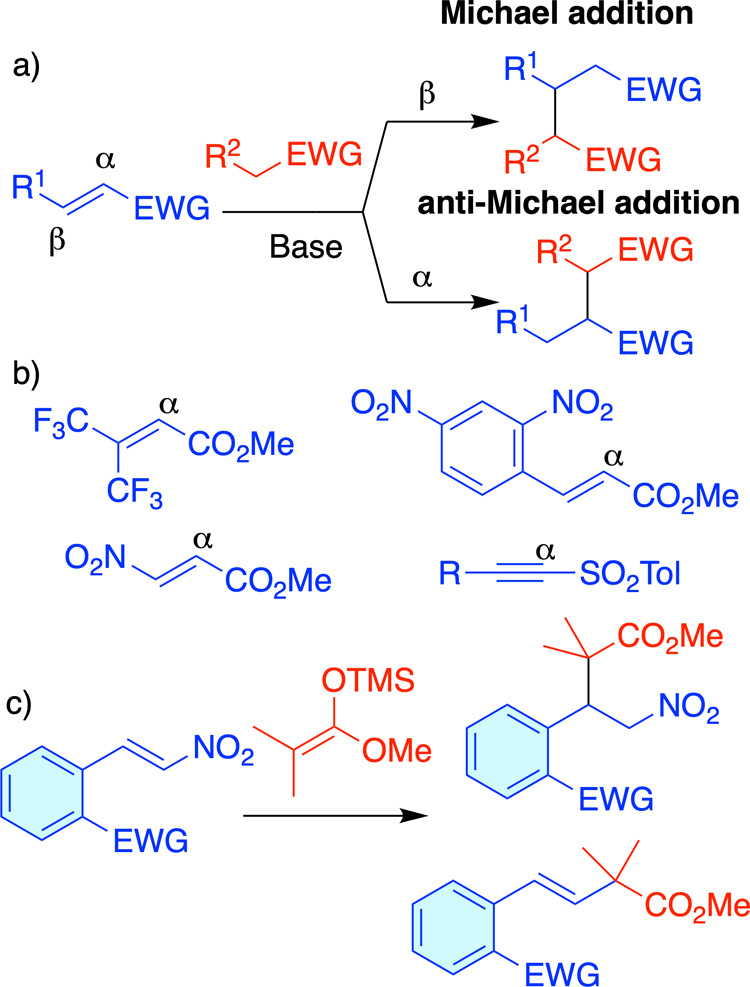 Figure 3
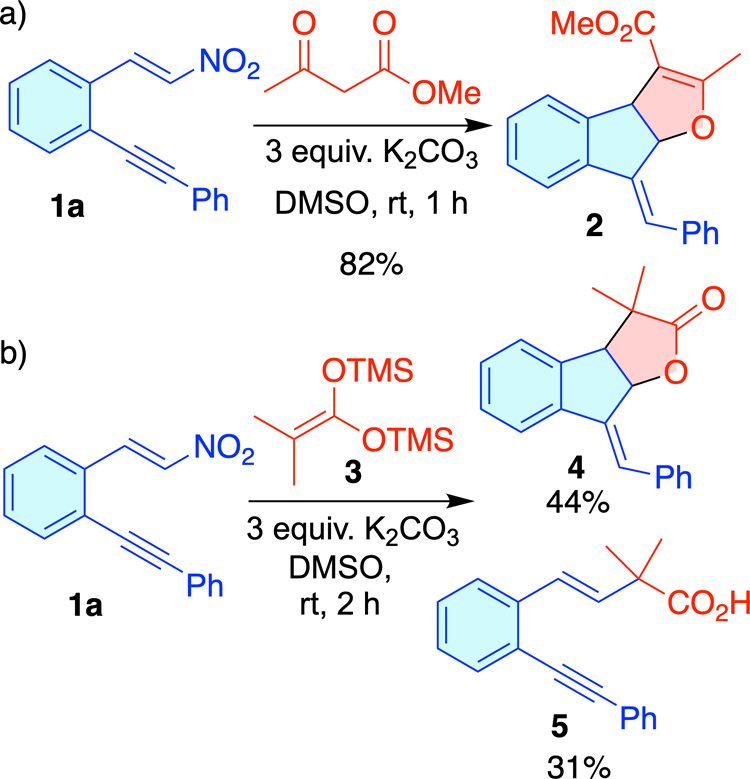 Figure 4
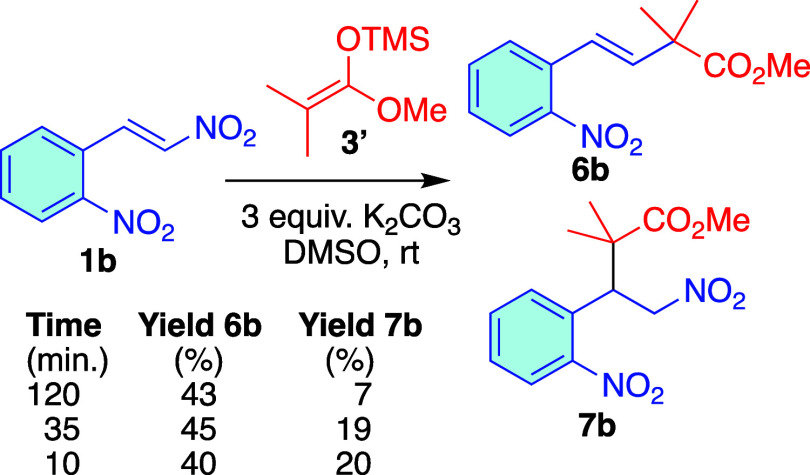 Figure 5
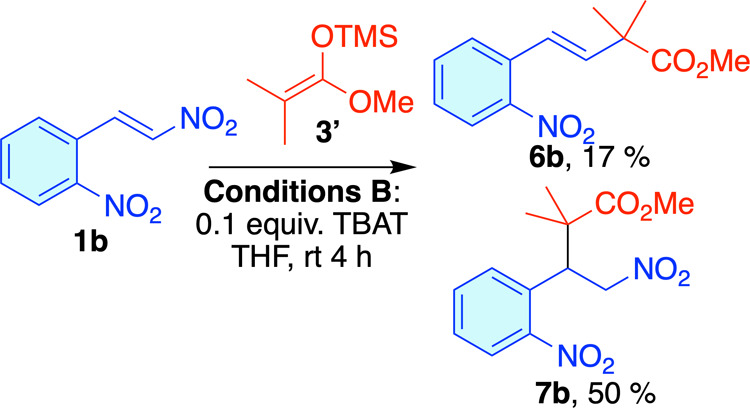 Figure 6
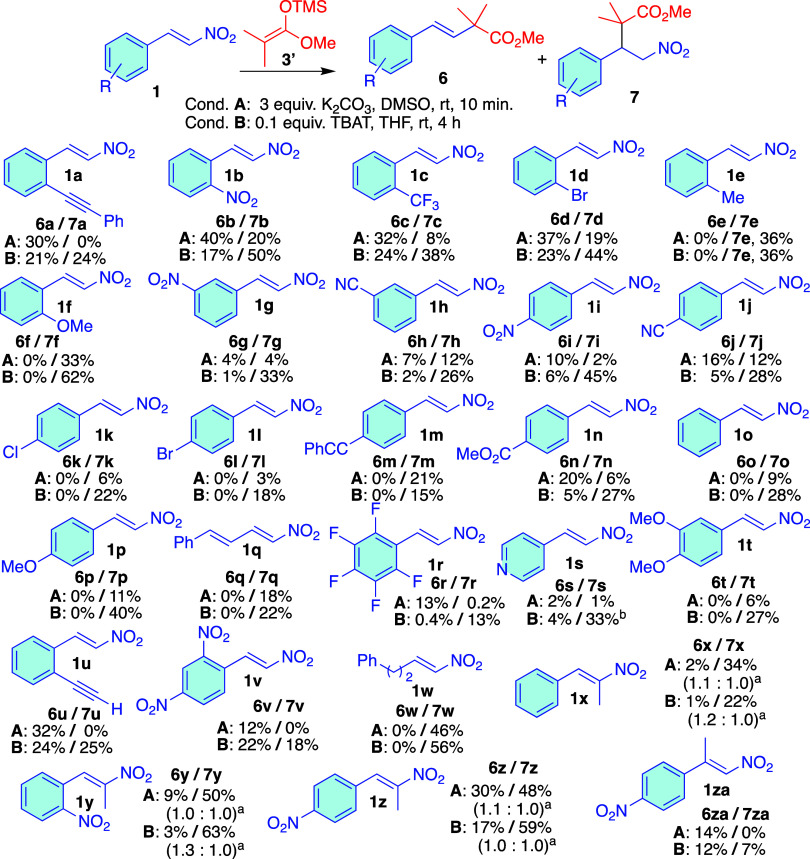 Figure 7
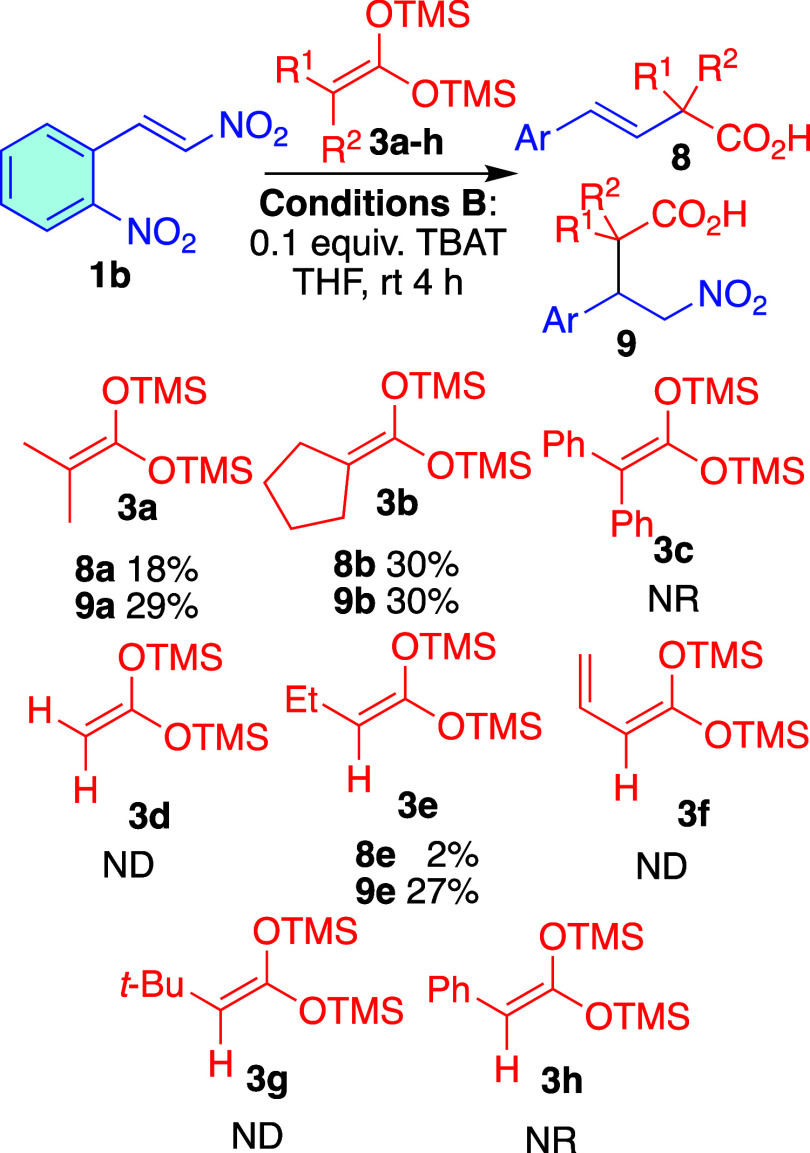 Figure 8
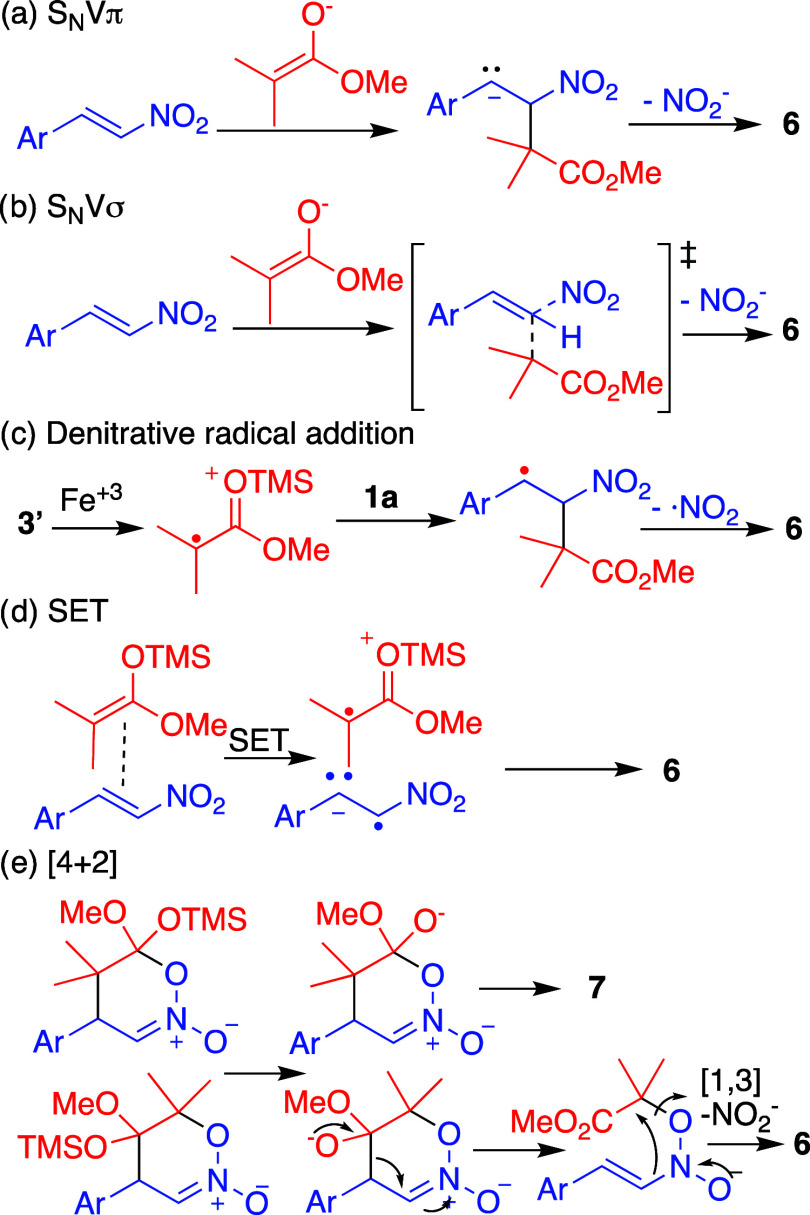 Figure 9
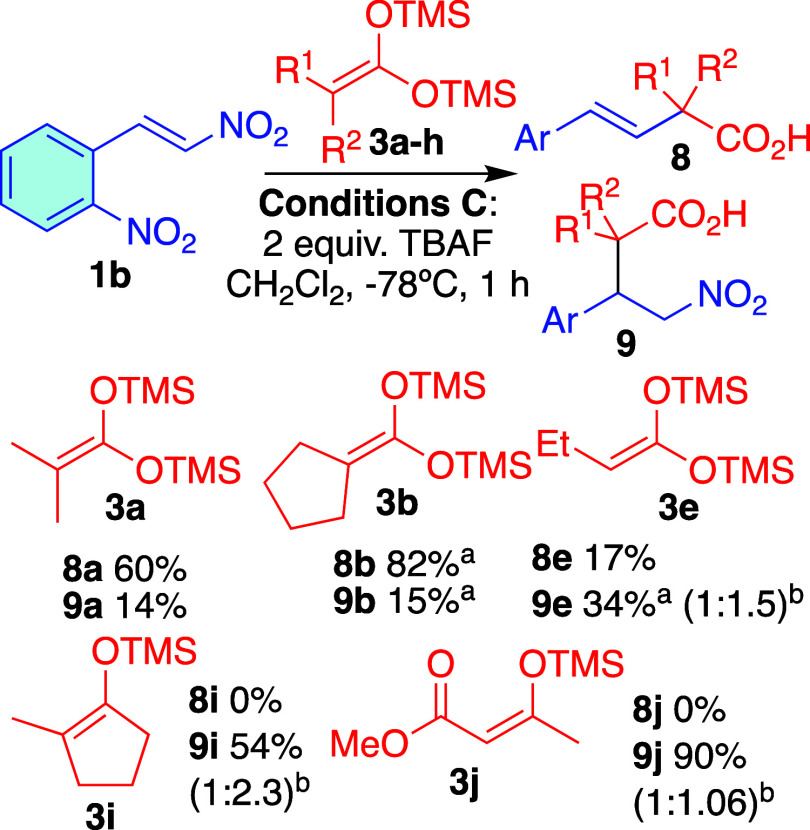 Figure 10
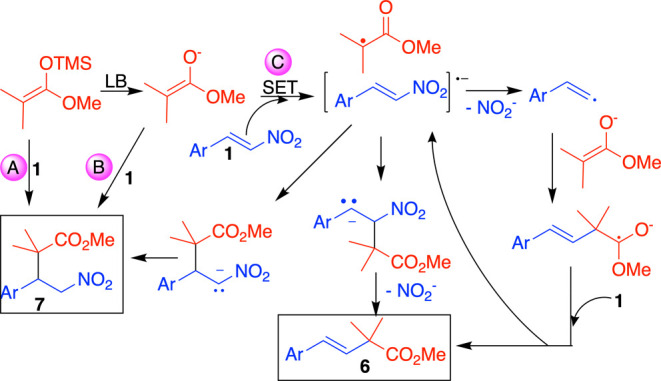 Figure 11
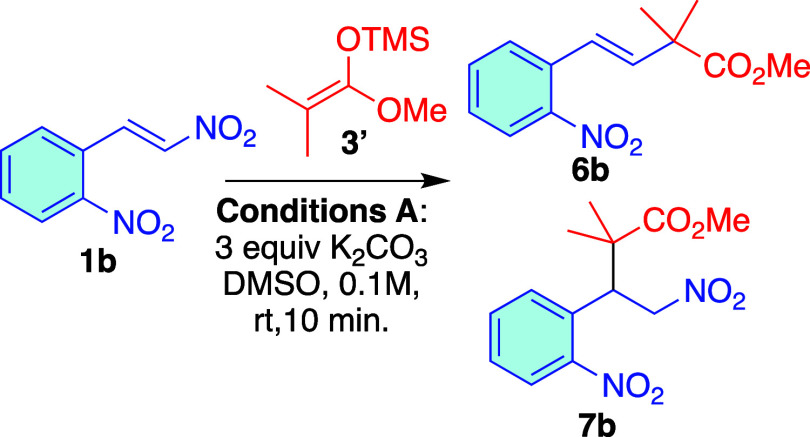 Figure 12
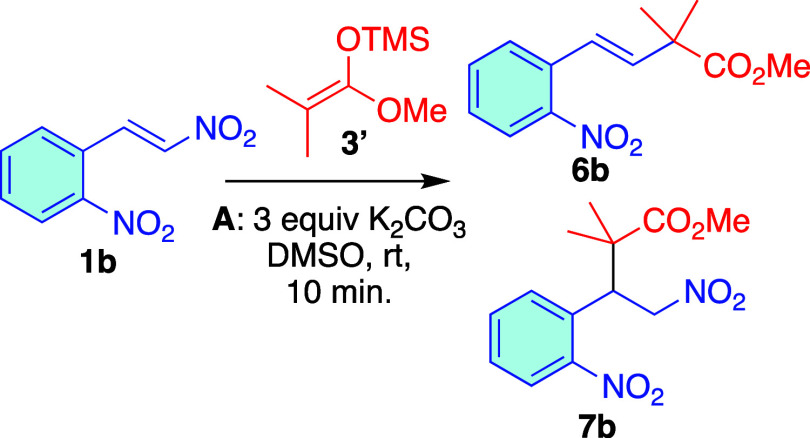 Figure 13
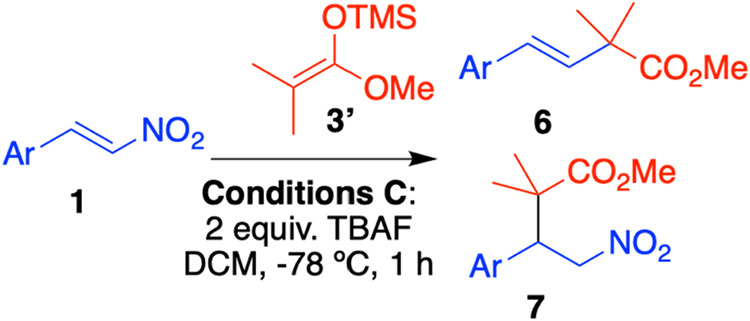 Figure 14
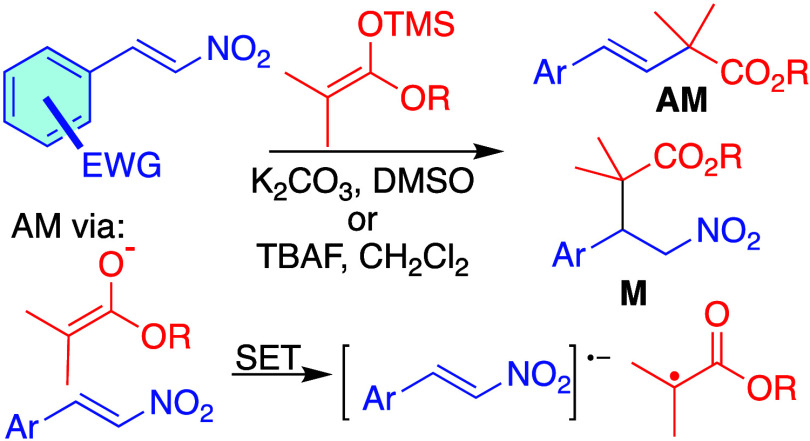 Figure 15
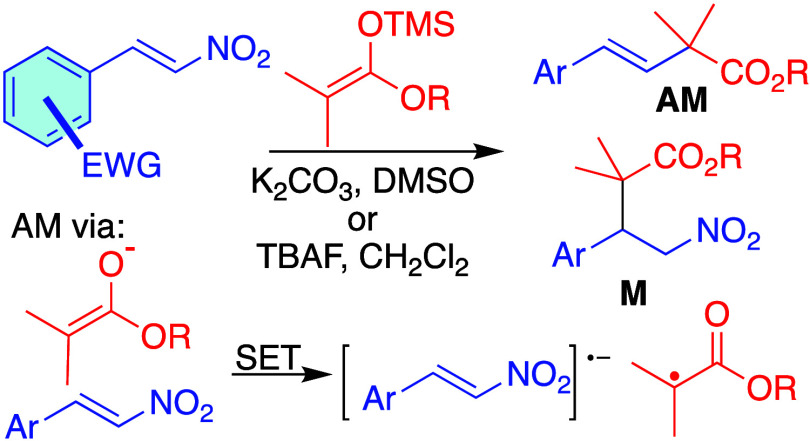 Figure 16
Peer Reviews
No public reviews on file for this paper yet. If you reviewed it on a platform where reviews are public (OpenReview, ICLR, NeurIPS, ICML), you can paste yours below so the community can read it here.
Videos
No videos yet. Explain this paper in a talk, walkthrough, or lecture? Add one.
Taxonomy
TopicsSynthesis and Biological Evaluation · Catalytic C–H Functionalization Methods · Chemical Reaction Mechanisms