Adhesion of Self-Complementary, Sinusoidal Surfaces Fabricated Using Two-Photon Polymerization
Madelyn P. Jeske, Hannan Wang, Hesam Askari, David R. Harding, Mitchell Anthamatten

TL;DR
Researchers developed a method to control adhesion between 3D-printed surfaces using temperature and mechanical compression, achieving high adhesive strength for microscale applications.
Contribution
A novel approach to switchable adhesion using self-complementary metasurfaces fabricated with two-photon polymerization.
Findings
Adhesive strength between printed surfaces exceeded 3 MPa when tested with pull-off stress.
Heating surfaces above 60°C reduced adhesion, while compression and cooling increased it.
Tailoring complementary surfaces could enable microscale disassembly for component recovery.
Abstract
Microscale, pick-and-place assembly is a non-lithographic assembly method poised to impact diverse fields including flexible electronics, microfluidics and robotics. However, a major technological challenge is the need to deterministically control adhesion between parts. Here, switchable adhesion involving 3D-printed, self-complementary surfaces is demonstrated. Mechanical properties of metasurfaces pressed against flat, rigid substrates are modeled using finite element methods. A series of flat slabs and metastructured slabs with 2D sinusoidal surfaces are printed using two-photon polymerization (2PP) of a shape-memory resin. The surface frequency of featured slabs was varied between 3.3̅ mm–1 and 26.6̅ mm–1 with similar amplitudes. Adhesion between printed metasurfaces and glass and between printed, self-complementary metasurfaces is studied above and below the cured resin’s glass…
Genes, proteins, chemicals, diseases, species, mutations and cell lines named across the full text — each resolved to its canonical identifier and authoritative record.
Click any figure to enlarge with its caption.
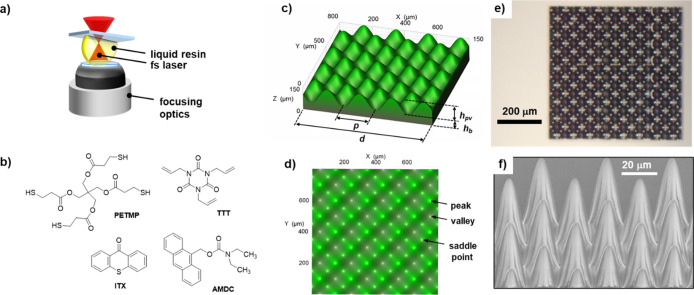 Figure 1
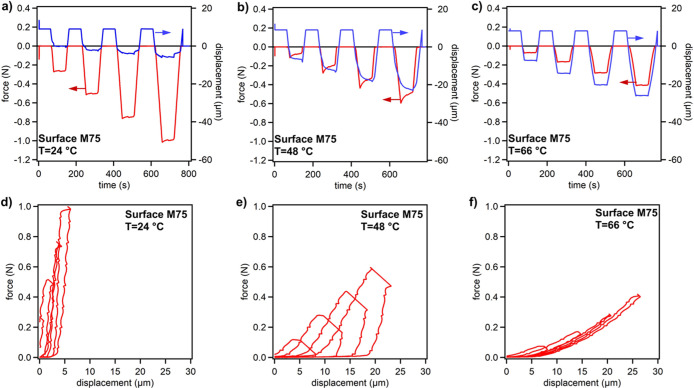 Figure 2
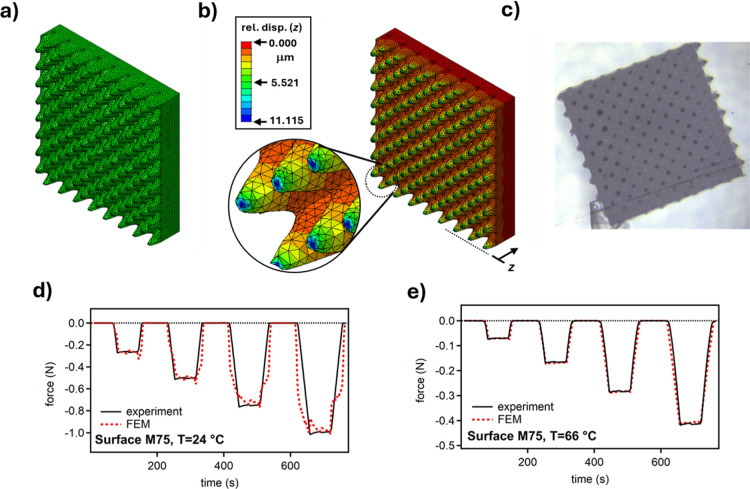 Figure 3
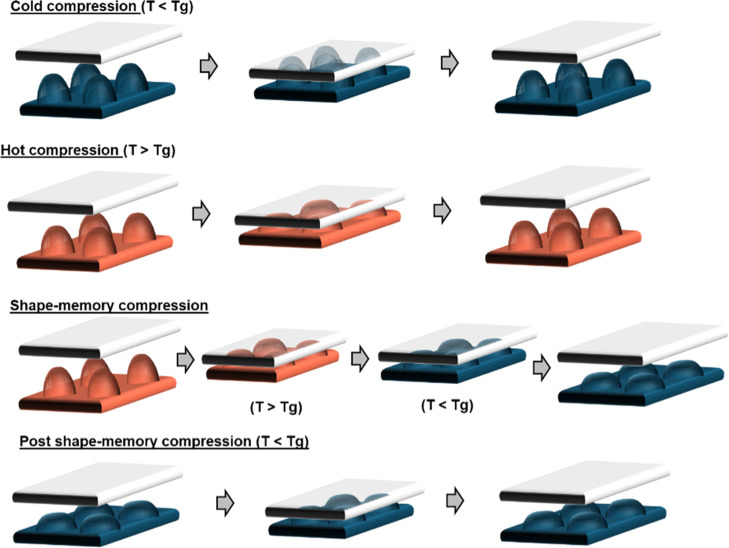 Figure 4
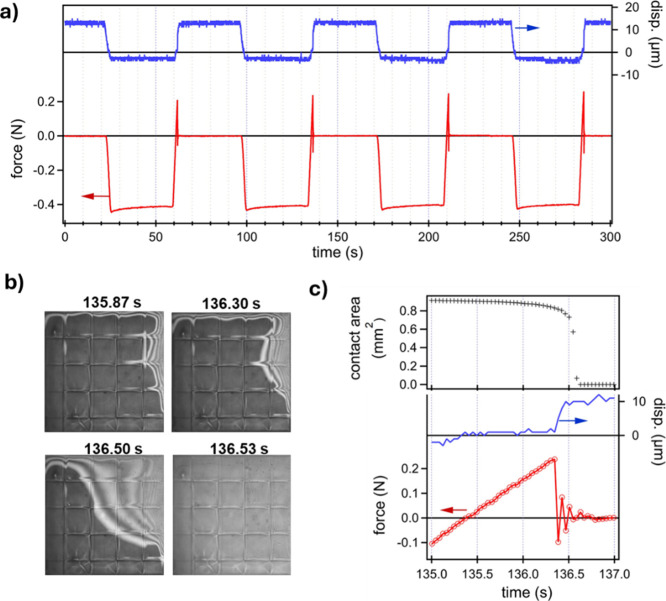 Figure 5
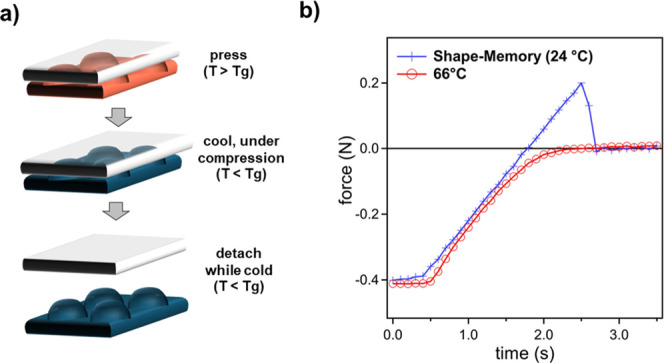 Figure 6
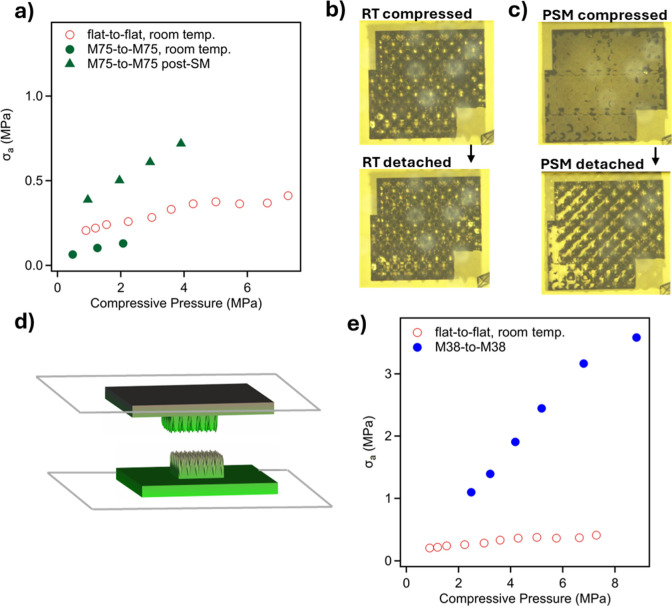 Figure 7
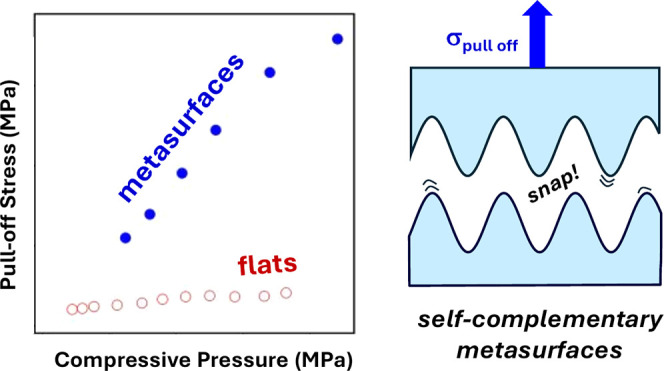 Figure 8
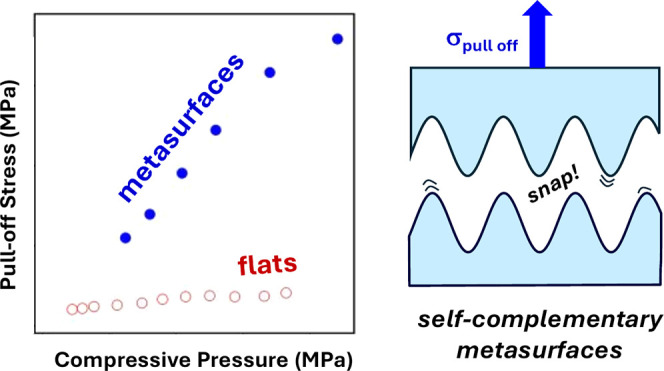 Figure 9
 Figure 10
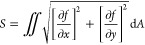 Figure 11
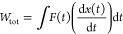 Figure 12
 Figure 13
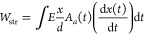 Figure 14
 Figure 15
Peer Reviews
No public reviews on file for this paper yet. If you reviewed it on a platform where reviews are public (OpenReview, ICLR, NeurIPS, ICML), you can paste yours below so the community can read it here.
Videos
No videos yet. Explain this paper in a talk, walkthrough, or lecture? Add one.
Taxonomy
TopicsAdhesion, Friction, and Surface Interactions · Advanced Sensor and Energy Harvesting Materials · Advanced Materials and Mechanics