Implementation Outcomes of Reusable Learning Objects in Health Care Education Across Three Malaysian Universities: Evaluation Using the RE-AIM Framework
Hooi Min Lim, Chin Hai Teo, Yew Kong Lee, Ping Yein Lee, Kuhan Krishnan, Zahiruddin Fitri Abu Hassan, Phelim Voon Chen Yong, Wei Hsum Yap, Renukha Sellappans, Enna Ayub, Nurhanim Hassan, Sazlina Shariff Ghazali, Nurul Amelina Nasharuddin, Puteri Shanaz Jahn Kassim, Faridah Idris

TL;DR
This study evaluated the use of reusable learning objects in healthcare education across three Malaysian universities using the RE-AIM framework, showing positive outcomes in reach, effectiveness, and adoption.
Contribution
The study provides a systematic evaluation of e-learning implementation outcomes using the RE-AIM framework in a healthcare education context.
Findings
RLOs were accessed by 7622 users from 48 countries, with 70.1% rating them as very helpful.
Knowledge and confidence levels improved significantly for most RLOs.
All three universities adopted RLOs across multiple healthcare disciplines.
Abstract
Current e- learning evaluation focuses on learners’ knowledge gain, satisfaction, perceptions, and attitudes; few assess the implementation outcomes of e- learning resources in teaching and learning. In this study, we used the RE-AIM (Reach, Effectiveness, Adoption, Implementation, and Maintenance) framework to systematically evaluate the implementation outcomes of reusable learning objects (RLOs) in the context of health care education. This study is a part of the Advancing Co-creation of RLOs to Digitise H ealthcare Curriculum (ACoRD) project, wherein we developed and implemented 23 RLOs across 3 Malaysian universities for medical, pharmacy, and biomedical curricula. Implementation and dissemination strategies were employed. Data were collected using a self-administered web-based questionnaire and Google Analytics. Th is study report s a cumulative RLO access of 7622 users from 48…
Genes, proteins, chemicals, diseases, species, mutations and cell lines named across the full text — each resolved to its canonical identifier and authoritative record.
Click any figure to enlarge with its caption.
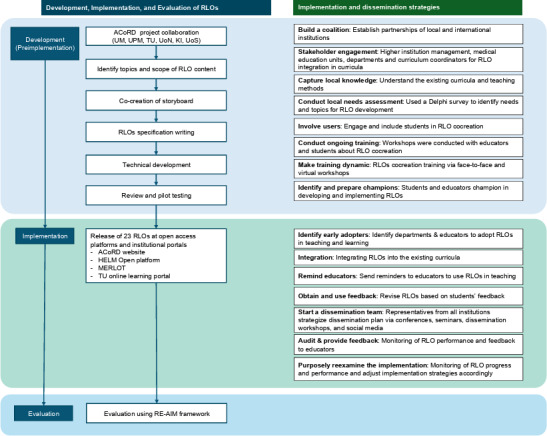 Figure 1
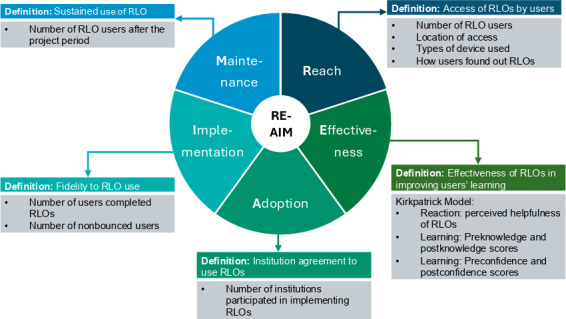 Figure 2
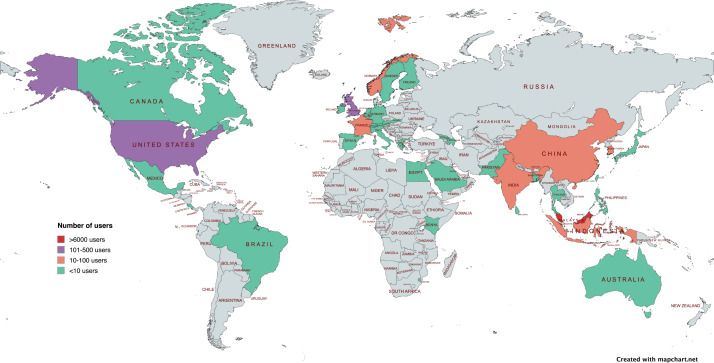 Figure 3
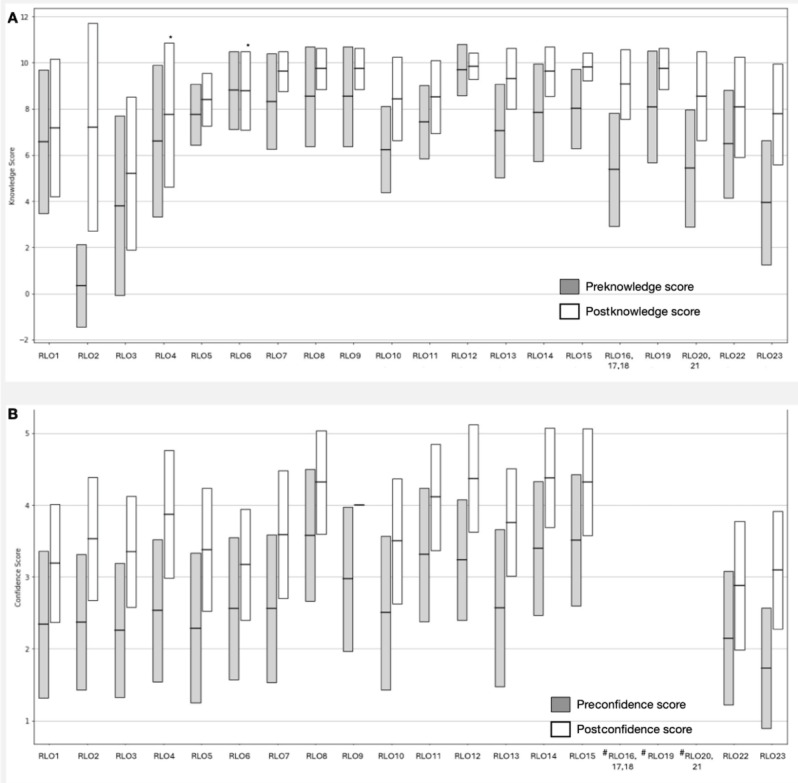 Figure 4
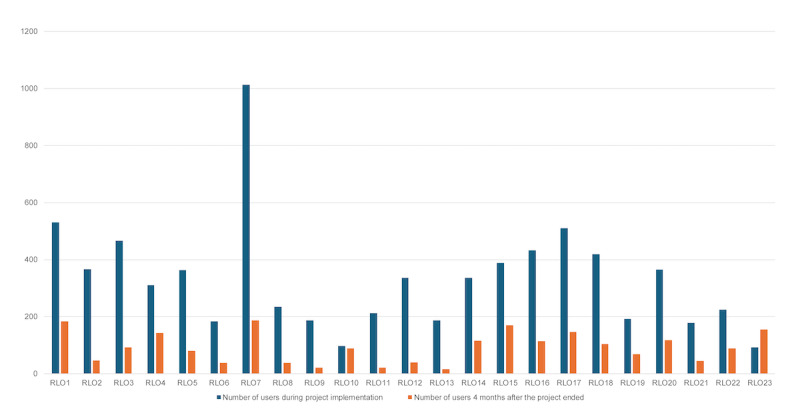 Figure 5
Peer Reviews
No public reviews on file for this paper yet. If you reviewed it on a platform where reviews are public (OpenReview, ICLR, NeurIPS, ICML), you can paste yours below so the community can read it here.
Videos
No videos yet. Explain this paper in a talk, walkthrough, or lecture? Add one.
Taxonomy
TopicsInnovations in Medical Education · E-Learning and Knowledge Management · Open Education and E-Learning