Genetic Deletion of the Purinergic Receptor P2rx7 Worsens the Phenotype of α‑Sarcoglycan Muscular Dystrophy
Cecilia Astigiano, Elisa Principi, Sara Pintus, Andrea Benzi, Serena Baratto, Chiara Panicucci, Mario Passalacqua, Juan Sierra-Marquez, Annette Nicke, Francesca Antonini, Genny Del Zotto, Annunziata Gaetana Cicatiello, Lizzia Raffaghello, Tanja Rezzonico Jost, Fabio Grassi

TL;DR
Deleting the P2rx7 gene worsens muscle disease in mice with α-sarcoglycan muscular dystrophy, suggesting that targeting this receptor may need careful timing and dosage.
Contribution
Genetic deletion of P2rx7 in α-sarcoglycan dystrophy mice unexpectedly worsens disease severity compared to pharmacological inhibition.
Findings
Genetic deletion of P2rx7 in Sgca–/– mice increased fibrosis and immune cell infiltration in diaphragm tissue.
P2X4R was co-expressed with immune cells in dystrophic muscle, suggesting a compensatory role.
Pharmacological P2X7R inhibition may have different effects than genetic deletion in dystrophic muscle.
Abstract
Limb-girdle muscular dystrophy R3 (LGMDR3), a rare genetic disorder characterized by progressive impairment of limb, diaphragmatic, and respiratory muscles, is caused by loss-of-function mutations in the α-sarcoglycan gene (SGCA) and aggravated by immune-mediated damage and fibrotic tissue replacement. Pharmacological inhibition of purinergic receptor P2X7 (P2X7R) reduced inflammation and fibrosis in Sgca –/– mice. To further define the role of P2X7R, we generated a double knockout mouse model Sgca –/– P2rx7 ‑/‑. We compared diaphragms isolated from 24-week-old Sgca –/– P2rx7 +/+ and Sgca –/– P2rx7 –/– mice since the diaphragmatic muscle is early and severely damaged by Sgca genetic loss-of-function. Unexpectedly, Sgca –/– P2rx7–/– mice displayed increased extracellular matrix deposition and augmented cellularity in fibrotic areas, in particular, a higher number of CD3+…
Genes, proteins, chemicals, diseases, species, mutations and cell lines named across the full text — each resolved to its canonical identifier and authoritative record.
Click any figure to enlarge with its caption.
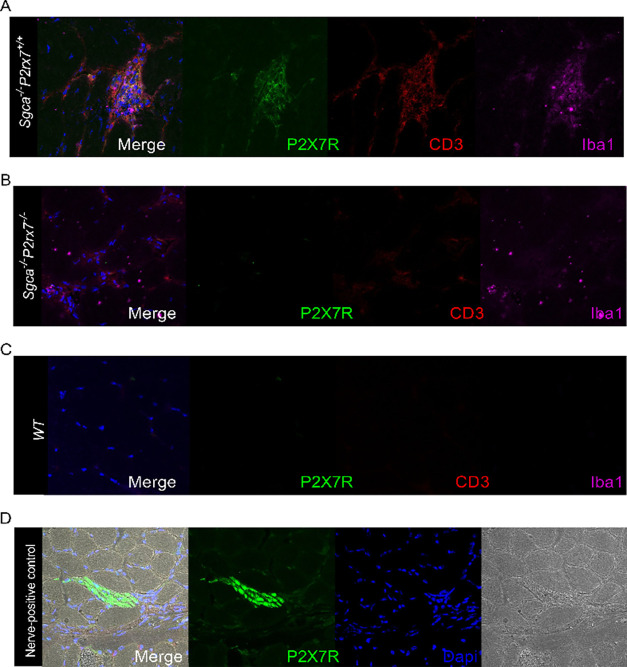 Figure 1
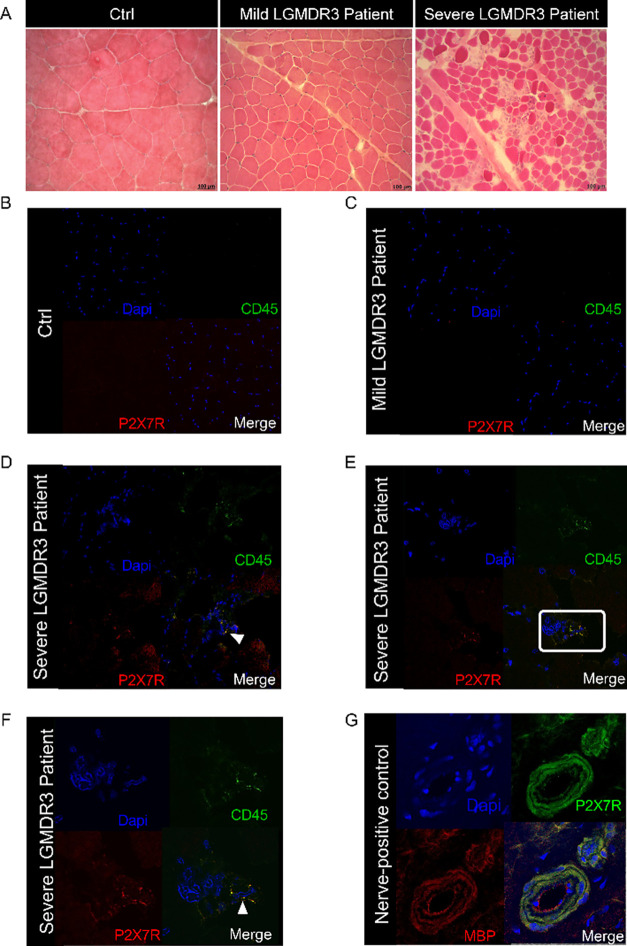 Figure 2
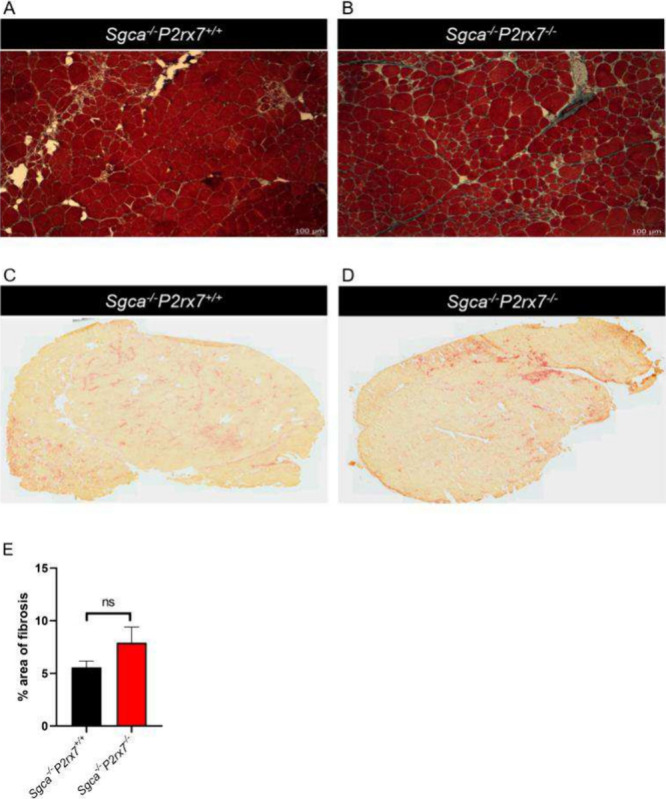 Figure 3
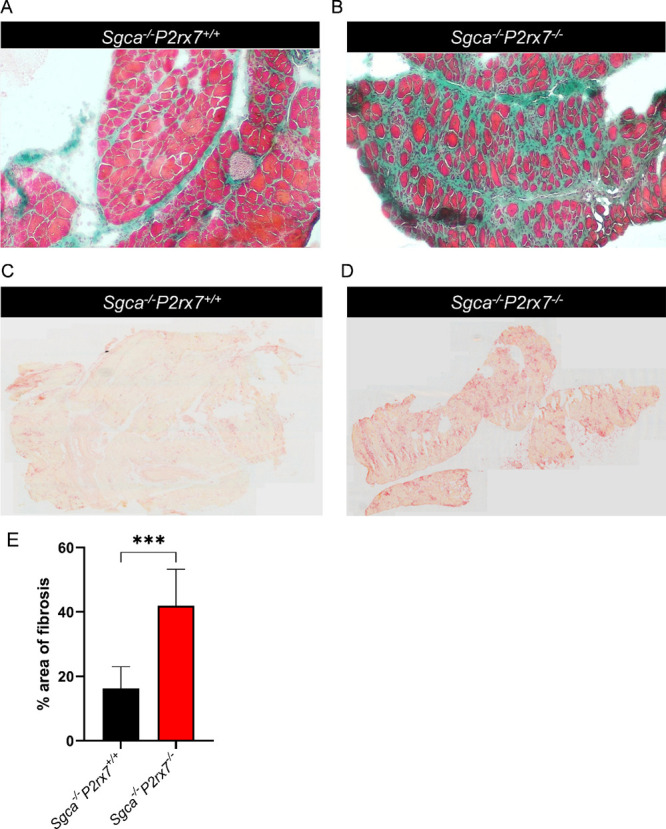 Figure 4
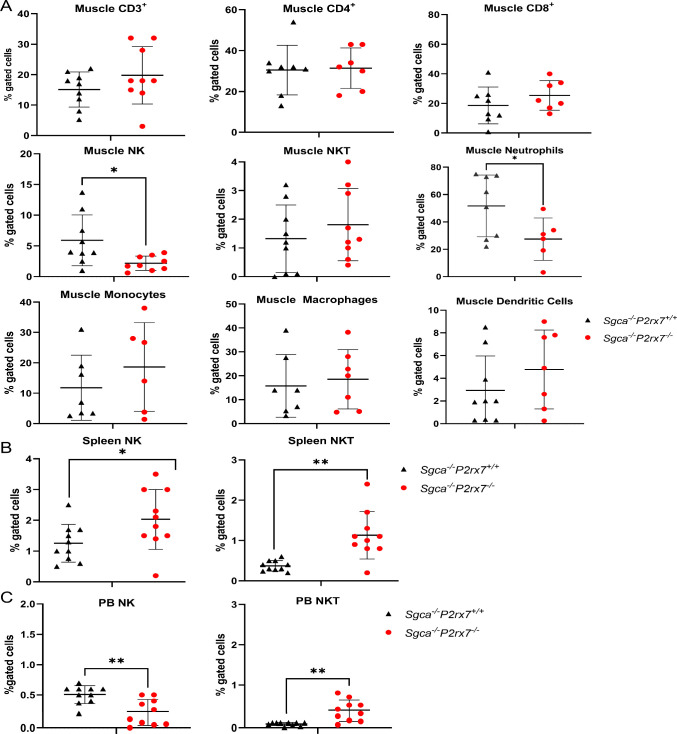 Figure 5
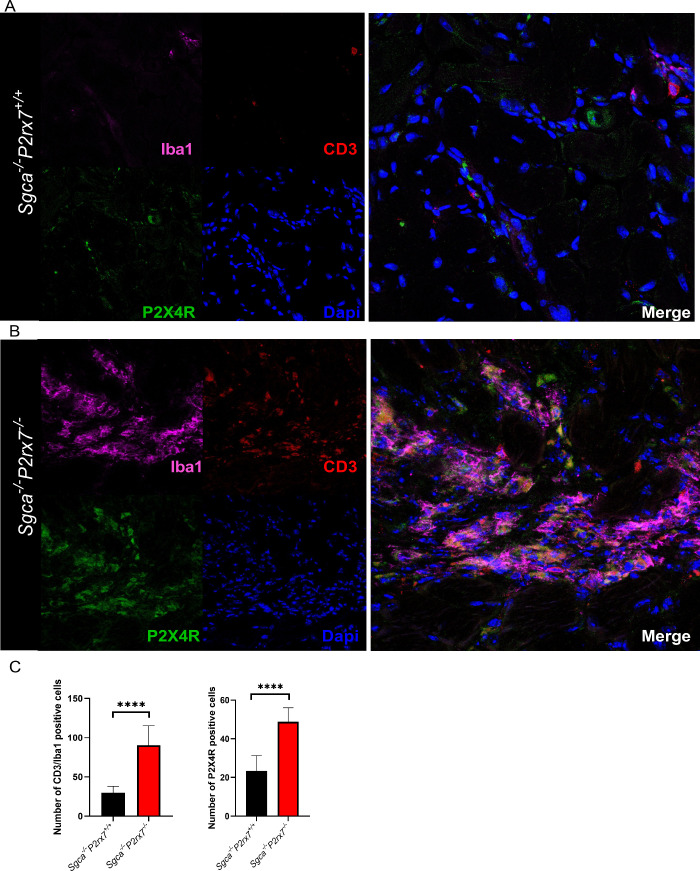 Figure 6
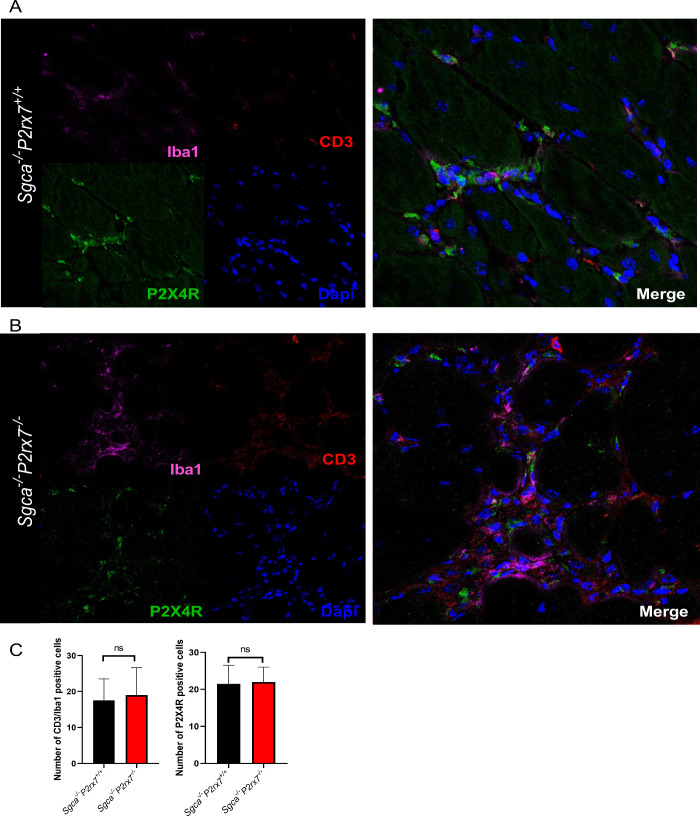 Figure 7
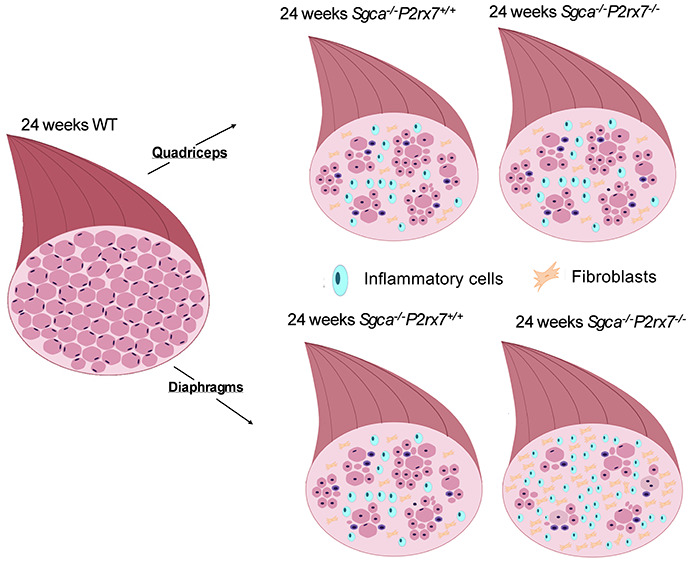 Figure 8
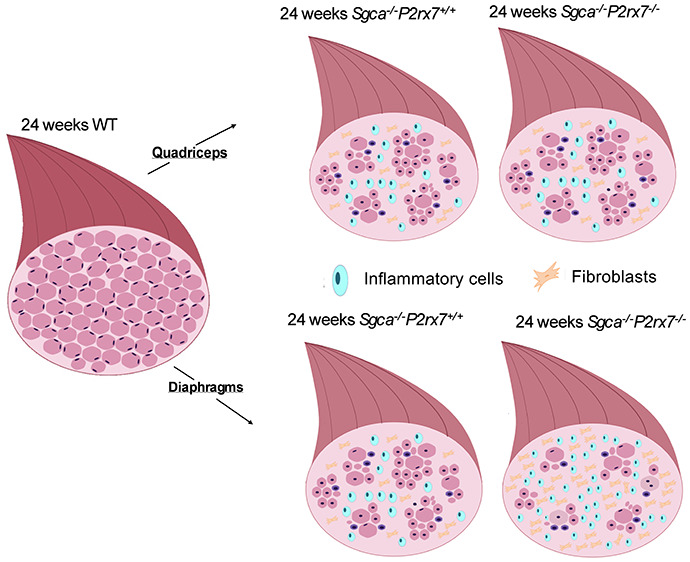 Figure 9
Peer Reviews
No public reviews on file for this paper yet. If you reviewed it on a platform where reviews are public (OpenReview, ICLR, NeurIPS, ICML), you can paste yours below so the community can read it here.
Videos
No videos yet. Explain this paper in a talk, walkthrough, or lecture? Add one.
Taxonomy
TopicsMuscle Physiology and Disorders · Adenosine and Purinergic Signaling · Nerve injury and regeneration