Reduction of Negative Charge in Mercaptoacetyl-Based Chelators Influences the Biodistribution of Prostate-Specific Membrane Antigen-Targeting Pseudopeptides Labeled with Technetium-99m
Ekaterina Bezverkhniaia, Panagiotis Kanellopoulos, Ulrika Rosenström, Vladimir Tolmachev, Anna Orlova

TL;DR
This paper explores how changing the charge of a chelator in a prostate cancer imaging tracer affects its distribution in the body.
Contribution
The study introduces new PSMA-targeting tracers with modified chelators to improve imaging and reduce kidney retention.
Findings
Reducing the negative charge of the chelator improved tracer clearance from normal organs.
Modified tracers showed efficient tumor targeting and better tumor-to-background ratios.
Tracer affinity was slightly reduced but pharmacokinetics improved in the gastrointestinal tract.
Abstract
Prostate cancer (PCa) is the most common cancer and the second leading cause of death among men worldwide. Significant progress has been made in managing PCa by targeting the prostate-specific membrane antigen (PSMA), which holds great promise for improving the accuracy and effectiveness of diagnosis. Previously, we reported a high-affinity glutamate–urea–lysine (EuK)-based PSMA-targeting tracer, BQ0413, containing the maE3 chelator for labeling with technetium-99m for single-photon emission tomography diagnostic imaging. BQ0413 demonstrated efficient tumor targeting in PCa patients with concomitant elevated activity retention in the kidneys, which is typical for EuK-based PSMA-targeting tracers. We hypothesized that a decrease in the tracer’s total negative charge, by substituting negatively charged glutamate residues in the maE3 chelator with polar neutral serine, could decrease…
Genes, proteins, chemicals, diseases, species, mutations and cell lines named across the full text — each resolved to its canonical identifier and authoritative record.
Click any figure to enlarge with its caption.
 Figure 1
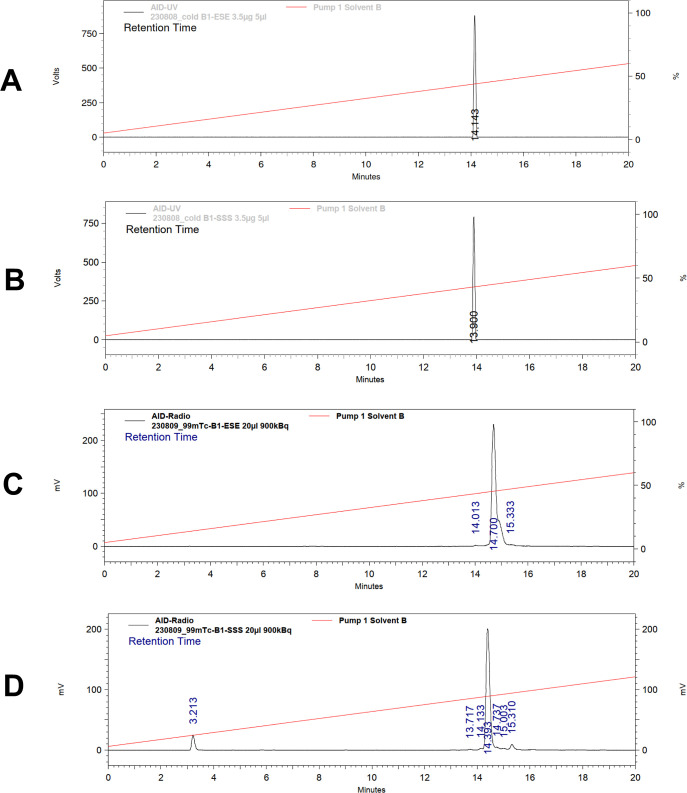 Figure 2
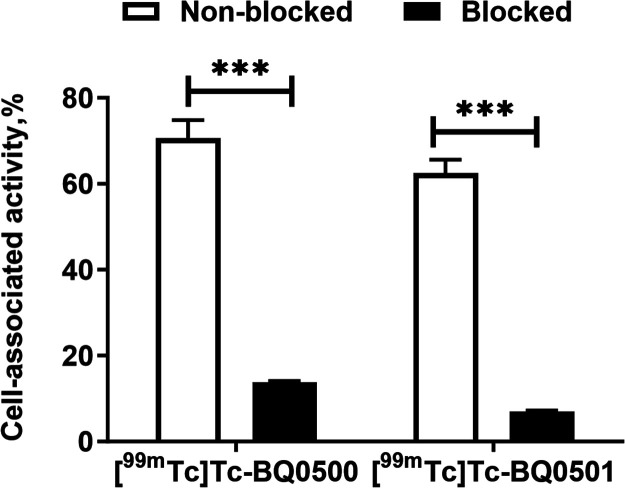 Figure 3
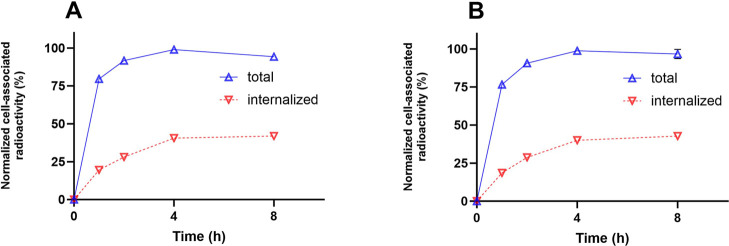 Figure 4
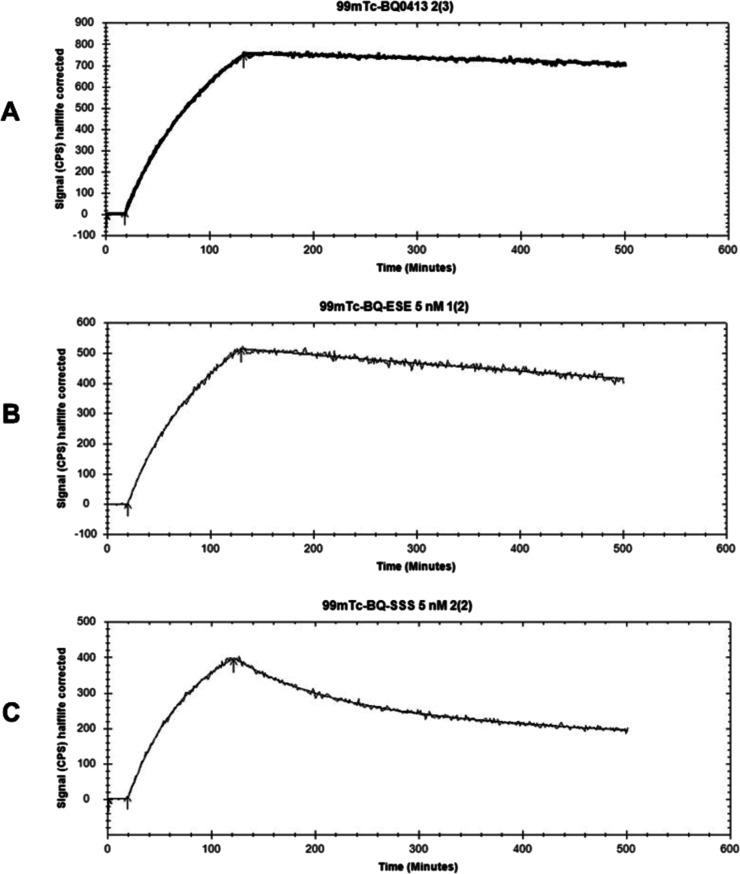 Figure 5
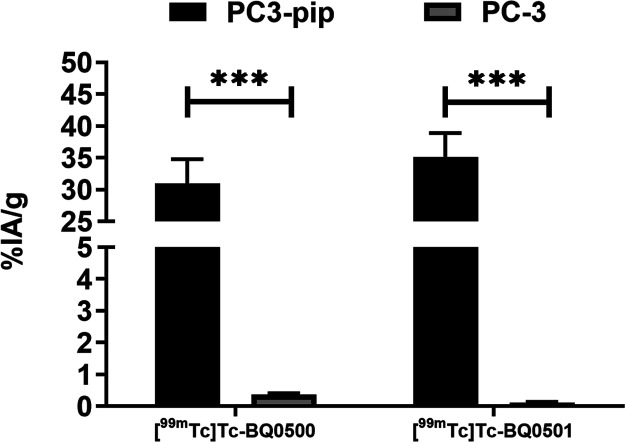 Figure 6
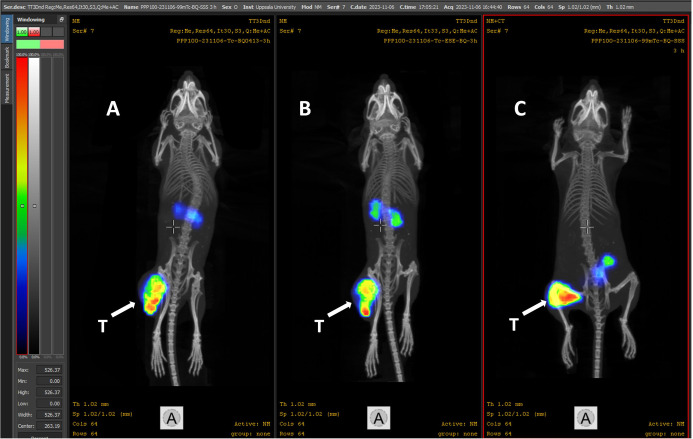 Figure 7
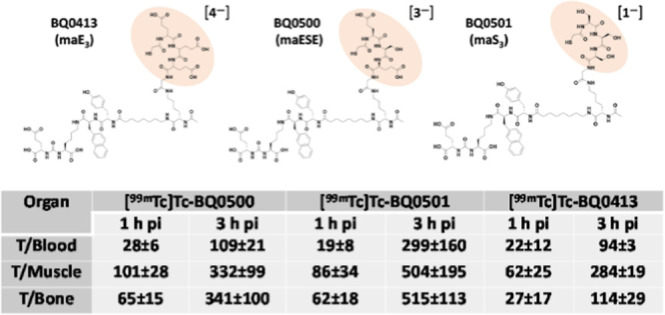 Figure 8
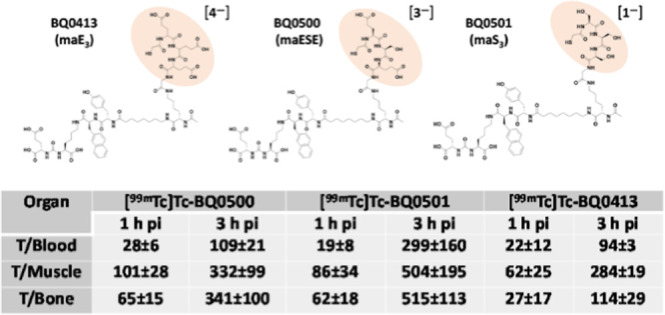 Figure 9
Peer Reviews
No public reviews on file for this paper yet. If you reviewed it on a platform where reviews are public (OpenReview, ICLR, NeurIPS, ICML), you can paste yours below so the community can read it here.
Videos
No videos yet. Explain this paper in a talk, walkthrough, or lecture? Add one.
Taxonomy
TopicsRadiopharmaceutical Chemistry and Applications · Prostate Cancer Treatment and Research · Medical Imaging and Pathology Studies