Biocatalytic synthesis of phenyl benzoate esters using the amide ligase ClxA
Alexander Ascham, Qingyun Tang, Ian J. S. Fairlamb, Gideon Grogan

TL;DR
Researchers found that the enzyme ClxA can efficiently create phenyl benzoate esters and can be modified to work with a wider range of substrates.
Contribution
The study demonstrates that ClxA, originally known for amide bond formation, can be repurposed and engineered for ester synthesis with expanded substrate tolerance.
Findings
ClxA catalyzes phenyl benzoate ester formation from benzoic acids and phenols in aqueous solution.
X-ray crystallography revealed the structure of ClxA with AMP and 3,4-aminohydroxybenzoic acid.
Engineered variants N226L and K140A of ClxA exhibit broader substrate specificity for ester synthesis.
Abstract
The synthesis of ester bonds using lipases is one of the most frequently performed reactions in biocatalysis, yet examples of the enzymatic synthesis of phenyl benzoate esters are comparatively rare. In this report we show that the ligase ClxA, from Clostridium cavendishii, initially reported to have roles in amide bond formation in the biosynthesis of benzoxazole antibiotics, is an effective catalyst for the formation of phenyl benzoate esters from acid and phenol substrates using ATP in an aqueous medium. The structure of ClxA in a complex with both AMP and 3,4-aminohydroxybenzoic acid was determined by X-ray crystallography to 2.15 Å resolution and used as a platform to engineer the enzyme to create variants N226L and K140A possessing broader substrate specificity for ester formation, and also the ability to enable the synthesis of native amide product oligomers. The ligase ClxA…
Genes, proteins, chemicals, diseases, species, mutations and cell lines named across the full text — each resolved to its canonical identifier and authoritative record.
Click any figure to enlarge with its caption.
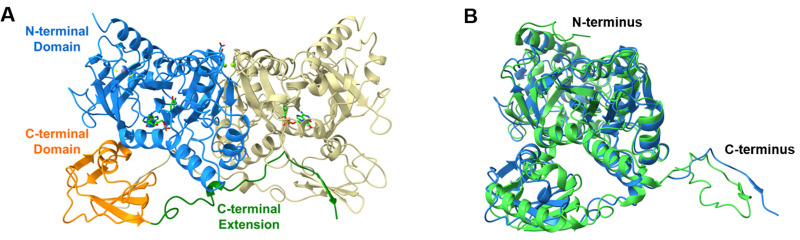 Figure 1
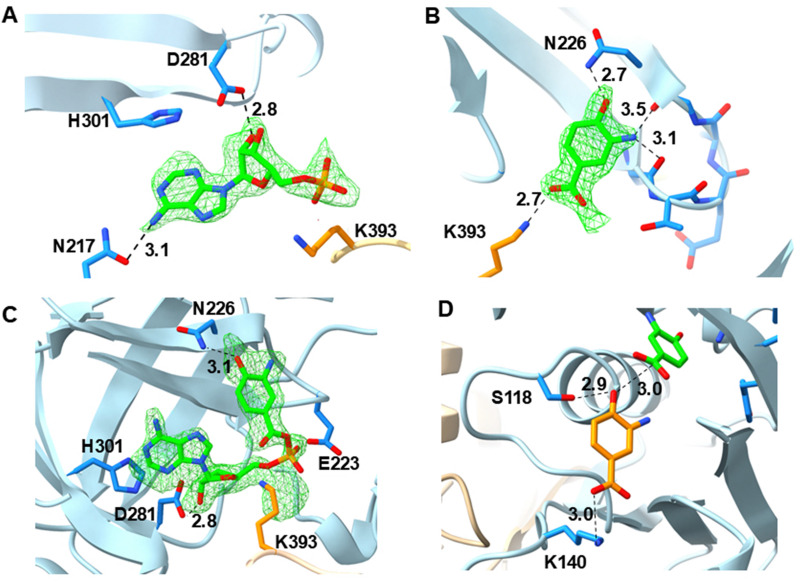 Figure 2
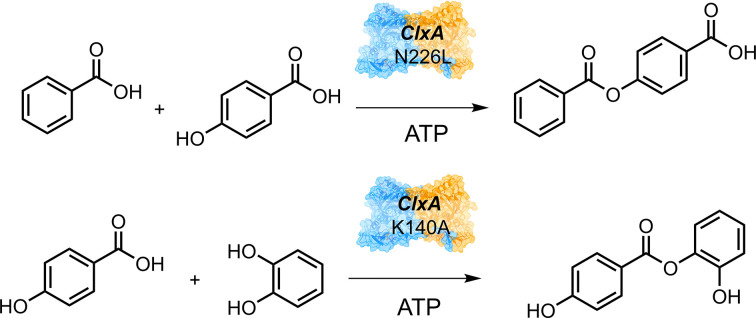 Figure 3
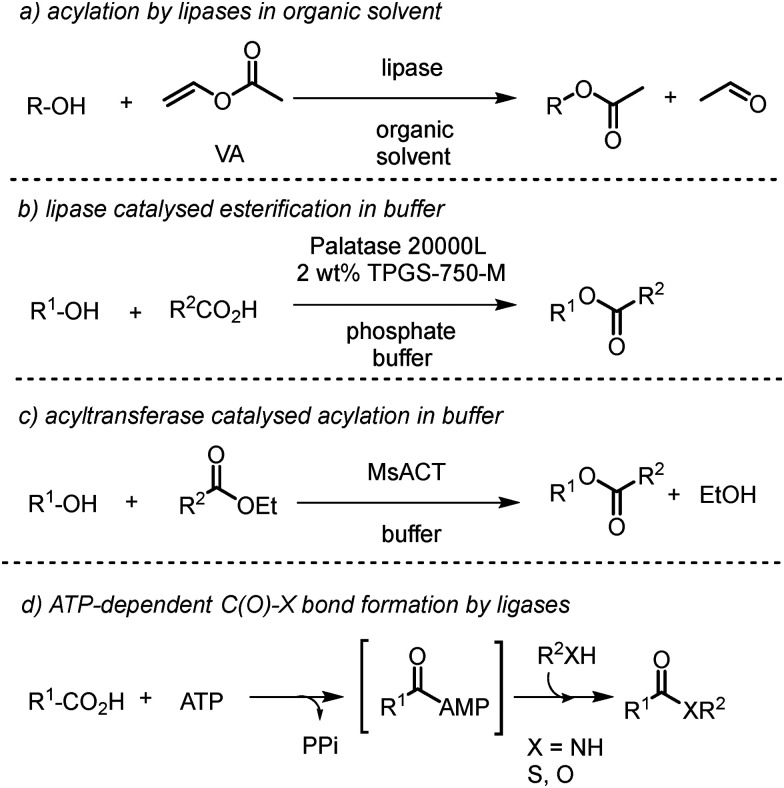 Figure 4
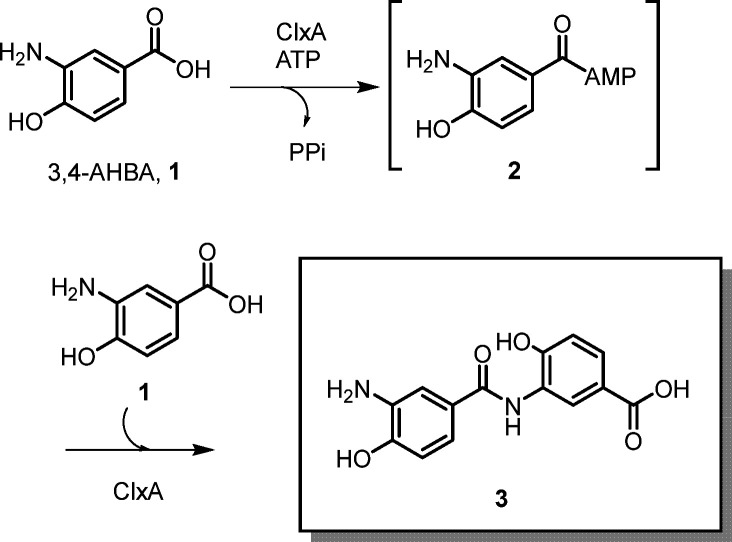 Figure 5
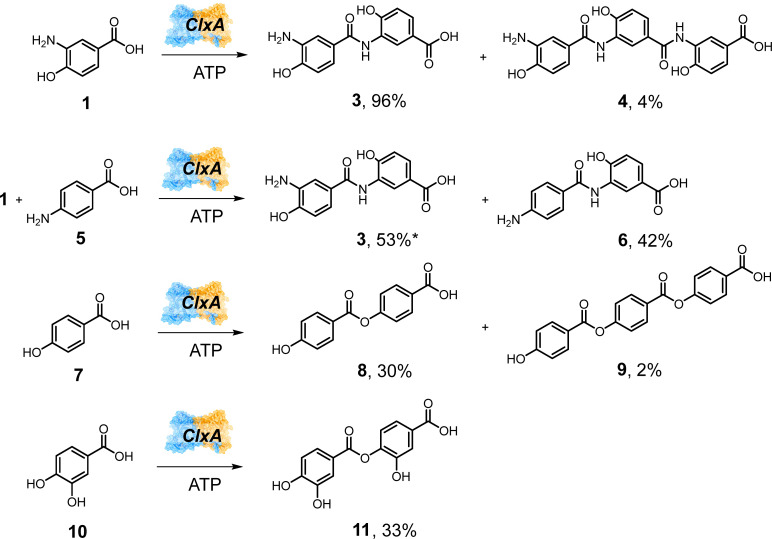 Figure 6
 Figure 7
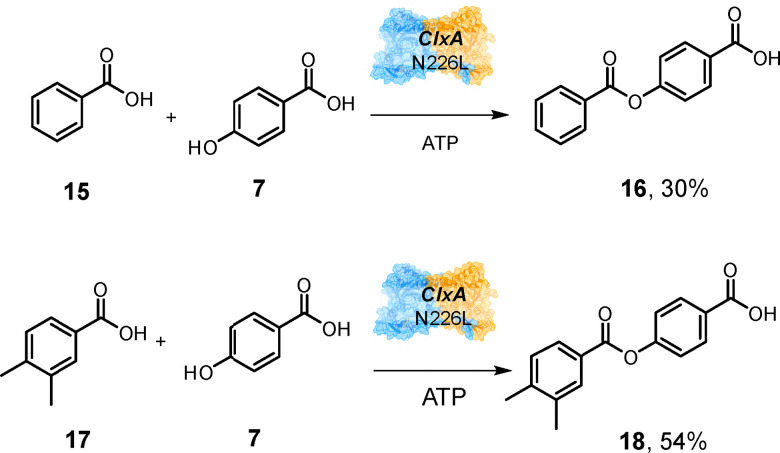 Figure 8
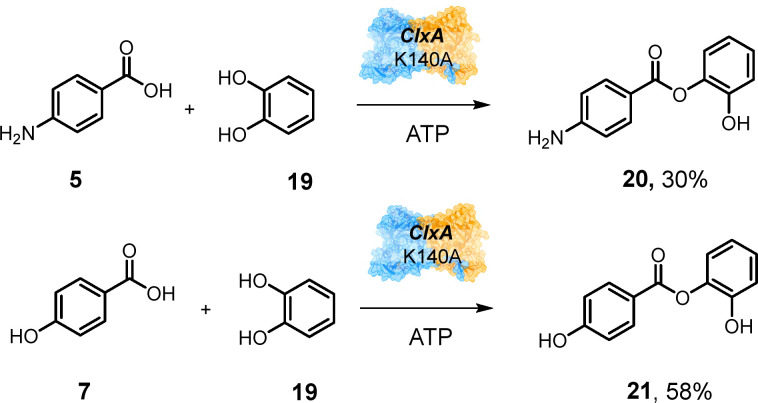 Figure 9
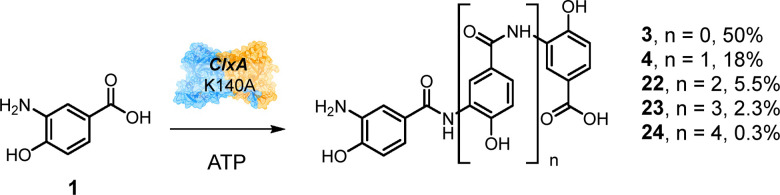 Figure 10
Peer Reviews
No public reviews on file for this paper yet. If you reviewed it on a platform where reviews are public (OpenReview, ICLR, NeurIPS, ICML), you can paste yours below so the community can read it here.
Videos
No videos yet. Explain this paper in a talk, walkthrough, or lecture? Add one.
Taxonomy
TopicsEnzyme Catalysis and Immobilization · Chemical synthesis and alkaloids · Analytical Chemistry and Chromatography