ACSS2 involved in acetyl‐CoA synthesis regulates skeletal muscle function
Mekala Gunasekaran, Gloriana Campos, Natalya M. Wells, Khanhlinh Lambuu, Isabelle Draper, Christina A. Pacak, Peter B. Kang

TL;DR
ACSS2 is essential for skeletal muscle function, as its deficiency causes muscle atrophy, lipid accumulation, and impaired movement in mice and flies.
Contribution
This study reveals ACSS2's role in skeletal muscle function and metabolism, linking it to cholesterol pathways and muscle diseases.
Findings
ACSS2 deficiency in mice causes muscle atrophy, lipid accumulation, and reduced NADH levels.
ACSS2 deficiency in flies leads to reduced body size and locomotor defects.
ACSS2 is crucial for maintaining skeletal muscle function and metabolism.
Abstract
Acyl‐coenzyme A synthetase short‐chain family member‐2 (ACSS2) catalyzes the conversion of acetate to acetyl‐CoA, regulating cholesterol metabolism. Given the discovery of a muscular dystrophy associated with 3‐hydroxy‐3‐methyl‐glutaryl‐coenzyme A reductase (HMGCR), a key enzyme in cholesterol synthesis, we studied Acss2 in mice and the orthologous gene AcCoA in flies. Skeletal muscle from Acss2 −/− mice showed atrophic fibers, lipid accumulation, and depleted NADH levels, while myoblasts from these mice displayed precocious differentiation. Exercise induced fatigue in the Acss2 −/− mice, which was accentuated by inhibition of ATP‐citrate lyase (ACLY) activity. AcCoA knockdown yielded reduced body sizes and locomotor defects in Drosophila. ACSS2 is vital for skeletal muscle function and merits study as a potential factor in muscle diseases related to cholesterol metabolism. Impact…
Genes, proteins, chemicals, diseases, species, mutations and cell lines named across the full text — each resolved to its canonical identifier and authoritative record.
Click any figure to enlarge with its caption.
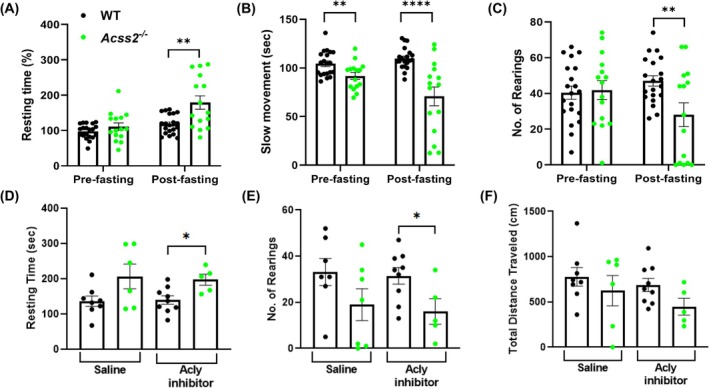 Figure 1
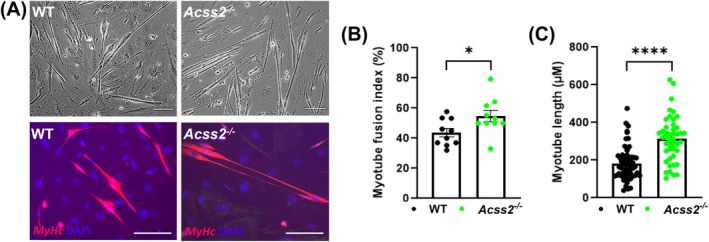 Figure 2
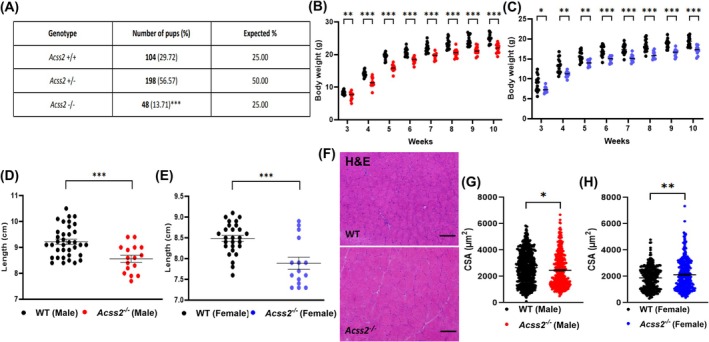 Figure 3
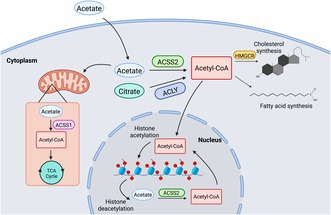 Figure 4
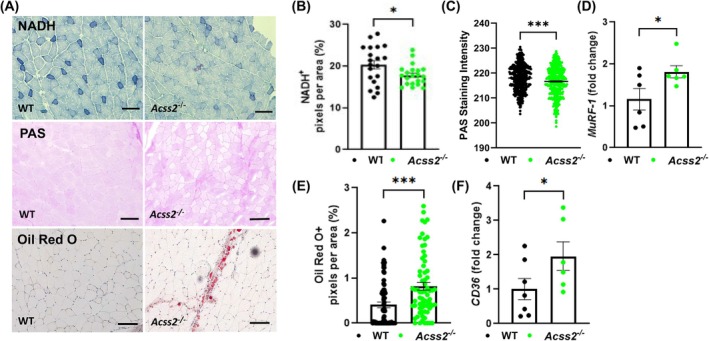 Figure 5
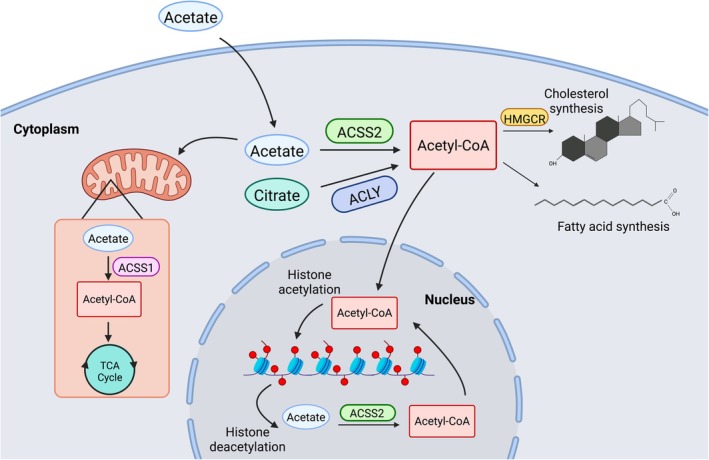 Figure 6
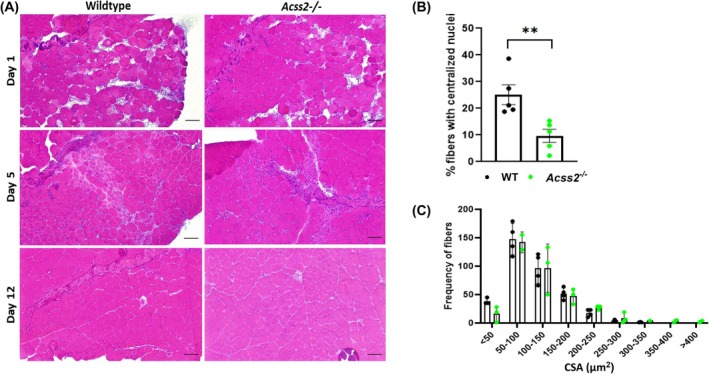 Figure 7
Peer Reviews
No public reviews on file for this paper yet. If you reviewed it on a platform where reviews are public (OpenReview, ICLR, NeurIPS, ICML), you can paste yours below so the community can read it here.
Videos
No videos yet. Explain this paper in a talk, walkthrough, or lecture? Add one.
Taxonomy
TopicsAdipose Tissue and Metabolism · Peroxisome Proliferator-Activated Receptors · Metabolomics and Mass Spectrometry Studies