Scope of Message Planning: Evidence From Production of Sentences With Heavy Sentence‐Final NPs
Agnieszka E. Konopka

TL;DR
This study explores how much information speakers plan before forming sentences, showing that they consider both the beginning and end of a sentence early on.
Contribution
The study provides new evidence that message-level planning includes conceptual details about both sentence-initial and sentence-final elements.
Findings
Speech onsets and eye movements indicate early planning of sentence-final characters.
Speakers incorporate information about both sentence-initial and sentence-final elements during message-level planning.
The complexity of sentence-final characters affects speech production timing.
Abstract
Speaking begins with the generation of a preverbal message. While a common assumption is that the scope of message‐level planning (i.e., the size of message‐level increments) can be more extensive than the scope of sentence‐level planning, it is unclear how much information is typically encoded at the message level in advance of sentence‐level planning during spontaneous production. This study assessed the scope and granularity of early message‐level planning in English by tracking production of sentences with light versus heavy sentence‐final NPs. Speakers produced SVO sentences to describe pictures showing an agent acting on a patient. Half of the pictures showed one‐patient events, eliciting sentences with unmodified patient names (e.g., “The tailor is cutting the dress”), and half showed two‐patient events with a target patient and a non‐target patient. The presence of a non‐target…
Genes, proteins, chemicals, diseases, species, mutations and cell lines named across the full text — each resolved to its canonical identifier and authoritative record.
Click any figure to enlarge with its caption.
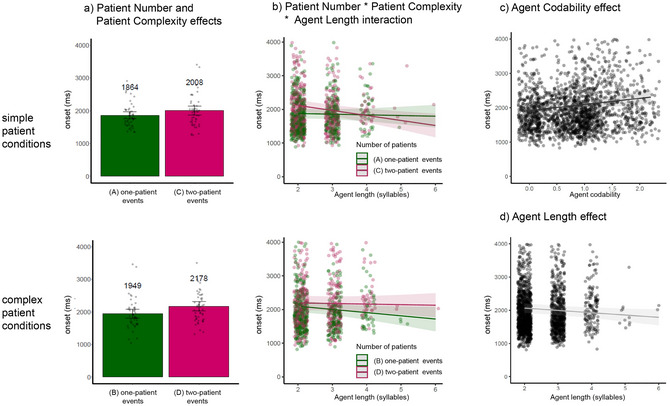 Figure 1
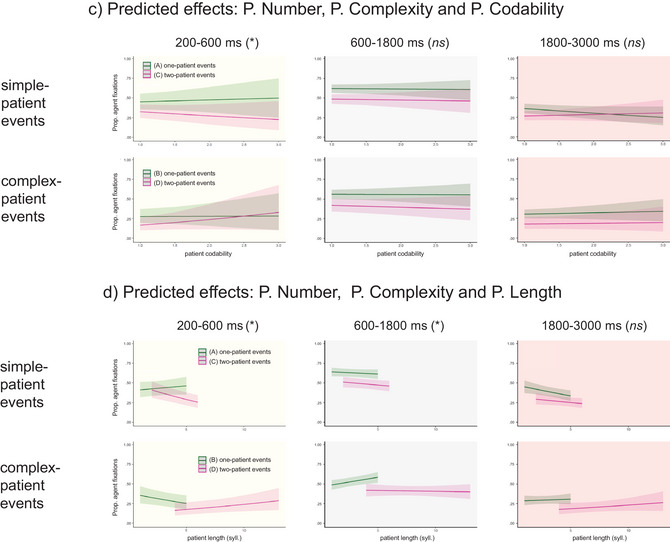 Figure 2
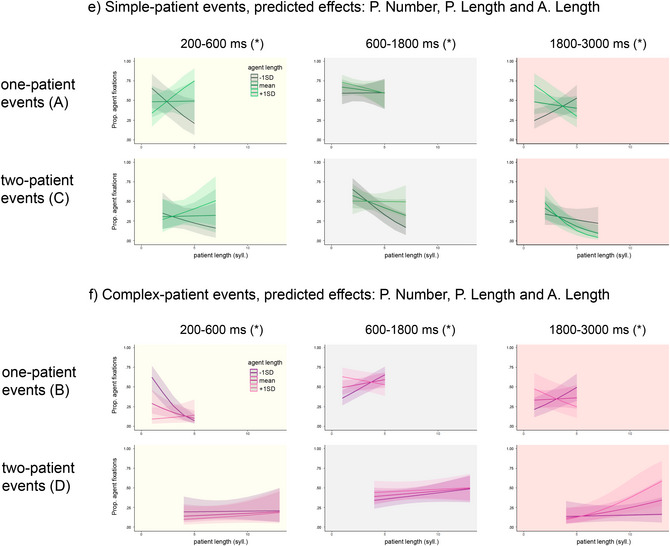 Figure 3
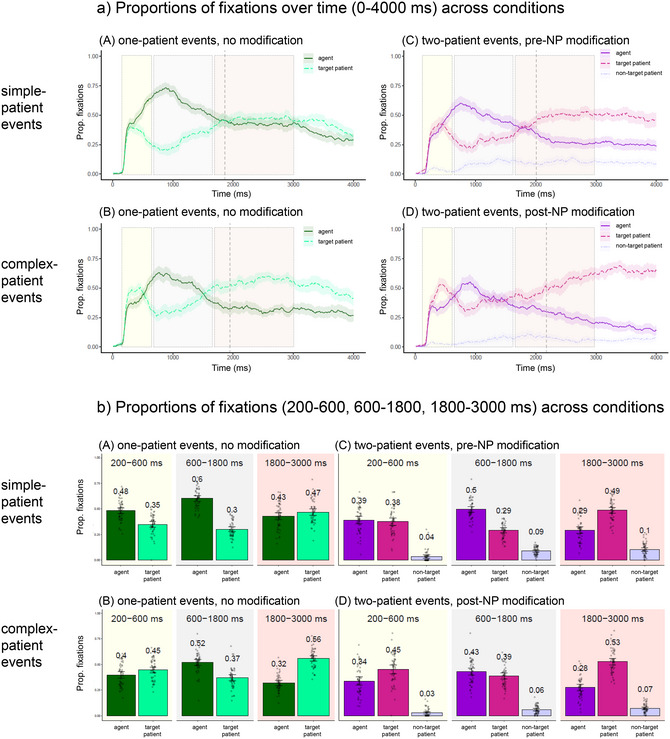 Figure 4
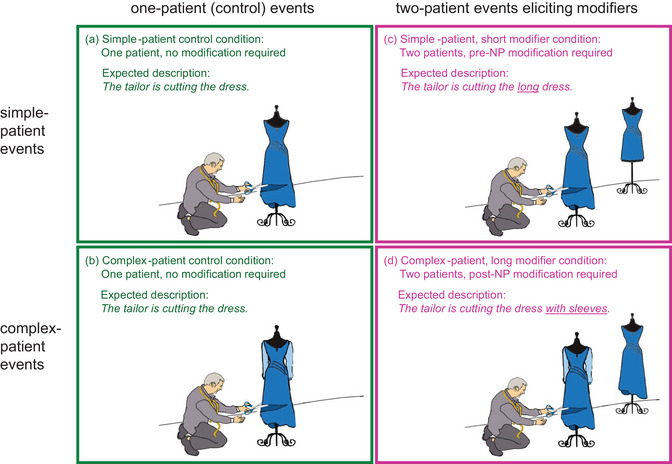 Figure 5
Peer Reviews
No public reviews on file for this paper yet. If you reviewed it on a platform where reviews are public (OpenReview, ICLR, NeurIPS, ICML), you can paste yours below so the community can read it here.
Videos
No videos yet. Explain this paper in a talk, walkthrough, or lecture? Add one.
Taxonomy
TopicsNeurobiology of Language and Bilingualism · Language Development and Disorders · Language, Discourse, Communication Strategies