Aβ42 promotes the aggregation of α‐synuclein splice isoforms via heterogeneous nucleation
Alexander Röntgen, Zenon Toprakcioglu, Michele Vendruscolo

TL;DR
The study shows how amyloid-beta (Aβ42) helps α-synuclein (αSyn) proteins clump together, linking Alzheimer's and Parkinson's disease protein aggregation.
Contribution
The study reveals a two-step co-aggregation mechanism where Aβ42 acts as a nucleation surface for αSyn isoforms.
Findings
Aβ42 aggregates first and then act as nucleation surfaces for αSyn isoforms.
Pre-formed Aβ42 seeds are more effective at promoting αSyn aggregation than in situ aggregates.
The findings suggest potential therapeutic targets for delaying mixed amyloid pathologies.
Abstract
Increasing evidence suggests that amyloid‐β (Aβ) and α‐synuclein (αSyn) co‐aggregate in Alzheimer's disease (AD) and Parkinson's disease (PD), an in other neurodegenerative disorders. We investigated how Aβ42 – the predominant Aβ form in AD – co‐aggregates with four αSyn splice isoforms (αSyn‐140, αSyn‐126, αSyn‐112 and αSyn‐98) implicated in PD, finding evidence of a two‐step process. Aβ42 first aggregated into fibrillar assemblies, which then acted as potent nucleation surfaces for initiating the aggregation of αSyn isoforms. Furthermore, pre‐formed Aβ42 seeds promoted αSyn aggregation more strongly than in situ Aβ42 aggregates. Our results reveal a unified Aβ–αSyn co‐aggregation mechanism, where Aβ aggregation and αSyn splicing synergistically drive co‐deposition. These findings could help develop therapeutic tools to target key steps in disease‐related co‐aggregation pathways.…
Genes, proteins, chemicals, diseases, species, mutations and cell lines named across the full text — each resolved to its canonical identifier and authoritative record.
Click any figure to enlarge with its caption.
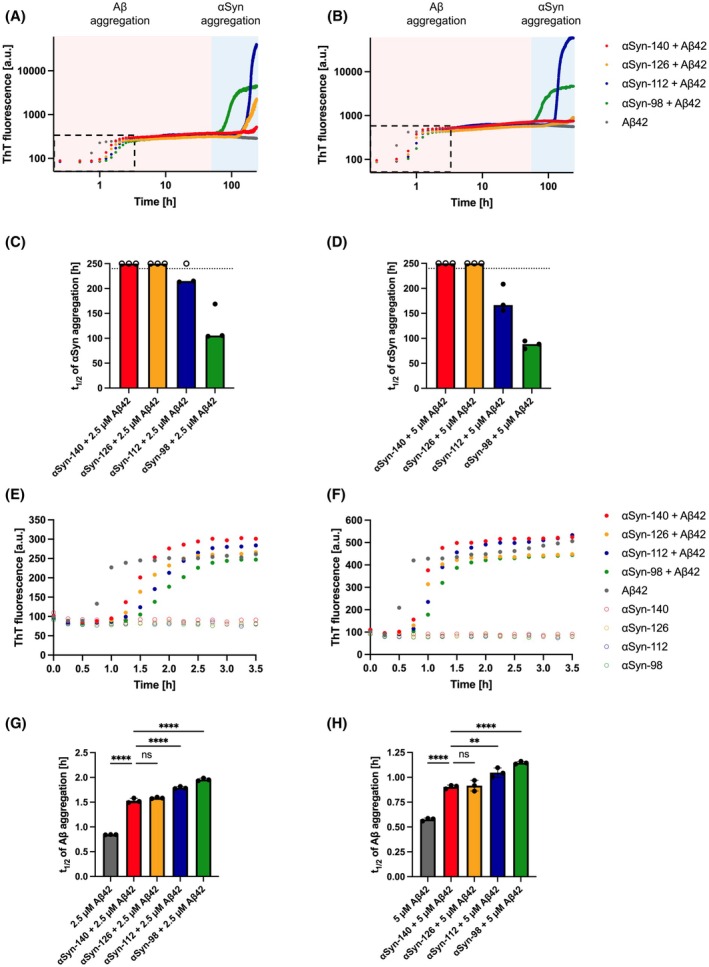 Figure 1
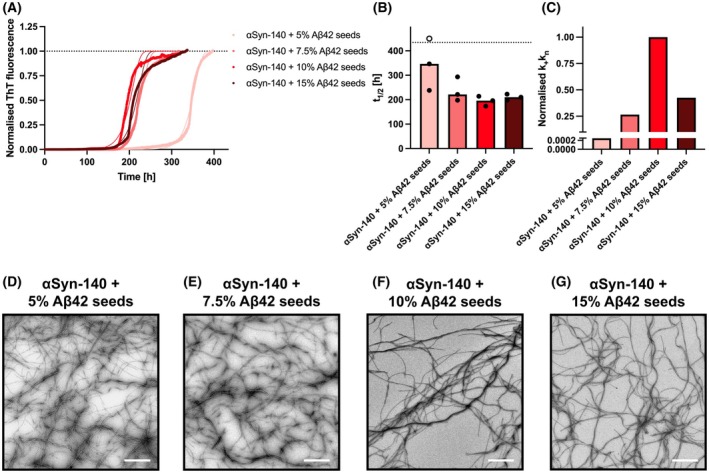 Figure 2
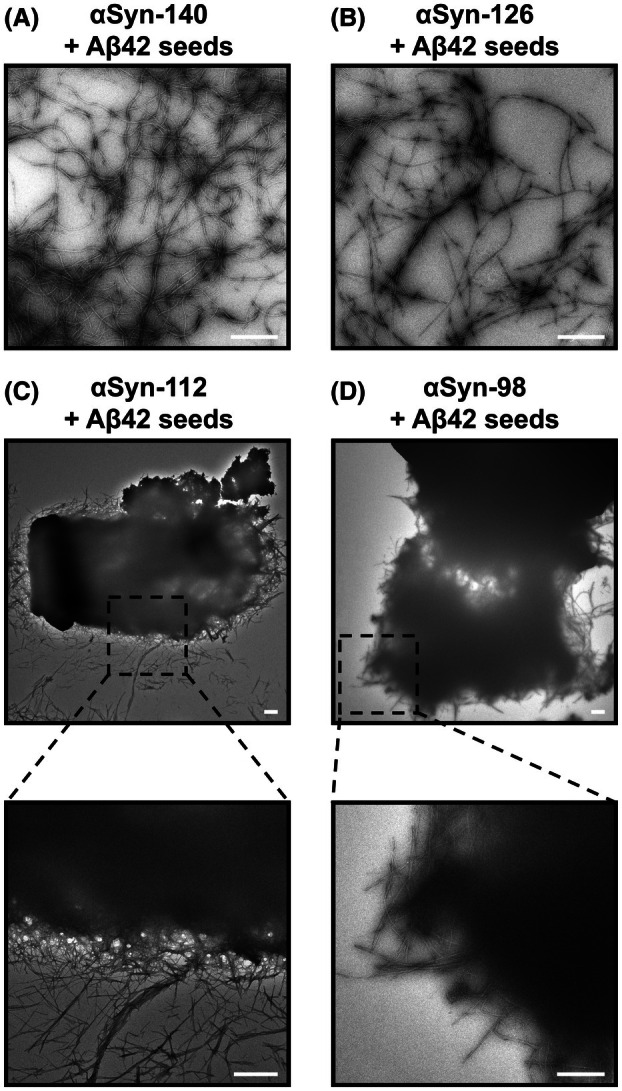 Figure 3
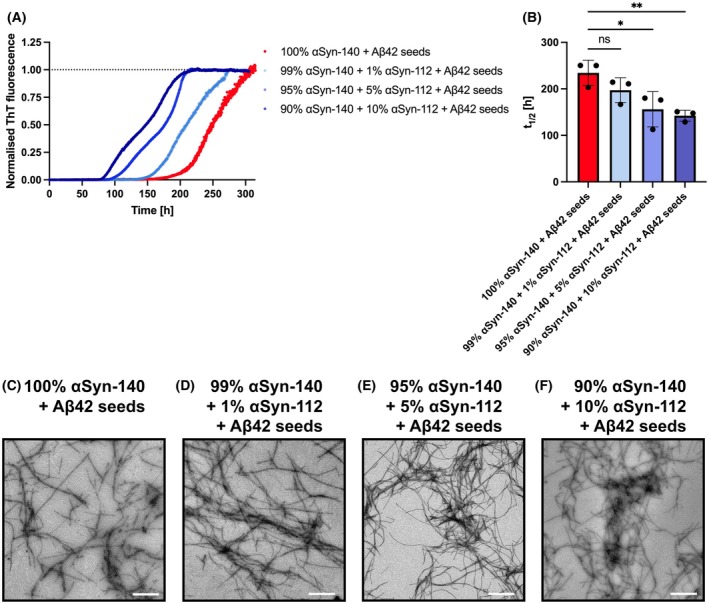 Figure 4
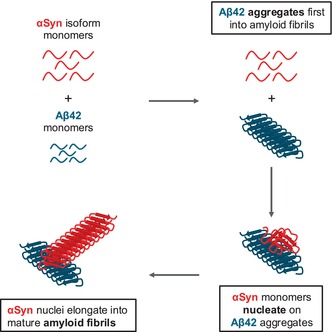 Figure 5
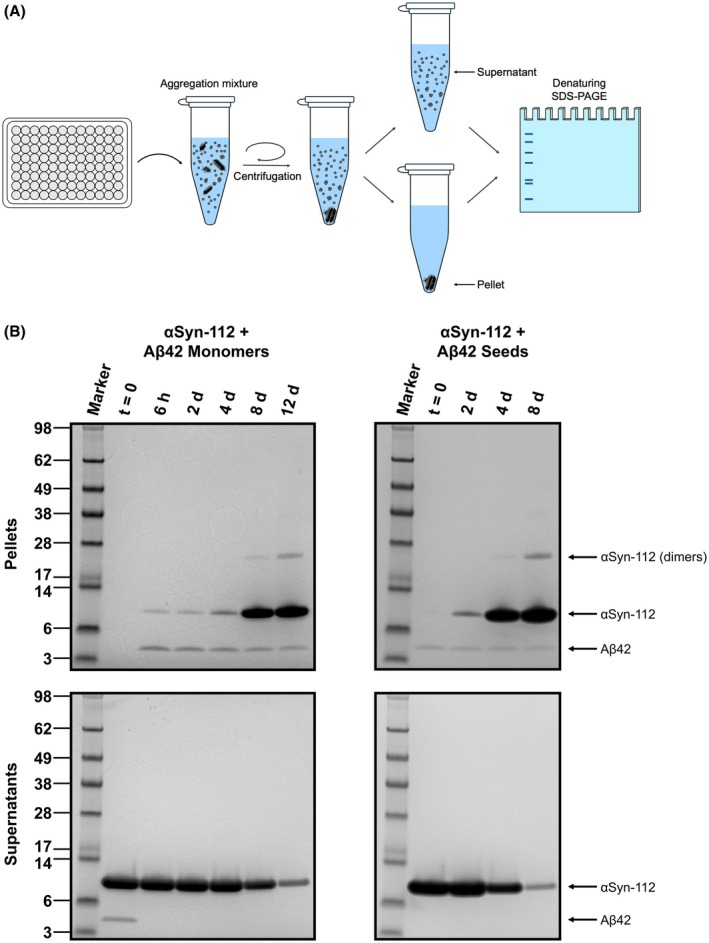 Figure 6
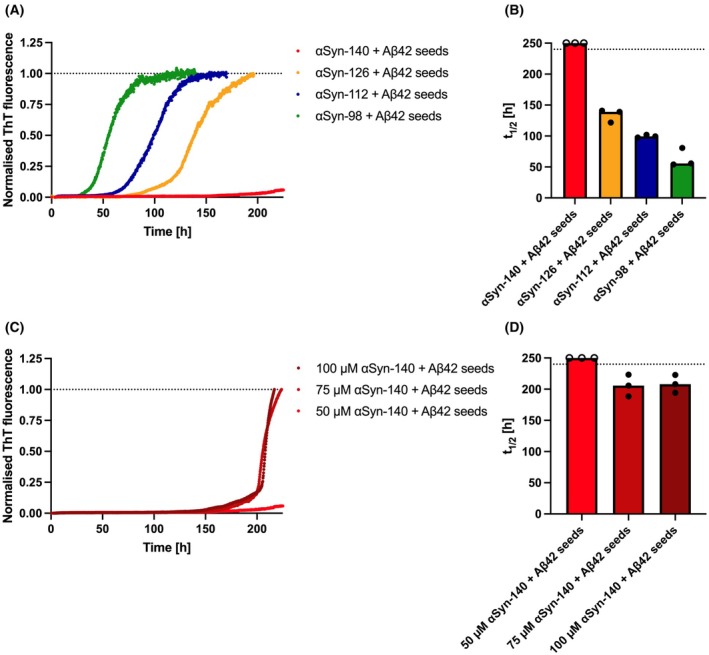 Figure 7
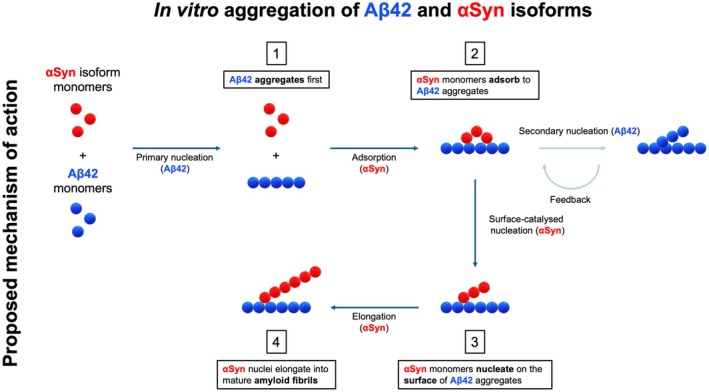 Figure 8
Peer Reviews
No public reviews on file for this paper yet. If you reviewed it on a platform where reviews are public (OpenReview, ICLR, NeurIPS, ICML), you can paste yours below so the community can read it here.
Videos
No videos yet. Explain this paper in a talk, walkthrough, or lecture? Add one.
Taxonomy
TopicsAlzheimer's disease research and treatments · Parkinson's Disease Mechanisms and Treatments · Prion Diseases and Protein Misfolding