Collaborative Dishonesty: Children Are More Likely to Cheat When They Benefit Together
Akzira Abuova, Laura Tietz, Sebastian Grueneisen

TL;DR
The study shows that young children are more likely to cheat when they collaborate with a partner, and that cultural background influences their honesty.
Contribution
The study reveals how collaborative goals can lead to dishonesty in children and highlights the impact of sociocultural factors on norm conflicts.
Findings
Children were more likely to cheat when benefiting together with a partner than when benefiting individually.
Kazakh-speaking children overreported winning outcomes more frequently than Russian-speaking children.
Collaborative motives and sociocultural contexts influence honesty in early childhood.
Abstract
Collaboration, the process by which individuals work together toward mutual benefits, is a core feature of human sociality. Capacities for collaboration emerge early in development and represent an important social competence. Yet, collaborative commitments can conflict with commitments to societal norms such as honesty and rule compliance, and little is known about whether the development of collaborative proclivities can promote dishonesty in young children. In this study, we tested pairs of 6‐ to 8‐year‐old Kazakh‐speaking and Russian‐speaking children in Kazakhstan (N = 192), a Central Asian post‐Soviet society characterized by relatively high social interdependence compared to European and North American, post‐industrialized samples commonly recruited in developmental research. Children participated in a die‐rolling game in which they could misreport the frequency of a specific…
Genes, proteins, chemicals, diseases, species, mutations and cell lines named across the full text — each resolved to its canonical identifier and authoritative record.
Click any figure to enlarge with its caption.
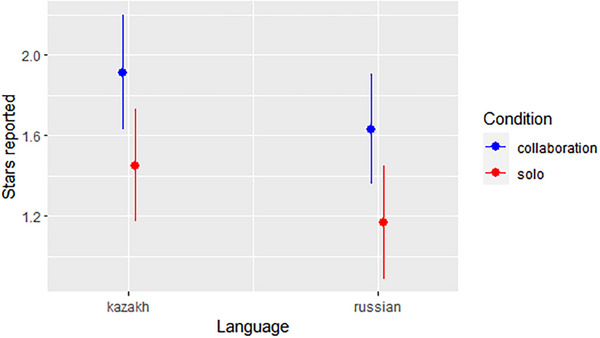 Figure 1
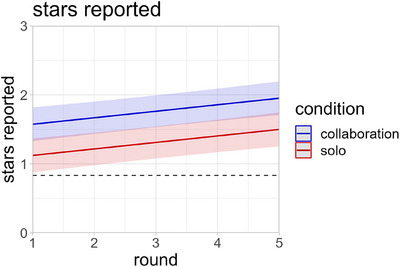 Figure 2
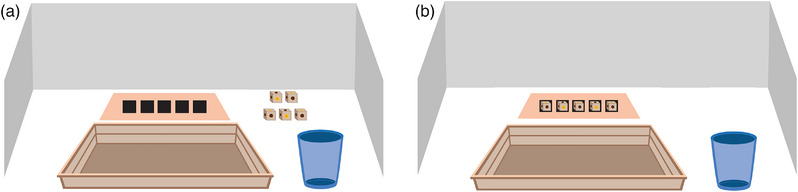 Figure 3
Peer Reviews
No public reviews on file for this paper yet. If you reviewed it on a platform where reviews are public (OpenReview, ICLR, NeurIPS, ICML), you can paste yours below so the community can read it here.
Videos
No videos yet. Explain this paper in a talk, walkthrough, or lecture? Add one.
Taxonomy
TopicsChild and Animal Learning Development · Experimental Behavioral Economics Studies · Psychology of Moral and Emotional Judgment