A biological phenotype of suicide attempt in adolescents with nonsuicidal self-injury: a machine-based learning approach
Erik Fink, Corinna Reichl, Stefan Lerch, Julian Koenig, Michael Kaess

TL;DR
This study explores biological markers that may help identify adolescents who self-harm and are at risk of suicide attempts, using machine learning.
Contribution
The study introduces a machine-based learning approach to identify a biological phenotype for suicide attempts in adolescents with nonsuicidal self-injury.
Findings
High DHEA-S and low TSH levels were the most predictive biomarkers for suicide attempts.
Reduced sets of neurobiological markers showed moderate predictive performance (AUC between 0.62 and 0.72).
Complex models slightly outperformed simpler ones in predicting suicide risk.
Abstract
Suicide attempts (SA) are a common risk in adolescents with non-suicidal self-injury (NSSI). In the present study, we investigated whether a set of biological markers contributed (above clinical features) to the distinction of adolescents with NSSI and SA from those with NSSI alone using machine-based learning approaches. Female adolescents engaging in NSSI (n = 161) were recruited from our outpatient clinic for risk-taking and self-harming behavior (AtR!Sk). Different machine-based learning models (logistic regression, elastic net regression, random forests, gradient boosted trees) with repeated cross-validation were applied. We tested whether a) the full set of neurobiological markers, b) a reduced set including preselected markers based on existing evidence (CRP, interleukin-6, salivary cortisol, DHEA-S, TSH, dopamine, norepinephrine, ACTH), and c) a model with only depressive…
Genes, proteins, chemicals, diseases, species, mutations and cell lines named across the full text — each resolved to its canonical identifier and authoritative record.
Click any figure to enlarge with its caption.
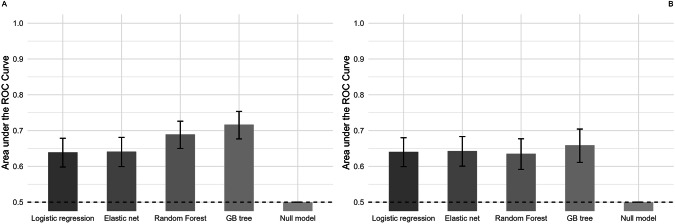 Figure 1
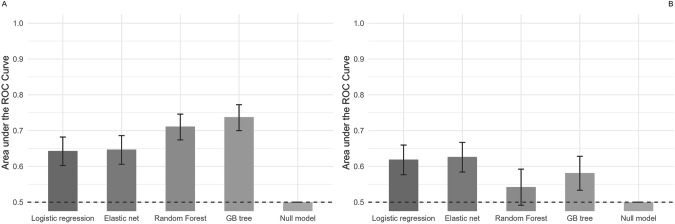 Figure 2
Peer Reviews
No public reviews on file for this paper yet. If you reviewed it on a platform where reviews are public (OpenReview, ICLR, NeurIPS, ICML), you can paste yours below so the community can read it here.
Videos
No videos yet. Explain this paper in a talk, walkthrough, or lecture? Add one.
Taxonomy
TopicsSuicide and Self-Harm Studies · Attention Deficit Hyperactivity Disorder · Nicotinic Acetylcholine Receptors Study