Optimized clonal isolation and immortalization of Rett syndrome patient fibroblasts for in vitro modeling of MECP2 mutations
Victoria Sarne, Anna Huber, Alexander V. Beribisky, Markus Hengstschläger, Franco Laccone, Hannes Steinkellner

TL;DR
Researchers developed a method to create long-lasting fibroblast models of Rett syndrome, allowing better study of MECP2 mutations and their effects.
Contribution
A scalable workflow for isolating and immortalizing clonal fibroblasts with specific MECP2 mutations is introduced.
Findings
Immortalized fibroblasts retained clonality and skewed X-chromosome inactivation.
Mutant clones showed RTT-like features such as histone hyperacetylation and oxidative stress dysregulation.
The method supports in vitro modeling of X-linked disorders and drug screening.
Abstract
Rett syndrome (RTT) is a severe neurodevelopmental disorder primarily caused by mutations in the X-linked MECP2 gene. Patient-derived fibroblasts serve as a practical system to study systemic aspects of RTT, however, their limited proliferative capacity due to cellular senescence poses a significant challenge. In this study, we establish a robust workflow to isolate and immortalize clonal fibroblast lines from female RTT patients heterozygous for two distinct MECP2 mutations (c.705delG and 1155del32). By employing single-cell cloning prior to hTERT-mediated immortalization, we generated stable, proliferative fibroblast clones with verified clonality and severely skewed X-chromosome inactivation. Wildtype clones exclusively expressed full-length MeCP2 protein, whereas mutant clones exhibit truncated or absent MeCP2. Immortalized lines retained elevated hTERT expression and sustained…
Genes, proteins, chemicals, diseases, species, mutations and cell lines named across the full text — each resolved to its canonical identifier and authoritative record.
Click any figure to enlarge with its caption.
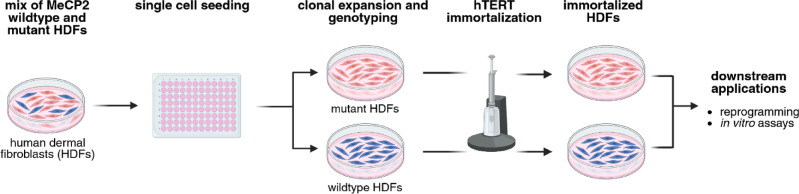 Figure 1
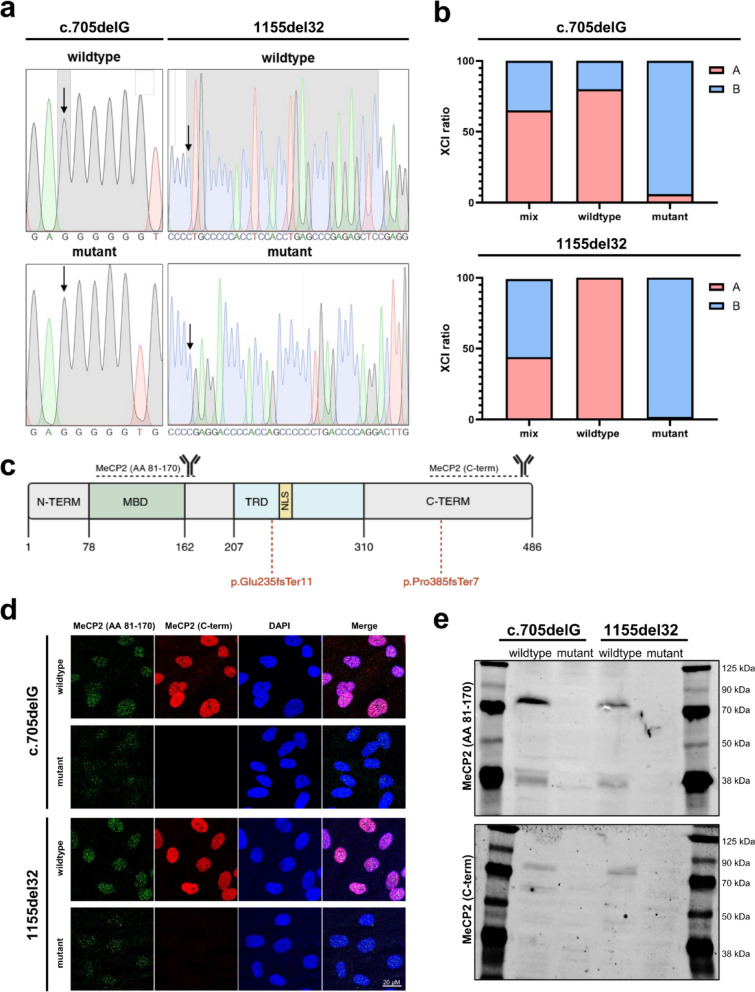 Figure 2
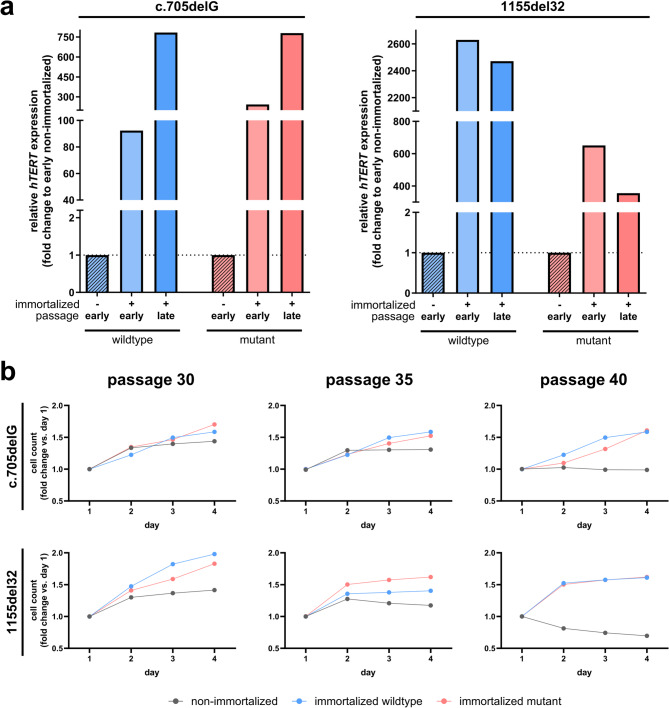 Figure 3
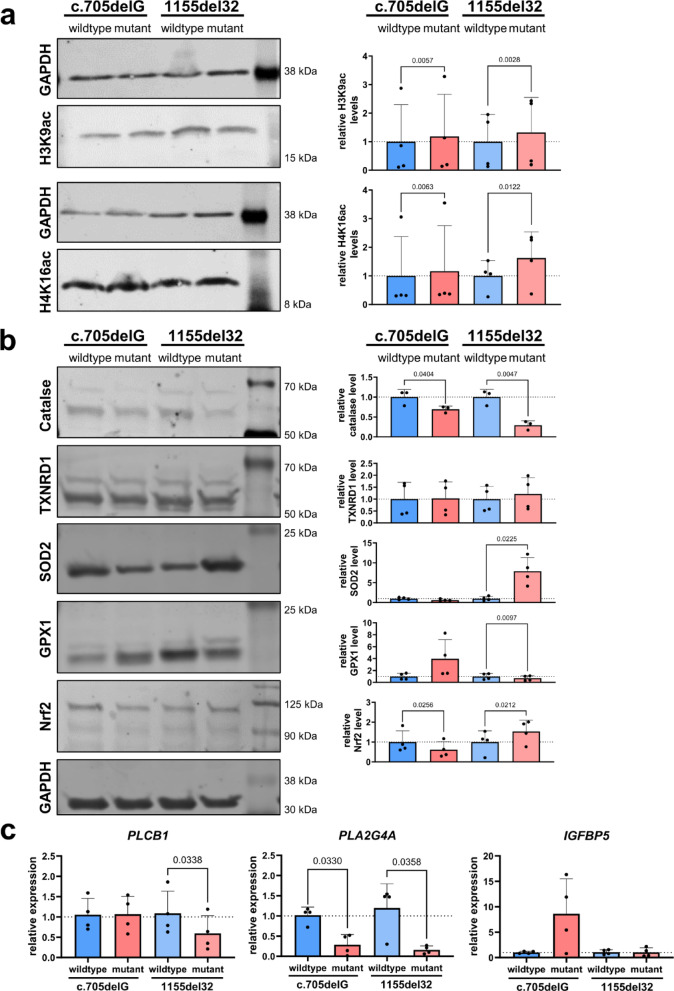 Figure 4
Peer Reviews
No public reviews on file for this paper yet. If you reviewed it on a platform where reviews are public (OpenReview, ICLR, NeurIPS, ICML), you can paste yours below so the community can read it here.
Videos
No videos yet. Explain this paper in a talk, walkthrough, or lecture? Add one.
Taxonomy
TopicsGenetics and Neurodevelopmental Disorders · Epigenetics and DNA Methylation · Autism Spectrum Disorder Research