Potent Fluorescent Probe for Target‐Engagement Studies of Allosteric Pyruvate Kinase Modulators
Oscar Nilsson, Anna P. Valaka, Liliana Håversen, Agnieszka Bogucka, István Köteles, Paul Brear, Mikael Rutberg, Anders Gunnarsson, Marko Hyvönen, Morten Grøtli

TL;DR
A new fluorescent probe called LumiPK was developed to study how drugs bind to a key metabolic enzyme in liver cells, improving drug development for metabolic diseases and cancer.
Contribution
LumiPK is a novel fluorescent tracer that enables direct monitoring of allosteric ligand engagement with PKL in both recombinant and cellular settings.
Findings
LumiPK has high affinity for PKL with a K_D of 37 ± 5 nM in recombinant assays.
LumiPK maintains potency (EC50 = 18.4 nM) in cellular experiments using a PKL-Nluc fusion.
LumiPK validates known PKL activators in both cellular and recombinant settings with consistent K_D values.
Abstract
Pyruvate kinases (PKs) are highly allosterically regulated enzymes that play a central role in cellular metabolism and are increasingly recognized as valuable therapeutic targets in cancer, metabolic diseases, and diabetes. Despite their biological and clinical significance, methods to directly assess allosteric ligand engagement of PK isoforms remain limited. Here, we report the development of LumiPK, a novel, environment‐sensitive fluorescent tracer designed to monitor allosteric binding to the liver isoform of pyruvate kinase (PKL). LumiPK integrates an environment‐sensitive 4‐sulfamonyl‐7‐aminobenzoxadiazole fluorophore into a potent allosteric modulator scaffold. It emerged as the lead compound from a small ligand series, showing high affinity for PKL (K D = 37 ± 5 nM) in recombinant assays; the most potent fluorescent PK reporter reported to date. A NanoBRET assay using a…
Genes, proteins, chemicals, diseases, species, mutations and cell lines named across the full text — each resolved to its canonical identifier and authoritative record.
Click any figure to enlarge with its caption.
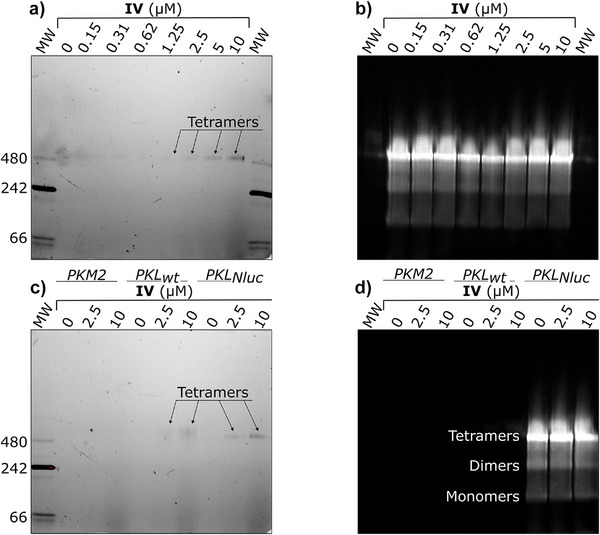 Figure 1
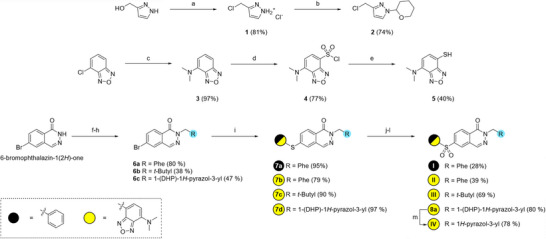 Figure 2
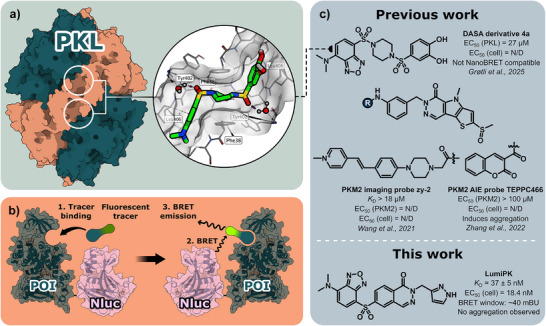 Figure 3
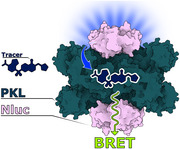 Figure 4
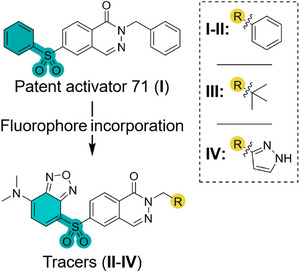 Figure 5
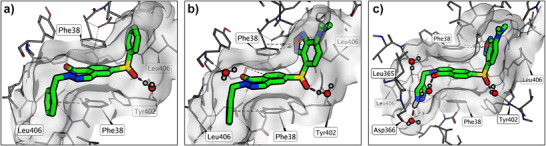 Figure 6
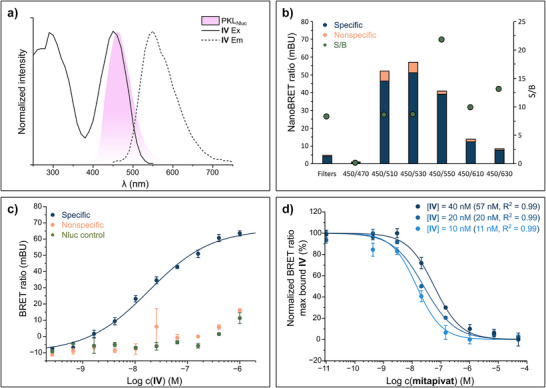 Figure 7
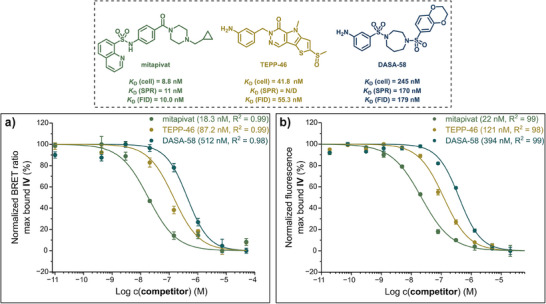 Figure 8
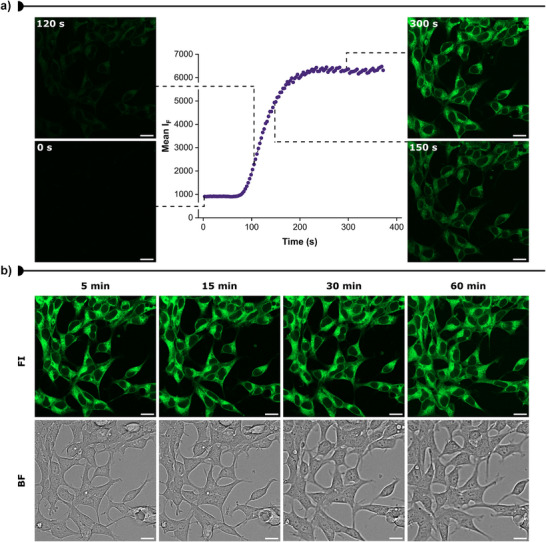 Figure 9
Peer Reviews
No public reviews on file for this paper yet. If you reviewed it on a platform where reviews are public (OpenReview, ICLR, NeurIPS, ICML), you can paste yours below so the community can read it here.
Videos
No videos yet. Explain this paper in a talk, walkthrough, or lecture? Add one.
Taxonomy
TopicsAmino Acid Enzymes and Metabolism · Receptor Mechanisms and Signaling · Cancer, Hypoxia, and Metabolism