Selective Chemical Manipulation of Mannosyl‐ and Galactosyl‐Queuosine in tRNAs of Living Cells
Alexander Pichler, Elsa Peev, Qingyi Ge, Ghofrane Ben Helal, Matthias Heiss, Stylianos Xefteris, Markus Müller, Thomas Carell

TL;DR
This study shows that enzymes add sugars to specific sites on tRNA molecules with high precision, suggesting these modifications play important roles in decoding genetic information.
Contribution
The study demonstrates precise enzymatic addition of sugars to tRNA using chemically manipulated queuine derivatives.
Findings
Sugar-modifying enzymes attach sugars to tRNA with high regio- and chemoselectivity.
Analysis of modified tRNAs reveals specific attachment of galactose and mannose moieties.
The sugar modifications likely play decisive roles in the decoding process of tRNA.
Abstract
Queuosine is a hypermodified nucleoside found in the anticodon loop of tRNAs decoding the amino acids His, Asn, Tyr, and Asp. In tRNATyr, the homoallylic 2‐hydroxyl group of the cyclopentene ring carries an additional β‐galactose, while in tRNAAsp, an α‐mannose is connected to the allylic 3‐hydroxyl group. Although these additional sugar modifications were found in the tRNAs of many animals, including humans, their purpose remains unknown. Recently, the Q‐tRNA galatosyl‐ and mannosyltransferase (QTGAL and QTMAN) that attach the galactose and mannose moieties to the different OH groups of the Q‐base have been identified, but the function of this transfer reaction remains unclear. Here, we performed feeding experiments with synthetic deoxyqueuine derivatives that lack either the allylic, the homoallylic, or both hydroxyl groups. Analysis of the queuosine derivatives that are found in the…
Genes, proteins, chemicals, diseases, species, mutations and cell lines named across the full text — each resolved to its canonical identifier and authoritative record.
Click any figure to enlarge with its caption.
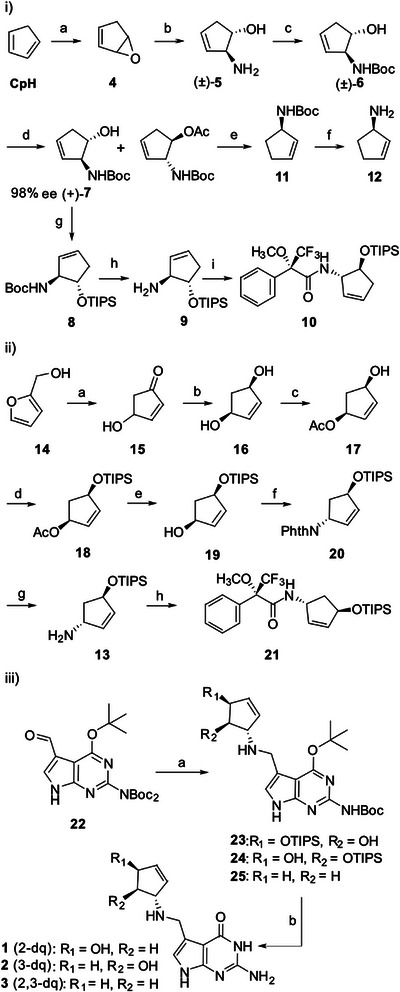 Figure 1
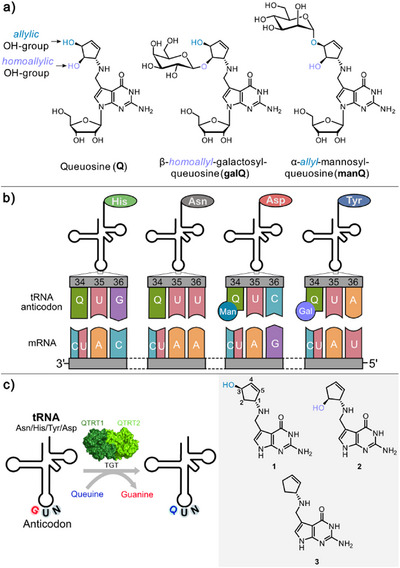 Figure 2
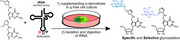 Figure 3
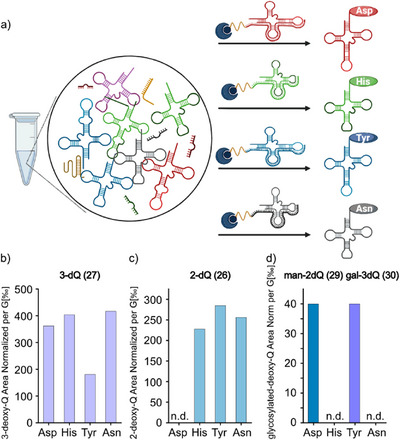 Figure 4
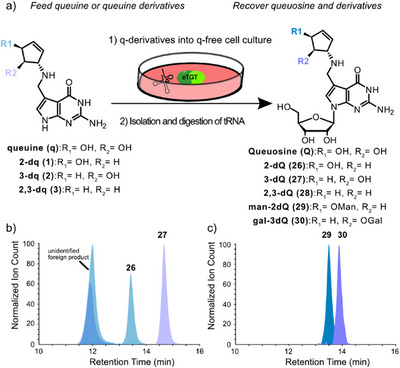 Figure 5
Peer Reviews
No public reviews on file for this paper yet. If you reviewed it on a platform where reviews are public (OpenReview, ICLR, NeurIPS, ICML), you can paste yours below so the community can read it here.
Videos
No videos yet. Explain this paper in a talk, walkthrough, or lecture? Add one.
Taxonomy
TopicsRNA modifications and cancer · RNA and protein synthesis mechanisms · Genomics and Phylogenetic Studies