Lysosome stress response and mitochondria injury are the earliest detectable alteration in FSGS
Eileen Dahlke, Jessica Promnitz, Mairon Trujillo Miranda, Makhabbat Saudenova, Gèraldine Mollet, Franziska Theilig

TL;DR
This study shows that lysosome stress and mitochondrial injury are the earliest changes in FSGS, a kidney disease, and may trigger inflammation and disease progression.
Contribution
The study identifies lysosome stress and mitochondrial injury as the earliest detectable events in FSGS development.
Findings
Lysosome stress and mitochondrial injury occur as early as 5 days after FSGS induction.
CXCL1 chemokine expression increases with early lysosome and mitochondrial changes.
Endoplasmic reticulum stress appears later and contributes to ongoing podocyte injury.
Abstract
Focal segmental glomerulosclerosis (FSGS) is a histopathologic lesion caused by a dysfunction and loss of podocytes. Podocytes as postmitotic cells, rely on lysosomes to maintain their structural and functional integrity and on mitochondria to adapt their metabolic needs. The importance of lysosomes and mitochondria in glomerular diseases is widely accepted, their time-dependent involvement during pathogenic events of FSGS remain unknown. The inducible mouse model of podocyte-specific Nphs2 deletion allowing the study of the time-dependent sequence of pathogenic events. Earliest alterations were overserved at 5 days after FSGS induction and comprise a very low number of glomeruli with foot process effacement and tuft adhesions to the Bowmans capsule, a lysosome stress response, mitochondria injury and higher chemokine CXCL1 expression. At 9 days after FSGS induction, increased…
Genes, proteins, chemicals, diseases, species, mutations and cell lines named across the full text — each resolved to its canonical identifier and authoritative record.
Click any figure to enlarge with its caption.
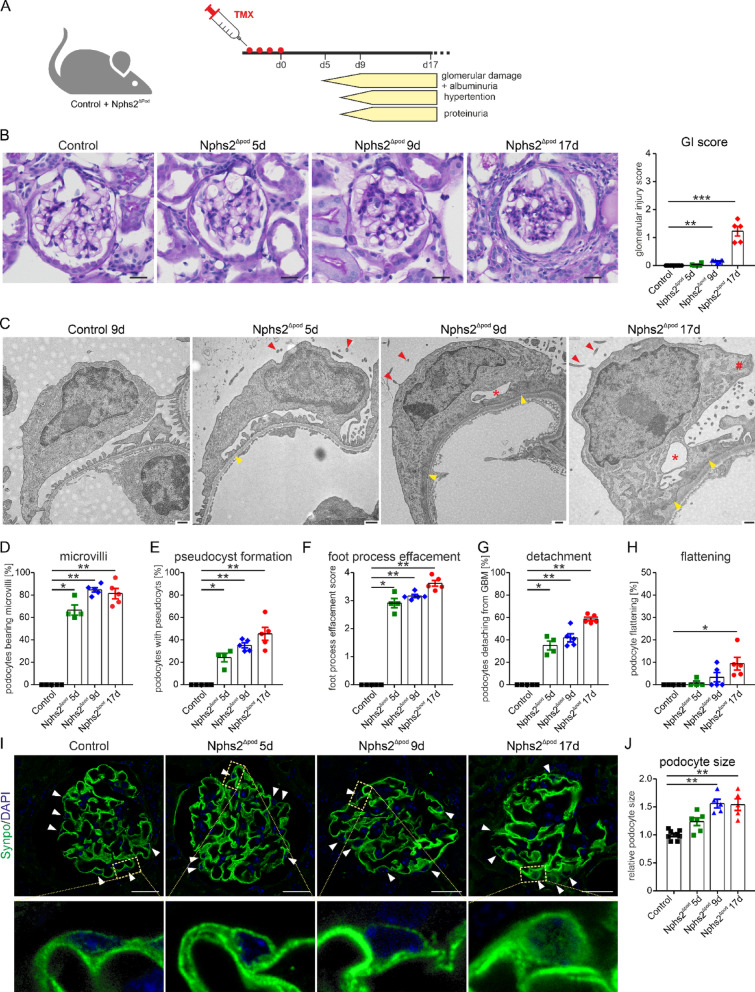 Figure 1
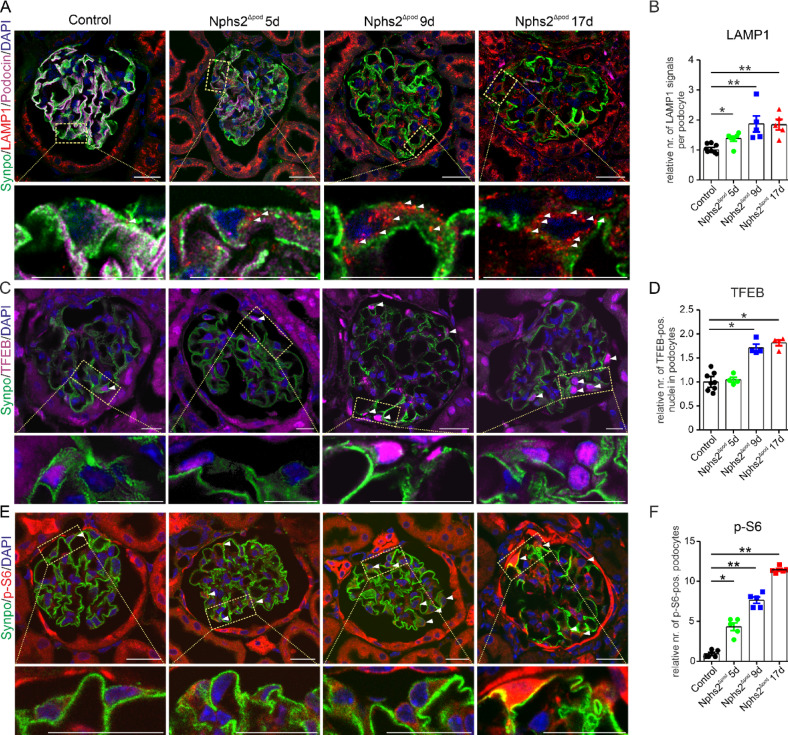 Figure 2
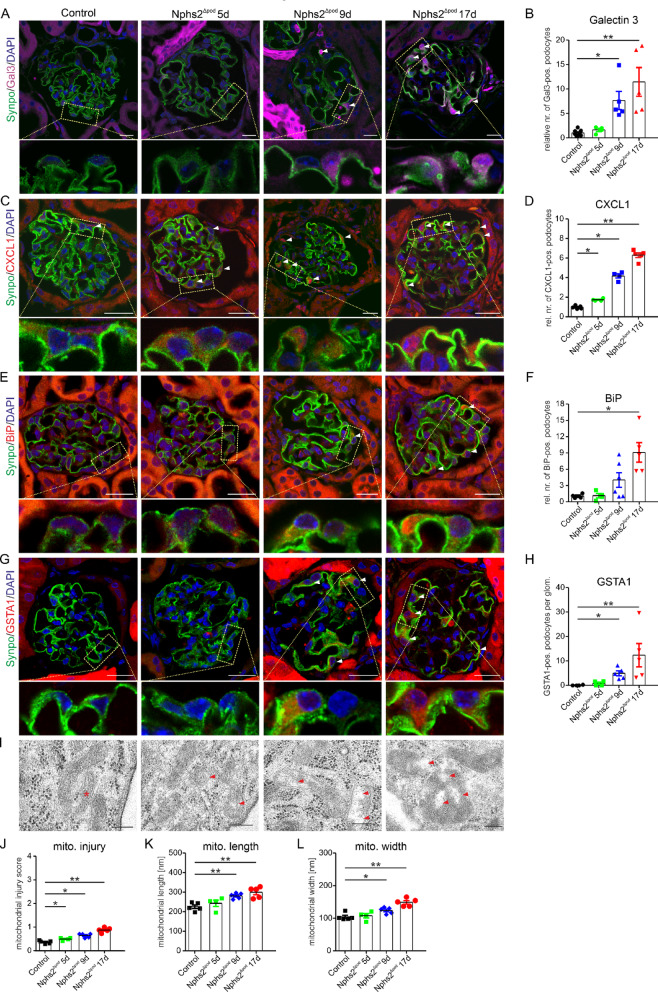 Figure 3
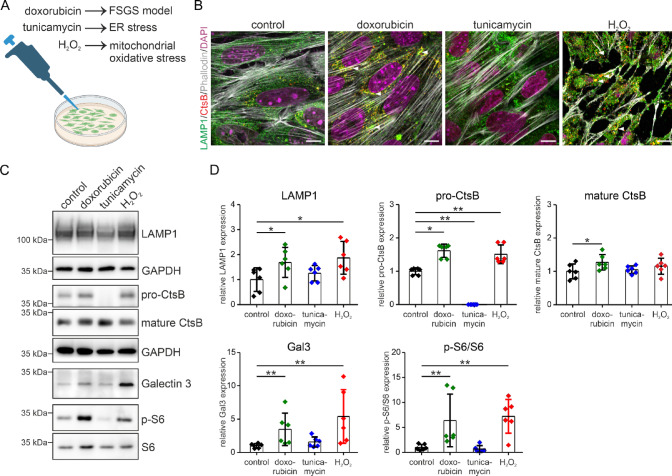 Figure 4
Peer Reviews
No public reviews on file for this paper yet. If you reviewed it on a platform where reviews are public (OpenReview, ICLR, NeurIPS, ICML), you can paste yours below so the community can read it here.
Videos
No videos yet. Explain this paper in a talk, walkthrough, or lecture? Add one.
Taxonomy
TopicsRenal Diseases and Glomerulopathies · Genetic and Kidney Cyst Diseases · Complement system in diseases