The rupture of smaller counterpart aneurysms in patients with multiple intracranial aneurysms
Thiemo Florin Dinger, Marvin Darkwah Oppong, Mehdi Chihi, Meltem Gümüs, Laurèl Rauschenbach, Mats Leif Moskopp, Yahya Ahmadipour, Maximilian Schüßler, Yan Li, Karsten Henning Wrede, Philipp René Dammann, Ulrich Sure, Ramazan Jabbarli

TL;DR
This study shows that smaller aneurysms, not the largest ones, can rupture in patients with multiple brain aneurysms, and identifies risk factors beyond size for predicting rupture.
Contribution
The study identifies new risk factors for rupture of smaller aneurysms in patients with multiple intracranial aneurysms, challenging the reliance on size alone.
Findings
The total number of aneurysms and use of multiple antihypertensive drugs were significant risk factors for smaller aneurysm rupture.
Smoking, radiographic features, and hypertension were not significantly associated with smaller aneurysm rupture.
The study suggests that some patients with multiple aneurysms may benefit from treating more than one aneurysm at once.
Abstract
In case of multiple (unruptured) intracranial aneurysms (M[U]IA), deciding which intracranial aneurysms (IA) should be treated and which at first can be challenging. The most accepted risk factor in making these decisions is IA size. However, a smaller intracranial counterpart aneurysm (SICA) and not the largest IA in patients with MIA might cause subarachnoid hemorrhage (aSAH). By falsely assessing a SICA as benign and withholding treatment, these patients are put at risk for SICA rupture before treatment. Therefore, there is a paramount need to improve the identification of more rupture-prone SICA, especially regarding the improved accessibility to intracranial imaging leading to increasing incidences of patients with (M)IA. From our institutional observational cohort, containing data of all patients with IA treated between 01/2003 and 06/2016, 285 patients with MIA who were…
Genes, proteins, chemicals, diseases, species, mutations and cell lines named across the full text — each resolved to its canonical identifier and authoritative record.
Click any figure to enlarge with its caption.
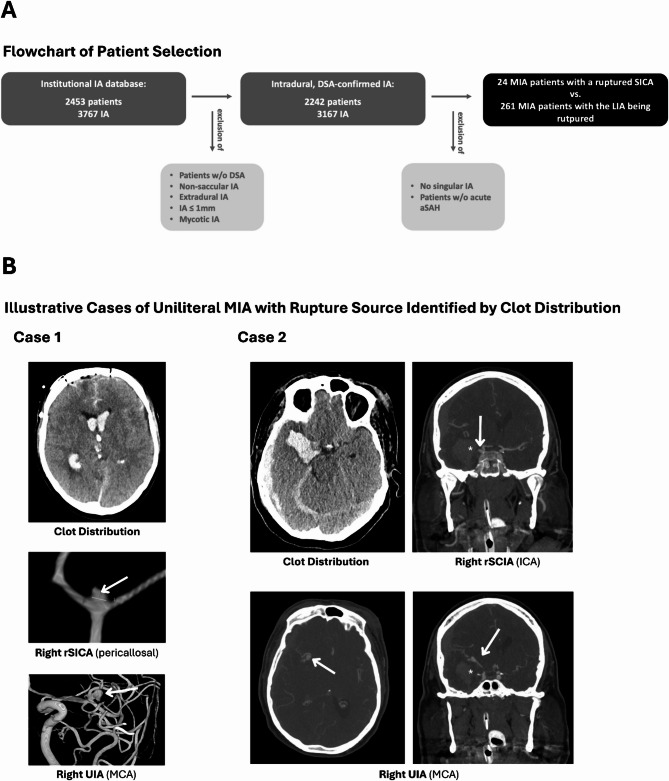 Figure 1
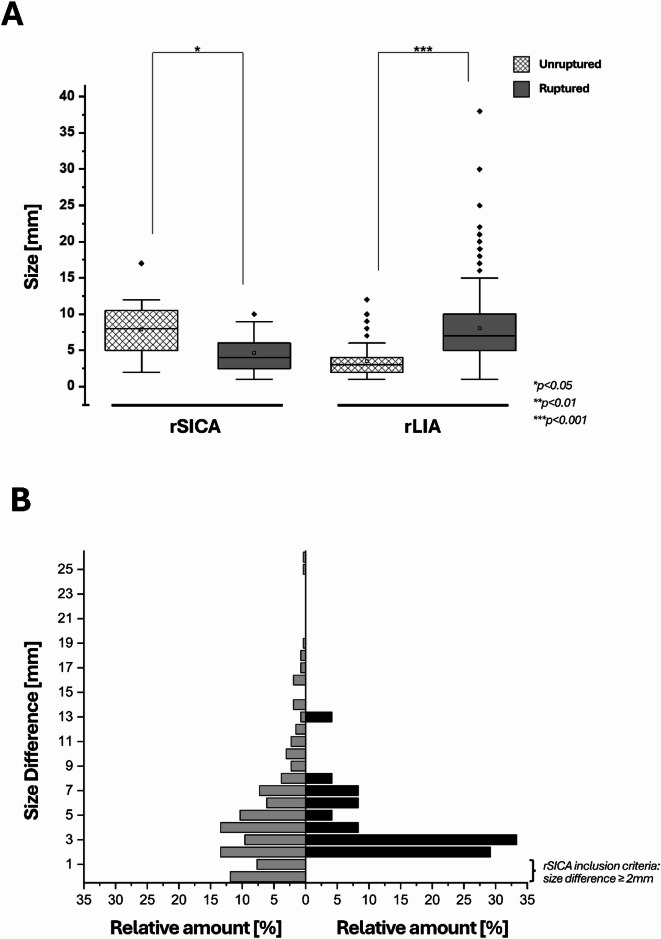 Figure 2
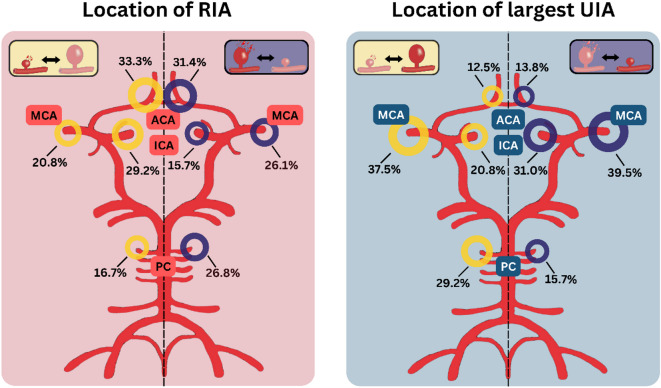 Figure 3
Peer Reviews
No public reviews on file for this paper yet. If you reviewed it on a platform where reviews are public (OpenReview, ICLR, NeurIPS, ICML), you can paste yours below so the community can read it here.
Videos
No videos yet. Explain this paper in a talk, walkthrough, or lecture? Add one.
Taxonomy
TopicsIntracranial Aneurysms: Treatment and Complications · Traumatic Brain Injury and Neurovascular Disturbances · Moyamoya disease diagnosis and treatment