Double dehiscence (Superior semicircular canal and tegmen tympani) in the epicampaniform period (Arboli type)
AI. Cisneros-Gimeno, A. García-Barrios, S. Baena-Pinilla, J. Obón-Nogués, R. Gómez-Miranda, J. Whyte-Orozco, M. Botella-López

TL;DR
This study identifies a rare skull condition in ancient human remains from the Iberian Peninsula, showing that a modern syndrome existed thousands of years ago.
Contribution
The first documented case of double dehiscence (superior semicircular canal and tegmen tympani) in ancient human remains.
Findings
A male skull from 1800–1700 BC shows double dehiscence on the right side.
The individual also exhibited possible congenital muscular torticollis on the same side.
This confirms the existence of superior semicircular canal dehiscence syndrome in ancient times.
Abstract
Although the superior semicircular canal dehiscence syndrome was described at the end of the 20th century, we want to check if it is a pathology that has existed since ancient times, through the anthropological study of bone remains. We have carried out an anthropological and radiological study (CT scan) of 8 skulls found in caves, as secondary burials of the Arbolí type epicampaniform culture (1800 − 1700 BC) on the Iberian Peninsula. The 8 skulls (16 temporal bones) show a grade 4 degree of pneumatisation or hyperpneumatization. One of these skulls, belonging to a male subject of around 25–30 years of age, shows a double dehiscence (superior semicircular canal and tegmen tympani) on the right side, and a possible congenital muscular torticollis on the same side. Superior semicircular canal dehiscence syndrome already existed in an inhabitant from 1800 − 1700 BC (Iberian Peninsula).…
Genes, proteins, chemicals, diseases, species, mutations and cell lines named across the full text — each resolved to its canonical identifier and authoritative record.
Click any figure to enlarge with its caption.
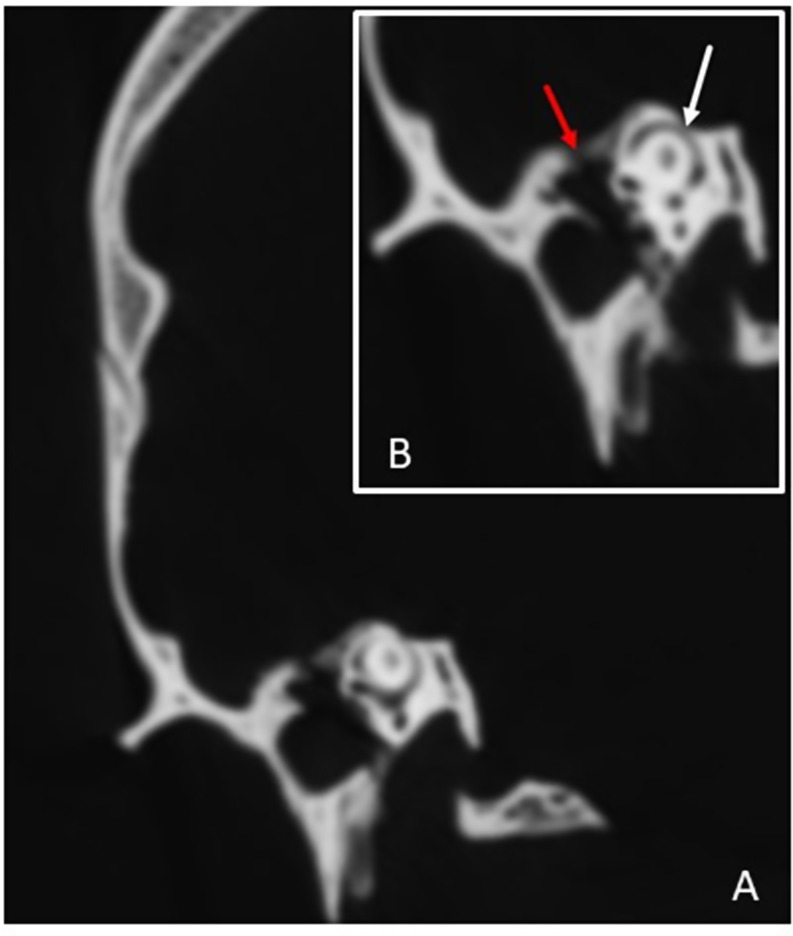 Figure 1
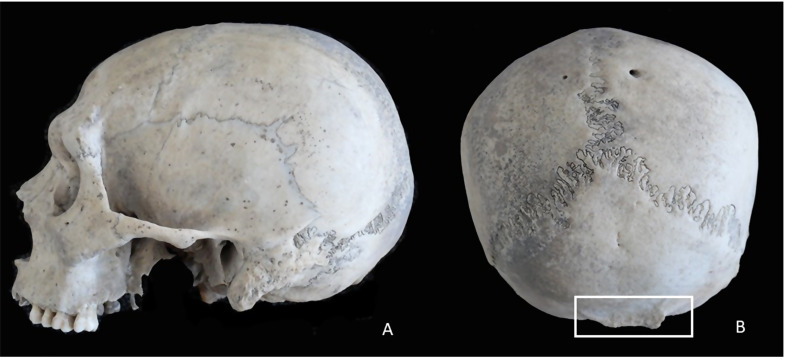 Figure 2
Peer Reviews
No public reviews on file for this paper yet. If you reviewed it on a platform where reviews are public (OpenReview, ICLR, NeurIPS, ICML), you can paste yours below so the community can read it here.
Videos
No videos yet. Explain this paper in a talk, walkthrough, or lecture? Add one.
Taxonomy
TopicsVestibular and auditory disorders · Ear Surgery and Otitis Media · Hearing, Cochlea, Tinnitus, Genetics