Savings in visuomotor learning are associated with connectivity changes within a cerebello-thalamo-cortical network encoding movement errors
Lucas Struber, Laurent Lamalle, Pierre-Alain Barraud, Aurélien Courvoisier, Rafael Laboissière, Takayuki Ito, Vincent Nougier, David J Ostry, Fabien Cignetti

TL;DR
The study shows that faster relearning of motor tasks is linked to changes in brain connectivity related to movement errors.
Contribution
The study identifies a specific cerebello-thalamo-cortical network whose connectivity strengthens during relearning, linking it to savings.
Findings
A cerebello-thalamo-cortical network is involved in processing movement errors during adaptation.
Strengthened connectivity in this network during re-adaptation correlates with greater savings in learning.
Key connections include the cerebellar lobule VI and ventrolateral thalamus, and primary somatosensory cortex and rostral cingulate motor zone.
Abstract
Savings refer to faster relearning upon re-exposure to a previously experienced movement perturbation. One theory posits that the brain recognizes past errors, enabling more efficient learning from them. If this is the case, there should be a modification in the neural response to errors during re-exposure to the perturbation. To investigate this hypothesis, we used fMRI to measure brain activity as participants adapted to a visuomotor perturbation across two sessions spaced one day apart, focusing on neural responses to movement errors. The magnitude of the movement error was incorporated into different types of GLMs to study error-related activation and co-activation (or functional connectivity). We identified a cerebello-thalamo-cortical network involved in processing movement errors during adaptation. We observed strengthened connectivity within this network during re-adaptation,…
Genes, proteins, chemicals, diseases, species, mutations and cell lines named across the full text — each resolved to its canonical identifier and authoritative record.
Click any figure to enlarge with its caption.
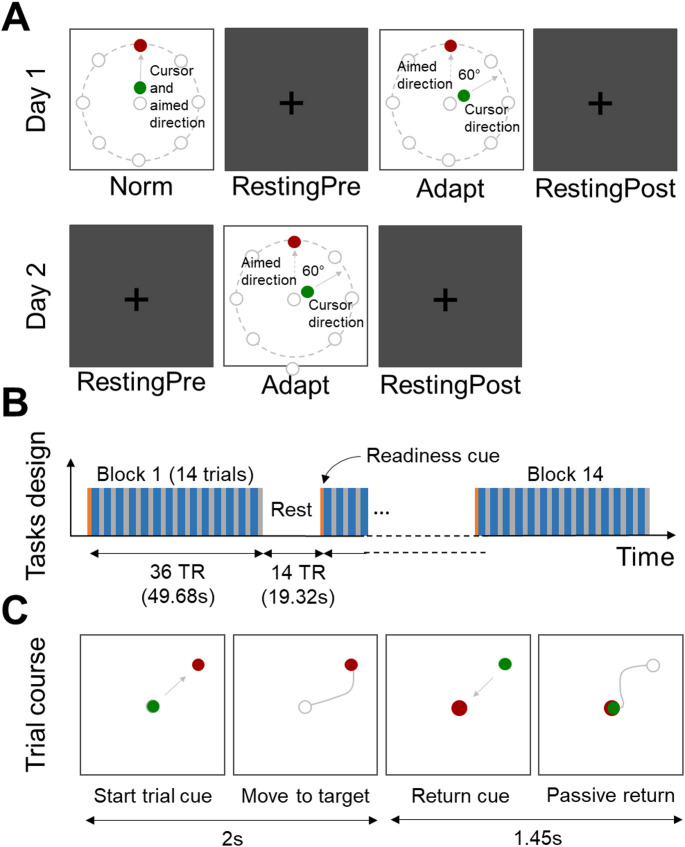 Figure 1
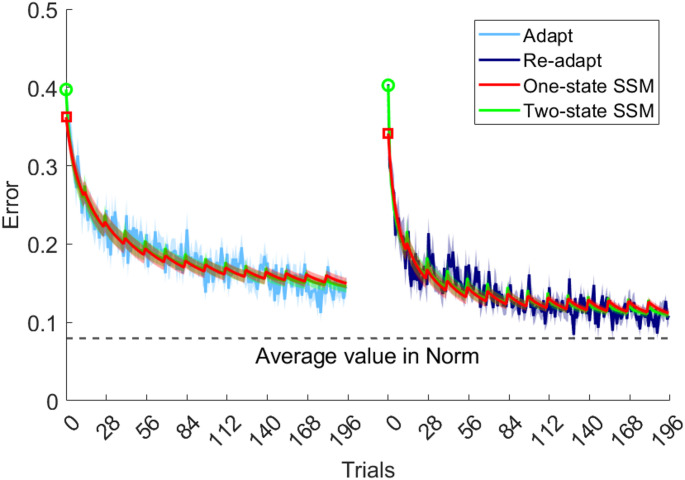 Figure 2
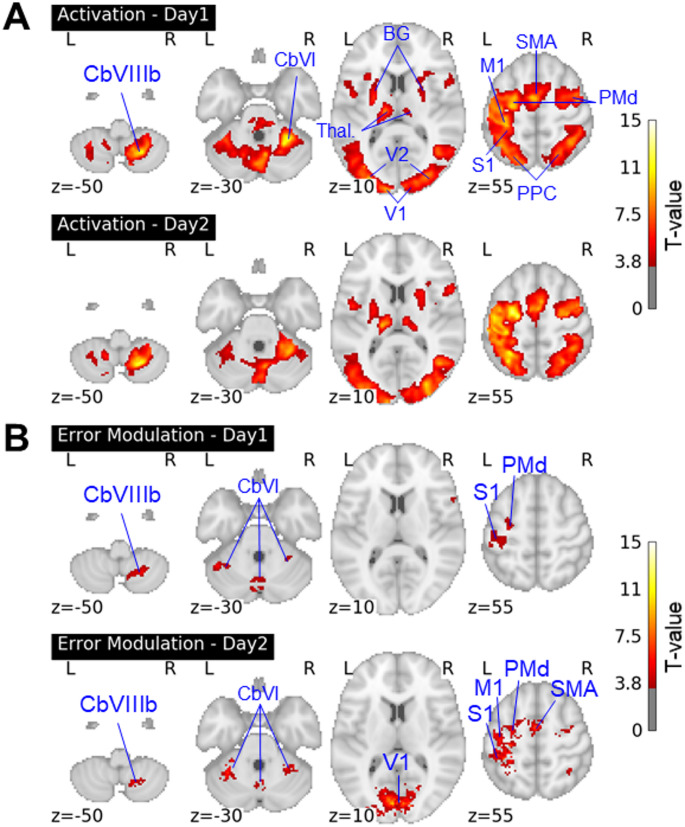 Figure 3
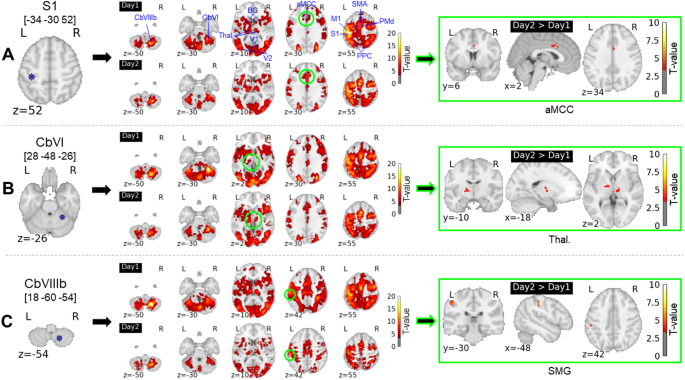 Figure 4
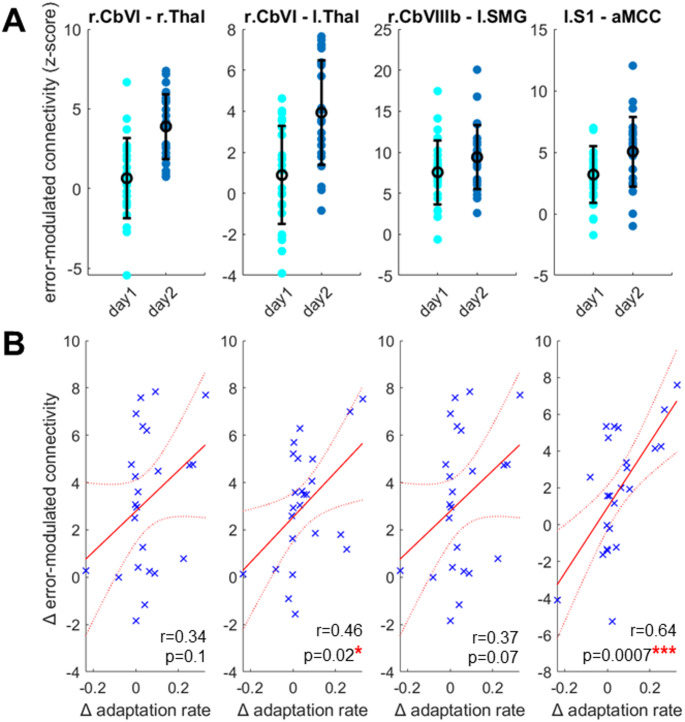 Figure 5
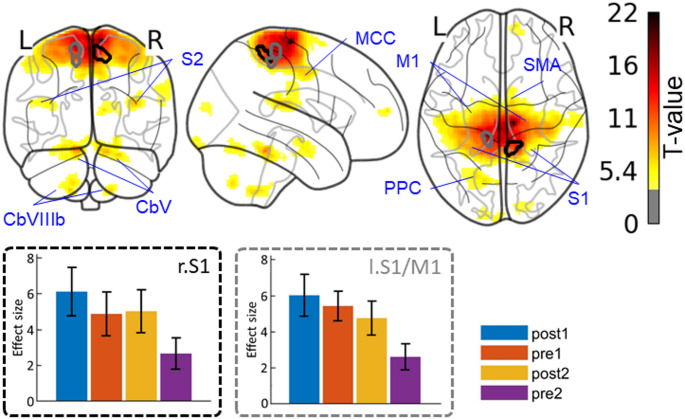 Figure 6
Peer Reviews
No public reviews on file for this paper yet. If you reviewed it on a platform where reviews are public (OpenReview, ICLR, NeurIPS, ICML), you can paste yours below so the community can read it here.
Videos
No videos yet. Explain this paper in a talk, walkthrough, or lecture? Add one.
Taxonomy
TopicsMotor Control and Adaptation · Vestibular and auditory disorders · Visual perception and processing mechanisms