Bioprospecting and mode of action of volatile organic compounds from morphospecies of the endophytic fungus Hypoxylon anthochroum in the field of bioherbicides
Gonzalo Roque-Flores, Martha Lydia Macías-Rubalcava, Jacqueline Fuentes-Jaime, Celia Bustos-Brito, Rogerio Alejandro Saavedra-Barrera, Baldomero Esquivel

TL;DR
This study investigates how volatile organic compounds (VOCs) from the endophytic fungus Hypoxylon anthochroum can act as bioherbicides by inhibiting plant growth and mitochondrial function.
Contribution
The study identifies specific VOCs and their mixtures from Hypoxylon anthochroum that show strong bioherbicidal activity and explores their mode of action on plant mitochondria.
Findings
VOCs from Hypoxylon anthochroum significantly inhibit seed germination, root growth, and seedling respiration in several weed plants.
Mixtures of VOCs show higher phytotoxicity than individual compounds, with alcohol mixtures being more effective than terpene mixtures.
VOCs disrupt mitochondrial respiration and membrane potential in isolated M. sativa mitochondria.
Abstract
In the present investigation, we explore the bioherbicidal activity of seven selected organic compounds (VOCs), previously identified as constituents of mixtures from four Hypoxylon anthochroum endophytic morphospecies. VOCs included four alcohols and three monoterpenes: 3-methyl-1-butanol, 2-methyl-1-butanol, 2-methyl-1-propanol and 2-phenylethanol, and eucalyptol, ocimene and terpinolene. Individual VOCs or VOCs’ mixtures exhibit strong bioherbicidal potential demonstrated through their phytotoxic effect on four herbaceous weed plants and one aquatic plant. VOCs demonstrated a significant inhibitory effect on the seed germination, root growth, and seedling respiration of four common herbaceous plants, including Amaranthus hypochondriacus, Trifolium pratense, Medicago sativa and Panicum miliaceum. In general, root growth was the most affected physiological process across all species,…
Genes, proteins, chemicals, diseases, species, mutations and cell lines named across the full text — each resolved to its canonical identifier and authoritative record.
Click any figure to enlarge with its caption.
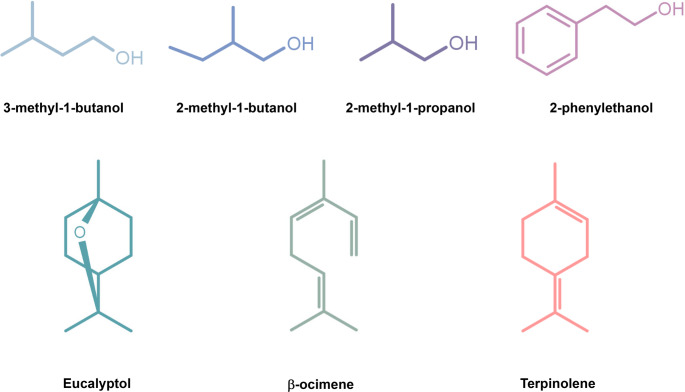 Figure 1
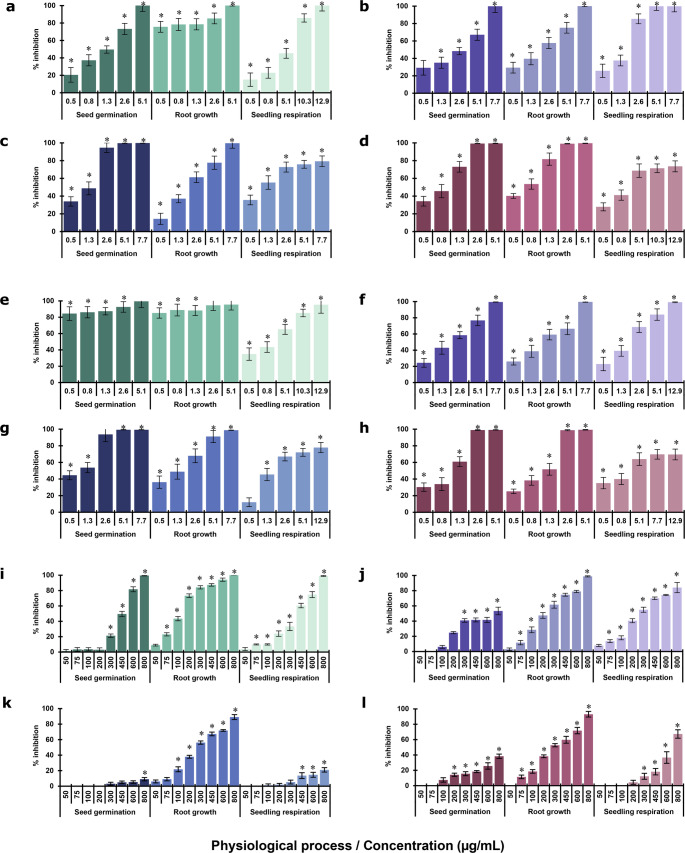 Figure 2
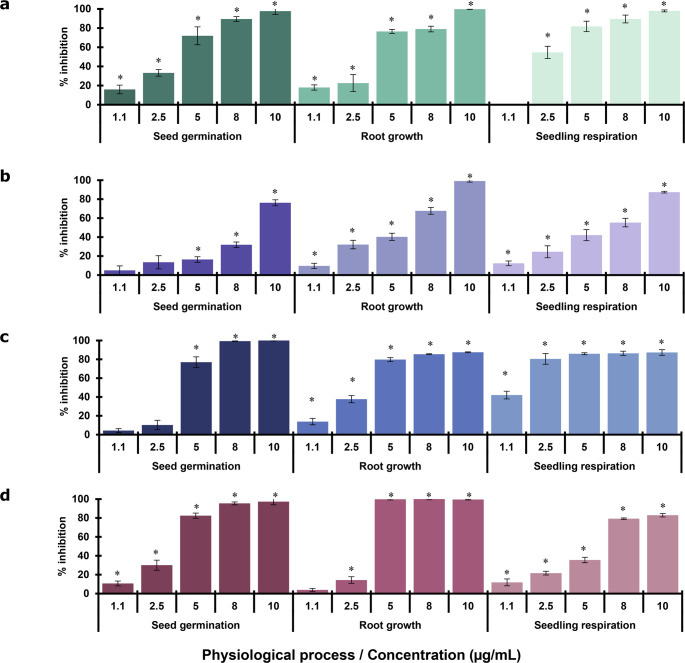 Figure 3
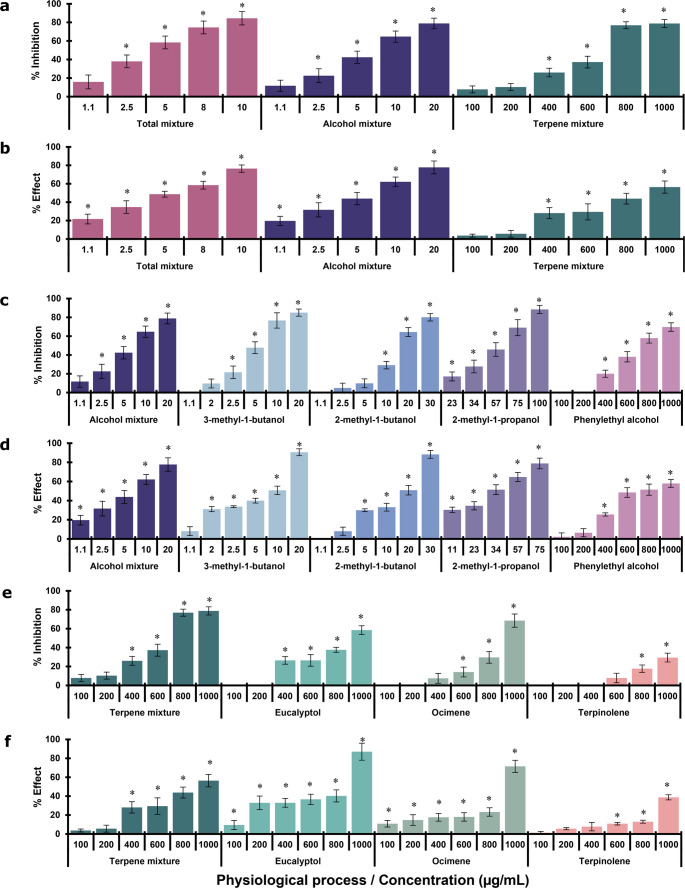 Figure 4
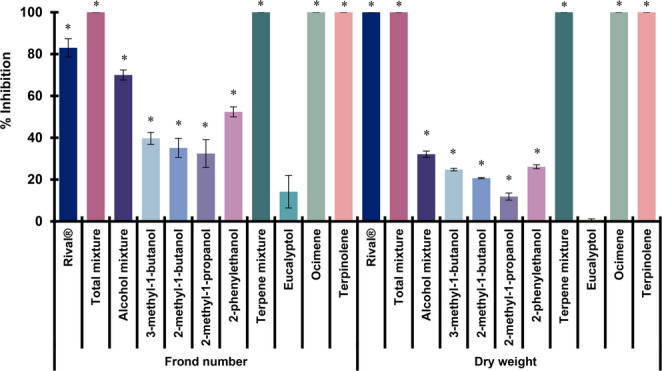 Figure 5
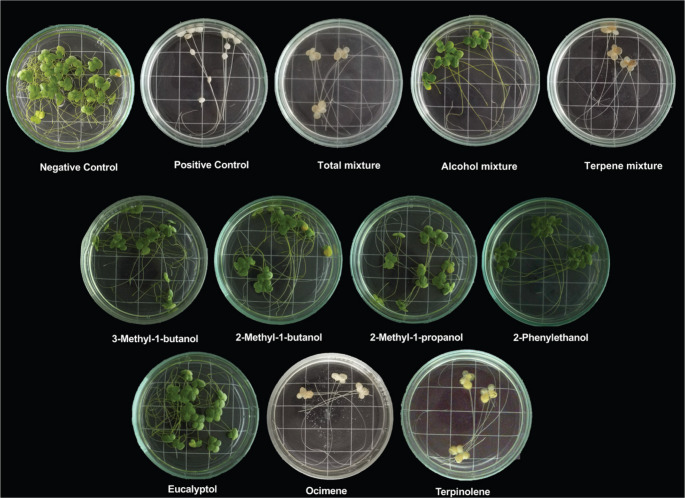 Figure 6
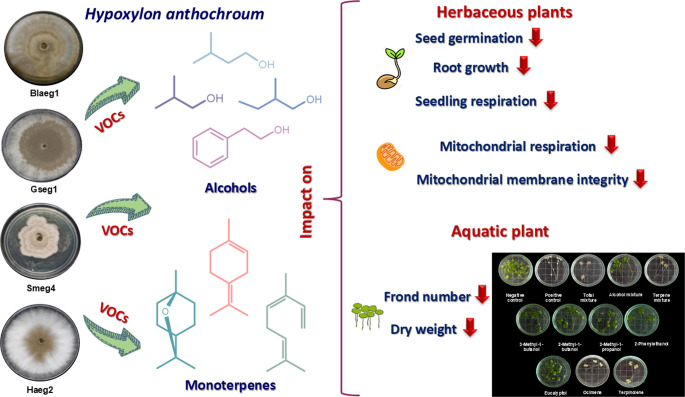 Figure 7
Peer Reviews
No public reviews on file for this paper yet. If you reviewed it on a platform where reviews are public (OpenReview, ICLR, NeurIPS, ICML), you can paste yours below so the community can read it here.
Videos
No videos yet. Explain this paper in a talk, walkthrough, or lecture? Add one.
Taxonomy
TopicsAllelopathy and phytotoxic interactions · Plant Parasitism and Resistance · Plant Pathogens and Fungal Diseases